Is Lash Egg Contagious to Humans? What the Science Actually Says

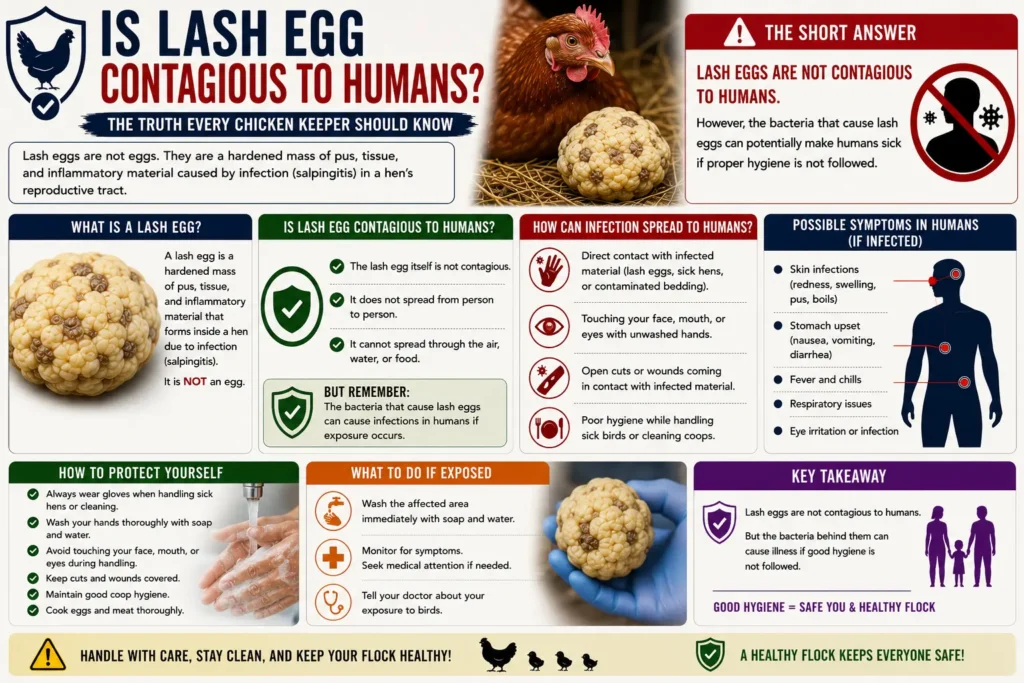
Is lash egg contagious to humans? No, a lash egg itself cannot infect you the way a cold spreads between people. But the bacteria behind it — including E. coli, Salmonella, and Enterococcus faecalis — can make you sick if you handle one without care. That distinction matters, and this guide walks through exactly what’s going on inside that strange, egg-shaped mass and what it means for your health.
Quick Answer: A lash egg is not contagious on its own. It’s a solid mass of pus and tissue, not a living pathogen. The real concern is the bacteria that caused it in the first place, which can pose a genuine zoonotic risk to people who touch it without gloves or proper hygiene.
If you keep backyard chickens, finding a lash egg in the nesting box is unsettling. It looks like a deformed egg wrapped in a rubbery shell, but it’s actually a byproduct of infection. Understanding what it is — and isn’t — helps you protect both your flock and your family.
Most backyard keepers ask is lash egg contagious to humans the moment they see one, usually right after wondering if it’s safe to let kids near the coop that day. The short version is that the object won’t infect you on contact, but skipping basic hygiene around it is where the real risk lives.
Table of Contents
Is Lash Egg Contagious to Humans? The Direct Answer
A lash egg is not a living organism, so it can’t “spread” the way a virus or bacterium spreads on its own. It’s medically known as caseous exudate — a cheese-like buildup of pus, dead cells, and sometimes bits of egg material. That means the lash egg itself doesn’t multiply, infect tissue, or pass between hosts.
What can transfer to a person is whatever pathogen triggered the inflammation in the first place. Salpingitis, the condition behind lash eggs, is usually caused by bacteria such as E. coli or Salmonella. Those bacteria are well-documented zoonotic agents, meaning they can move from animals to people under the right conditions.
So the honest answer to is lash egg contagious to humans sits in the middle: the object is inert, but the germs inside it are not always safe to touch. Treat every lash egg as a biohazard-lite object, similar to how you’d treat raw chicken droppings.
Is Lash Egg Contagious to Humans Through Salpingitis?
No. Salpingitis in humans refers to inflammation of the fallopian tubes, usually from a sexually transmitted infection like chlamydia or gonorrhea. It is a completely different disease process from avian salpingitis, and you cannot catch human salpingitis from handling a chicken’s reproductive discharge.
What you can catch is a bacterial illness — food poisoning-style symptoms from Salmonella or E. coli — if the pathogen enters your body through your mouth, a cut, or your eyes after contact.
Read More: https:https://lashegg.com/are-lash-eggs-dangerous-to-humans/
What Is a Lash Egg, Exactly?
A lash egg forms when a hen’s oviduct becomes inflamed, usually from a bacterial or viral infection. Her immune system reacts by walling off the infection with layers of pus, fibrin, and tissue debris, similar to how your body forms a scab.
Over days or weeks, that mass takes on an oval shape as it moves through the same muscular contractions that normally form and lay a real egg. It’s often coated in a thin membrane, which is why people mistake it for a deformed egg at first glance.
Lash Egg vs. a Real Egg
| Feature | Real Egg | Lash Egg |
| Shell | Hard, calcium-based | No true shell, rubbery film only |
| Contents | Yolk and albumen | Pus, tissue, sometimes yolk fragments |
| Smell | Neutral | Foul, often described as rotten |
| Cause | Normal reproduction | Salpingitis (oviduct infection) |
| Texture | Firm inside a shell | Squishy, cheese-like, layered |
| Frequency | Daily, if hen is laying | Rare, tied to illness |
How Common Are Lash Eggs?
Lash eggs are considered rare compared to everyday egg abnormalities like soft shells or blood spots. Most backyard keepers with a small flock may never see one over many years of raising chickens.
They show up more often in high-production breeds pushed to lay eggs at commercial-style rates, since their reproductive systems face more strain. Flocks with poor sanitation, overcrowding, or an active respiratory virus tend to report clusters of cases rather than isolated ones.
Because lash eggs are uncommon, many keepers search is lash egg contagious to humans simply because there’s so little mainstream information available compared to more familiar chicken health issues.
Lash Eggs in Ducks, Geese, and Other Poultry
Salpingitis and lash eggs aren’t limited to chickens. Ducks, geese, turkeys, and other female poultry share a similar reproductive anatomy and can develop the same type of oviduct infection.
The same safety logic applies across species. The bacteria responsible, not the bird species, determines whether there’s a risk to the people handling it. A duck’s lash egg carrying Salmonella calls for the same basic precautions as a chicken’s.
What a Lash Egg Looks and Smells Like
Recognizing a lash egg quickly helps you respond faster and avoid unnecessary handling. Most keepers describe distinct warning signs the first time they encounter one.
- An oblong, egg-like shape without a hard shell
- A rubbery or cheese-like outer texture
- Yellow, white, or grayish coloring, sometimes streaked with blood
- A strong, foul odor, often compared to spoiled meat
- Visible layering when cut open, similar to an onion’s rings
If something in the nesting box matches this description, assume it’s a lash egg and follow the safe handling steps below rather than inspecting it closely by hand.
What Causes Lash Eggs in Chickens?
Salpingitis doesn’t have one single cause. It’s the end result of several possible infections reaching the oviduct, often after traveling up from the cloaca or bloodstream.
Bacterial Causes
E. coli is the most commonly identified culprit, often entering through fecal contamination near the vent. Salmonella and Enterococcus faecalis are also frequently isolated from lash egg material, according to backyard poultry health resources and veterinary case reports.
Viral Causes
Infectious Bronchitis Virus, Newcastle Disease, and avian influenza can all damage the reproductive tract indirectly, setting the stage for secondary bacterial salpingitis. Viral cases tend to affect multiple hens in a flock around the same time, which is a useful clue during diagnosis.
Other Contributing Factors
- High egg production breeds (Leghorns, ISA Browns, production hybrids)
- Poor nutrition, especially low calcium or vitamin deficiency
- Obesity or being overweight, which stresses the reproductive tract
- Age over two years, when the oviduct naturally loses elasticity
- Stress from overcrowding, predators, or sudden environmental changes
Did You Know? Chickens have a single opening, the cloaca, used for laying eggs, mating, and passing waste. That shared pathway is exactly why bacteria from droppings can travel upward and trigger an oviduct infection.
Understanding the Bacterial Danger Behind Lash Eggs
The zoonotic risk tied to lash eggs comes entirely from the bacteria involved, not the mass itself. Here’s how the main pathogens compare:
| Pathogen | Zoonotic Risk Level | Possible Human Symptoms |
| Salmonella spp. | High | Diarrhea, fever, cramps, vomiting |
| E. coli (pathogenic strains) | Moderate to high | Stomach pain, diarrhea, in rare cases kidney issues |
| Enterococcus faecalis | Low to moderate | Usually opportunistic, higher risk for immunocompromised people |
| Mycoplasma gallisepticum | Low | Rarely causes illness in healthy adults |
| Viral causes (IBV, Newcastle) | Very low | Not typically transmissible to humans |
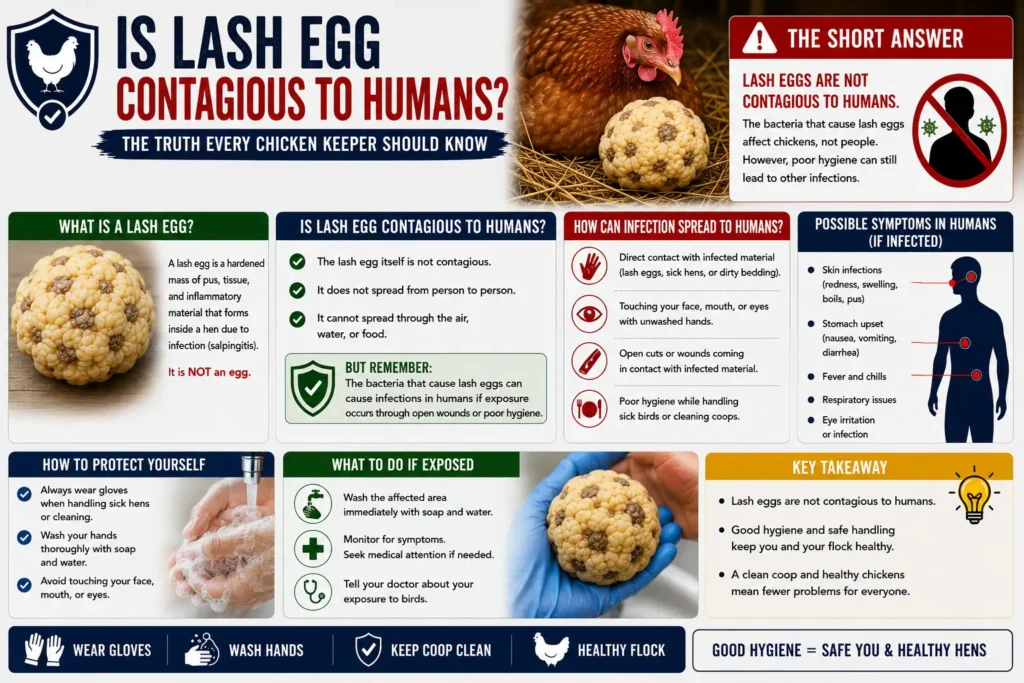
This is why answering is lash egg contagious to humans requires looking past the object and straight at the microbiology. A gloved hand and a bar of soap remove almost all practical risk.
Expert Tip: If you’re unsure what caused a lash egg, treat it as if Salmonella is present. It’s one of the most common and most preventable causes of illness from backyard poultry, according to guidance published by the and state extension programs.
Who Is Most at Risk From Handling a Lash Egg?
Not everyone faces the same level of risk from these bacteria. Some groups should avoid contact entirely.
- Young children, who often touch their face after handling animals or eggs
- Pregnant women, since some infections carry pregnancy-specific complications
- Older adults, who tend to have a weaker immune response
- Anyone with a compromised immune system, including chemotherapy patients or transplant recipients
If someone in your household falls into one of these groups, it’s safer to have another family member remove and dispose of the lash egg entirely.
How to Safely Handle a Lash Egg
Follow these steps whenever you find one in the nesting box:
- Put on disposable gloves before touching the lash egg.
- Place it directly into a sealed plastic bag without squeezing it.
- Dispose of it in an outdoor trash bin, not a household compost pile used for food gardens.
- Wash your hands with soap for at least 20 seconds afterward.
- Disinfect the nesting box with a poultry-safe cleaner.
- Watch the hen for other symptoms over the next few days.
Warning: Never handle a lash egg with bare hands, and never let children or pets near it. Even a small crack in your skin is enough for bacteria like Salmonella to enter.
Symptoms of Salpingitis in Hens
A hen producing lash eggs is often dealing with more than a one-time issue. Watch for these signs alongside the discovery of a lash egg.
- Reduced or stopped egg production
- Swollen or distended abdomen
- Lethargy or fluffed-up feathers
- Loss of appetite
- Discharge from the vent
- Straining, similar to signs of egg binding
Symptom Comparison: Salpingitis vs. Egg Binding
| Sign | Salpingitis | Egg Binding |
| Abdominal swelling | Common, gradual | Sudden, firm |
| Discharge | Foul-smelling pus | Usually absent |
| Straining | Occasional | Frequent, visible |
| Onset | Days to weeks | Hours |
| Egg production | Drops off slowly | Stops abruptly |
Treatment Options for Lash Eggs and Salpingitis
Treatment depends heavily on how early the infection is caught and what caused it.
| Treatment | When It’s Used | Success Rate |
| Antibiotics (vet-prescribed) | Early bacterial cases | Moderate, higher if caught early |
| Anti-inflammatory medication | To reduce pain and swelling | Supportive only |
| Surgical removal of the oviduct | Severe, recurring cases | Guarded, high-risk surgery |
| Supportive care and monitoring | Mild or unclear cases | Varies by underlying cause |
| Euthanasia consideration | Advanced peritonitis | N/A |
Home remedies alone will not resolve true salpingitis. This is a condition that needs veterinary input, not just probiotics or diet changes, once symptoms appear.
When to Call a Vet: Contact an avian or poultry veterinarian if your hen lays more than one lash egg, stops eating, shows a swollen belly, or seems lethargic for more than a day. According to the , salpingitis is a leading cause of mortality in commercial and backyard layers, and early veterinary diagnosis significantly improves outcomes.
Preventing Lash Eggs and Protecting Your Household
Good flock management reduces both the chance of salpingitis and the risk of bacterial exposure to your household.
- Keep nesting boxes clean and change bedding weekly.
- Feed a balanced layer diet with adequate calcium and vitamins.
- Reduce overcrowding to lower stress hormones that weaken immunity.
- Quarantine new birds for at least two weeks before introducing them to the flock.
- Practice basic biosecurity, including changing shoes or using a footbath near the coop.
- Provide clean, fresh water daily to reduce bacterial buildup.
Following guidance from your local university extension office is a reliable way to keep both your flock and your family safer, since many extension programs run poultry health hotlines for backyard keepers.
Common Mistakes Backyard Keepers Make
Common Mistakes
- Picking up a lash egg with bare hands out of curiosity
- Assuming it’s just a “weird egg” and ignoring the hen’s other symptoms
- Feeding a lash egg to other animals or composting it near a vegetable garden
- Waiting too long to call a vet, allowing the infection to progress
- Not isolating the affected hen from the rest of the flock during evaluation
Is Lash Egg Contagious to Other Chickens?
This is a different question from the human risk, and the answer is more nuanced. Salpingitis itself doesn’t spread hen-to-hen the way a cold spreads between people. But the underlying pathogen often can.
If a virus like Infectious Bronchitis is circulating in the flock, multiple hens can develop salpingitis around the same time, simply because they were all exposed to the same virus. Bacterial cases are less likely to spread directly between birds unless hygiene in the coop is poor.
People Also Ask
Can I eat eggs from a hen that laid a lash egg? Eggs laid by the same hen before or after the lash egg are generally considered safe if the hen appears otherwise healthy, but many keepers choose to discard eggs from a visibly sick bird until a vet confirms the diagnosis and treatment plan.
Is a lash egg painful for the hen? Yes, salpingitis is often uncomfortable or painful, especially as the mass grows large enough to pass through the oviduct. Straining and lethargy are common signs of discomfort.
Does a lash egg mean my hen has cancer? Not necessarily. Lash eggs are tied to infection and inflammation, not cancer. However, chronic reproductive issues can sometimes coexist with reproductive tumors in older hens, so a veterinary exam helps rule this out.
Can lash eggs be prevented completely? No method guarantees zero risk, but good nutrition, low stress, and strong biosecurity dramatically lower the odds of salpingitis developing in the first place.
5. FAQ
Is lash egg contagious to humans directly? No. A lash egg is not a living pathogen and cannot infect you on its own. The health risk comes from bacteria like Salmonella or E. coli that may be present on its surface.
What happens if I touch a lash egg with bare hands? You may pick up bacteria that can cause stomach illness if they reach your mouth or an open cut. Wash your hands immediately and monitor for symptoms like diarrhea or fever over the next 24 to 72 hours.
Should I wear gloves when removing a lash egg? Yes, always. Gloves are the simplest way to eliminate almost all bacterial exposure when handling a lash egg or cleaning the nesting box afterward.
Can children get sick from lash eggs? Yes, children are considered higher risk because of their developing immune systems and tendency to touch their face. Keep children away from lash eggs and any affected nesting material.
Is it safe to compost a lash egg? It’s safer to dispose of it in a sealed bag in an outdoor trash bin. Composting near food crops can spread bacteria like Salmonella into soil used for vegetables.
Does finding one lash egg mean my whole flock is infected? Not automatically. A single lash egg often points to one hen’s individual infection, but repeated cases across multiple birds can signal a viral cause spreading through the flock.
How long does it take a hen to recover from salpingitis? Recovery time varies widely, from a few weeks with early antibiotic treatment to months for severe cases, and some hens never fully return to normal egg production.
Can a rooster get salpingitis or produce a lash egg? No. Salpingitis affects the oviduct, a female-only reproductive organ, so roosters cannot develop this condition or produce a lash egg.