Salpingitis in Chickens: A Complete Veterinary Guide

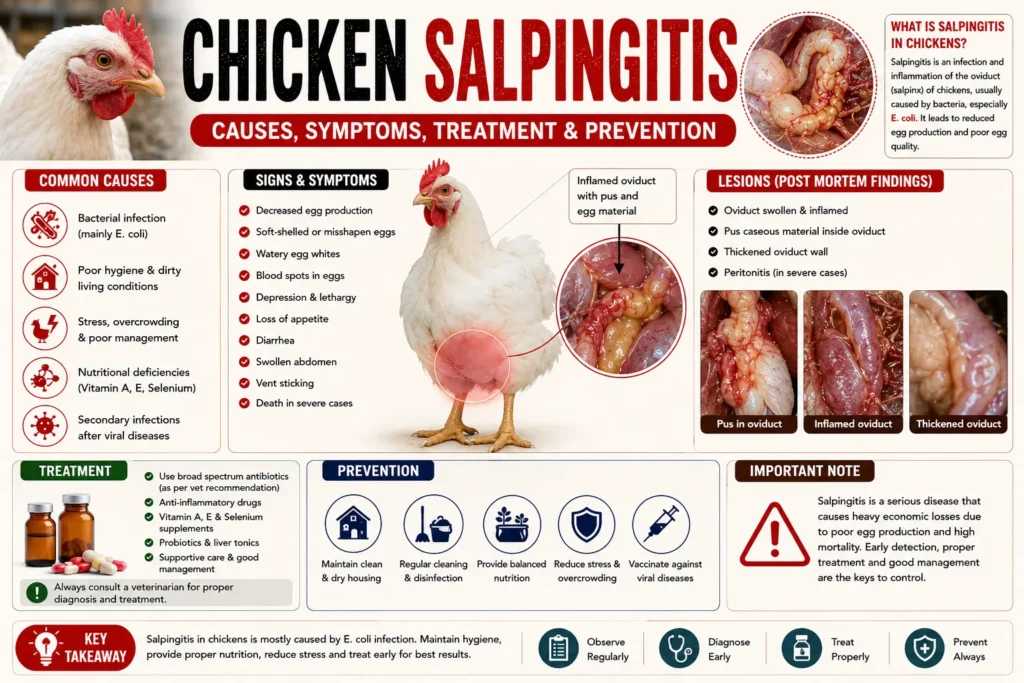
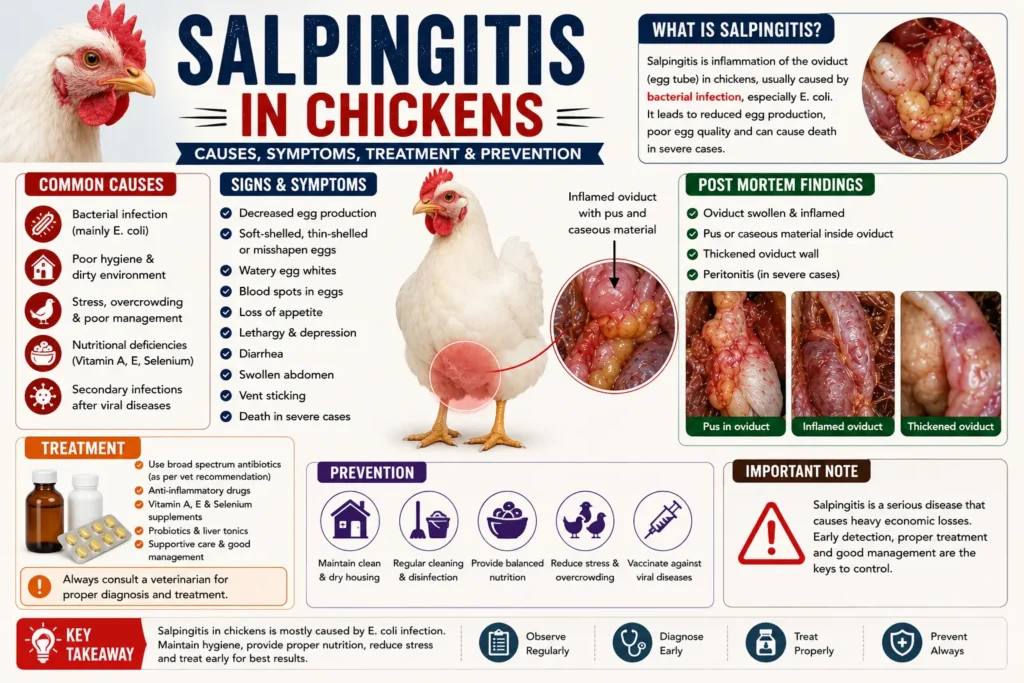
If your hen suddenly stops laying, develops a swollen abdomen, passes a lash egg, or seems unusually lethargic, salpingitis in chickens may be the underlying cause. This reproductive disease affects the oviduct—the tube responsible for producing and transporting eggs—and can lead to serious health complications if left untreated.
Salpingitis is one of the most common reproductive disorders in laying hens. It affects backyard chickens, commercial flocks, breeding birds, and pet hens worldwide. Understanding the warning signs, causes, treatment options, and prevention strategies can help poultry keepers recognize problems early and improve outcomes for affected birds.
Table of Contents
Quick Answer: What Is Salpingitis in Chickens?
Quick Answer
Salpingitis in chickens is inflammation and often infection of the oviduct, the reproductive tube that forms and transports eggs. It is commonly caused by bacterial infections such as E. coli and may result in lash eggs, reduced egg production, abdominal swelling, illness, and in severe cases, death.
Salpingitis in Chickens: Understanding the Disease
The oviduct is one of the most important organs in a laying hen.
A normal oviduct:
- Receives the yolk from the ovary
- Adds egg white (albumen)
- Forms membranes
- Produces the eggshell
- Moves the egg toward the vent
When inflammation develops, these functions become disrupted.
What Happens During Salpingitis?
The inflamed oviduct may:
- Fill with inflammatory material
- Accumulate pus
- Develop bacterial infection
- Produce abnormal eggs
- Form lash eggs
- Stop functioning normally
As inflammation worsens, the disease can spread beyond the reproductive tract and affect the hen’s overall health.
Read More: https://lashegg.com/lash-egg-frequently-asked-questions/
Why Salpingitis Is a Serious Problem
Many poultry owners assume reproductive issues affect only egg production.
In reality, severe chicken salpingitis can impact:
- Appetite
- Mobility
- Breathing
- Body condition
- Quality of life
- Survival
Some hens show only mild symptoms initially, while others become seriously ill in a short period.
Anatomy of the Chicken Reproductive Tract
Understanding anatomy helps explain how the disease develops.
Key Reproductive Structures
| Structure | Function |
| Ovary | Produces yolks |
| Infundibulum | Captures yolk |
| Magnum | Adds egg white |
| Isthmus | Forms membranes |
| Shell gland | Produces shell |
| Vagina | Expels egg |
The oviduct includes all sections between the ovary and vent.
When infection enters any portion of this system, inflammation may develop.
Causes of Salpingitis in Chickens
Several factors can trigger disease.
Bacterial Infection
The most common cause is bacterial invasion of the oviduct.
Common bacteria include:
- Escherichia coli (E. coli)
- Salmonella species
- Pasteurella multocida
- Mycoplasma gallisepticum
- Staphylococcus species
These organisms may enter through the vent or spread from other parts of the body.
Ascending Infection
Bacteria sometimes travel upward from the vent into the reproductive tract.
Poor hygiene can increase this risk.
Respiratory Disease
Certain respiratory infections can spread through the bloodstream and affect reproductive organs.
Egg Binding and Trauma
Physical injury to the oviduct may increase susceptibility to infection.
Internal Laying
Improper egg formation can contribute to inflammation and secondary infection.
Age-Related Changes
Older hens often have a higher risk of reproductive disease.
Risk Factors for Chicken Salpingitis
Certain conditions increase susceptibility.
Environmental Factors
- Dirty nesting boxes
- Wet litter
- Poor ventilation
- Overcrowding
- High ammonia levels
Bird-Related Factors
- Advanced age
- Obesity
- High egg production
- Previous reproductive disease
- Compromised immune system
Management Factors
- Stress
- Nutritional deficiencies
- Poor biosecurity
- Inadequate sanitation
Symptoms of Salpingitis in Chickens
Symptoms vary depending on disease severity.
Early Symptoms
| Symptom | Commonality |
| Reduced laying | Very common |
| Misshapen eggs | Common |
| Soft-shelled eggs | Common |
| Mild lethargy | Common |
| Reduced appetite | Common |
Advanced Symptoms
As disease progresses, symptoms may become more noticeable.
- Weight loss
- Swollen abdomen
- Penguin stance
- Labored breathing
- Pale comb
- Weakness
- Vent discharge
- Dirty feathers around the vent
H3: Salpingitis in Chickens and Lash Eggs
One of the strongest associations in poultry medicine is the connection between salpingitis in chickens and lash eggs.
When infection and inflammation occur inside the oviduct, the body produces:
- Fibrin
- Pus
- Blood
- Cellular debris
- Inflammatory tissue
These materials may compress together into a mass known as a lash egg.
Many backyard chicken owners first discover reproductive disease after finding one.
What Does a Chicken With Salpingitis Look Like?
Affected hens often appear:
- Tired
- Fluffed up
- Less active
- Thin or losing weight
- Reluctant to move
In severe cases, they may stand upright in a characteristic “penguin posture” caused by abdominal discomfort.
Stages of Disease Progression
Stage 1: Early Inflammation
Symptoms are often subtle.
Egg production may decline slightly.
Stage 2: Active Infection
Inflammatory material accumulates.
Abnormal eggs become more common.
Stage 3: Chronic Disease
The oviduct becomes heavily damaged.
Lash eggs may occur.
Stage 4: Systemic Illness
The infection may affect other body systems.
The hen becomes noticeably sick.
How Veterinarians Diagnose Salpingitis
Diagnosis requires evaluation of the bird, not just the symptoms.
Diagnostic Methods
| Diagnostic Tool | Purpose |
| Physical examination | Assess overall health |
| Palpation | Detect swelling |
| Ultrasound | Examine reproductive tract |
| X-rays | Identify internal abnormalities |
| Blood testing | Evaluate health status |
| Bacterial culture | Identify pathogens |
| Necropsy | Confirm diagnosis |
Conditions Often Confused With Salpingitis
Several disorders produce similar symptoms.
Differential Diagnosis Table
| Condition | Similar Symptoms |
| Egg binding | Difficulty laying |
| Internal laying | Abdominal swelling |
| Egg yolk peritonitis | Lethargy and swelling |
| Reproductive tumors | Reduced laying |
| Vent prolapse | Reproductive abnormalities |
Accurate diagnosis is important because treatment approaches differ.
Treatment for Salpingitis in Chickens
Treatment depends on severity and underlying cause.
Veterinary Treatment Options
A veterinarian may recommend:
- Antibiotics
- Anti-inflammatory medications
- Supportive care
- Pain management
- Hormonal suppression
- Fluid therapy
Important Consideration
Not every hen responds to treatment.
The outcome depends on:
- Disease stage
- Age
- Overall health
- Extent of damage
Can Salpingitis Be Treated at Home?
Home care can support recovery but cannot replace diagnosis.
Supportive Care Measures
Provide:
- Fresh water
- Balanced nutrition
- Clean housing
- Reduced stress
- Comfortable temperatures
Expert Tip
Expert Tip
Keeping detailed notes on egg production, appetite, weight, and behavior can help veterinarians identify changes that might otherwise go unnoticed.
Recovery Expectations
Recovery Factors
| Factor | Better Outcome | Poorer Outcome |
| Disease stage | Early | Advanced |
| Appetite | Normal | Poor |
| Activity | Active | Weak |
| Weight | Stable | Losing weight |
| Frequency of lash eggs | Rare | Repeated |
Some hens recover and continue laying.
Others survive but never return to normal egg production.
Can Chickens Die From Salpingitis?
Unfortunately, yes.
Severe infection can lead to:
- Systemic illness
- Organ damage
- Chronic pain
- Death
Early recognition greatly improves the chance of successful management.
Is Salpingitis Contagious?
This question appears frequently in poultry communities.
Direct vs Indirect Spread
The condition itself is not typically considered contagious.
However, infectious organisms involved may spread through:
- Contaminated equipment
- Water
- Droppings
- Poor sanitation
Good flock management reduces risk.
Preventing Salpingitis in Chickens
Prevention focuses on reducing infection risk.
Improve Coop Hygiene
- Clean nesting boxes regularly.
- Replace wet bedding.
- Improve ventilation.
- Remove manure buildup.
Optimize Nutrition
Provide:
- High-quality layer feed
- Adequate calcium
- Clean water
- Proper vitamin balance
Maintain Healthy Body Weight
Obesity can increase reproductive problems.
Reduce Stress
Stress weakens immune function and increases disease susceptibility.
Biosecurity Measures
Simple biosecurity steps make a significant difference.
Recommended Practices
- Quarantine new birds.
- Limit visitor access.
- Control rodents.
- Clean feeders regularly.
- Disinfect equipment.
- Monitor flock health.
Common Mistakes Poultry Owners Make
Common Mistakes
- Ignoring early symptoms.
- Assuming abnormal eggs are harmless.
- Delaying veterinary care.
- Treating without diagnosis.
- Overlooking subtle changes in laying patterns.
Did You Know?
Did You Know?
A hen can develop significant reproductive tract disease before showing obvious outward signs. Reduced egg production is often one of the earliest clues.
Warning Signs That Require Immediate Attention
Warning
Seek veterinary care immediately if a hen:
- Stops eating
- Has severe abdominal swelling
- Struggles to breathe
- Cannot stand normally
- Produces repeated lash eggs
- Appears weak or collapsed
When to Call a Vet
When to Call a Vet
Contact a veterinarian if:
- Egg production suddenly drops.
- A lash egg is found.
- Weight loss occurs.
- The abdomen enlarges.
- The hen becomes lethargic.
- Reproductive abnormalities persist.
Early intervention offers the best chance of successful treatment.
What Veterinary Research Says
Educational materials from the USDA, AVMA, Merck Veterinary Manual, MSD Veterinary Manual, university extension poultry programs, and peer-reviewed poultry medicine research consistently identify bacterial infection and reproductive tract inflammation as major contributors to salpingitis.
These organizations emphasize accurate diagnosis, supportive care, and prevention through proper flock management.
Internal Links for LashEgg.com
Suggested internal links include:
- What Is a Lash Egg?
- Lash Egg vs Normal Egg
- Symptoms of a Lash Egg
- Internal Laying in Chickens
- Egg Yolk Peritonitis Explained
- Can Chickens Recover From Lash Eggs?
- What Do You Do If You Find a Lash Egg?
- Chicken Reproductive Disorders Guide
- Signs of a Sick Hen
- Best Diet for Laying Hens
- Preventing Reproductive Disease
- When to Call a Poultry Veterinarian
Final Thoughts
Salpingitis in chickens is one of the most significant reproductive diseases affecting laying hens. While it often begins with subtle symptoms such as reduced egg production or abnormal eggs, it can progress to serious illness if left unmanaged.
Recognizing early warning signs, maintaining excellent flock hygiene, supporting overall health, and seeking veterinary guidance when symptoms appear are the most effective ways to protect your birds. Because salpingitis in chickens is closely linked to lash eggs, abdominal swelling, and reproductive dysfunction, careful monitoring can help detect problems before they become severe.
FAQ
What is salpingitis in chickens?
Salpingitis in chickens is inflammation and often infection of the oviduct, the reproductive tract responsible for egg formation and transport.
What causes chicken salpingitis?
Common causes include bacterial infections, internal laying, reproductive tract injury, poor hygiene, and age-related reproductive changes.
Is salpingitis in chickens contagious?
The disease itself is not usually considered contagious, but bacteria associated with the condition may spread under poor sanitary conditions.
Can salpingitis cause lash eggs?
Yes. Salpingitis is one of the leading causes of lash egg formation in laying hens.
Can chickens recover from salpingitis?
Some hens recover, especially when diagnosed and treated early. Advanced cases often have a poorer prognosis.
How is salpingitis chicken disease diagnosed?
Veterinarians may use physical examinations, imaging, laboratory testing, and bacterial cultures to diagnose the condition.
What are the first signs of salpingitis?
Reduced egg production, soft-shelled eggs, lethargy, mild appetite loss, and abnormal eggs are among the earliest signs.
When should I call a veterinarian?
Seek veterinary assistance if your hen develops abdominal swelling, repeated lash eggs, weight loss, breathing difficulty, or severe lethargy.