Lash Egg vs Egg Binding: Why Telling Them Apart Matters

A hen straining, hunched, or acting “off” near the nesting box sends most keepers straight to Google, and the lash egg vs egg binding question is one of the first things people search. Both involve the reproductive tract. Both can look serious. But one is a slow-building infection, and the other can turn life-threatening within a day or two.
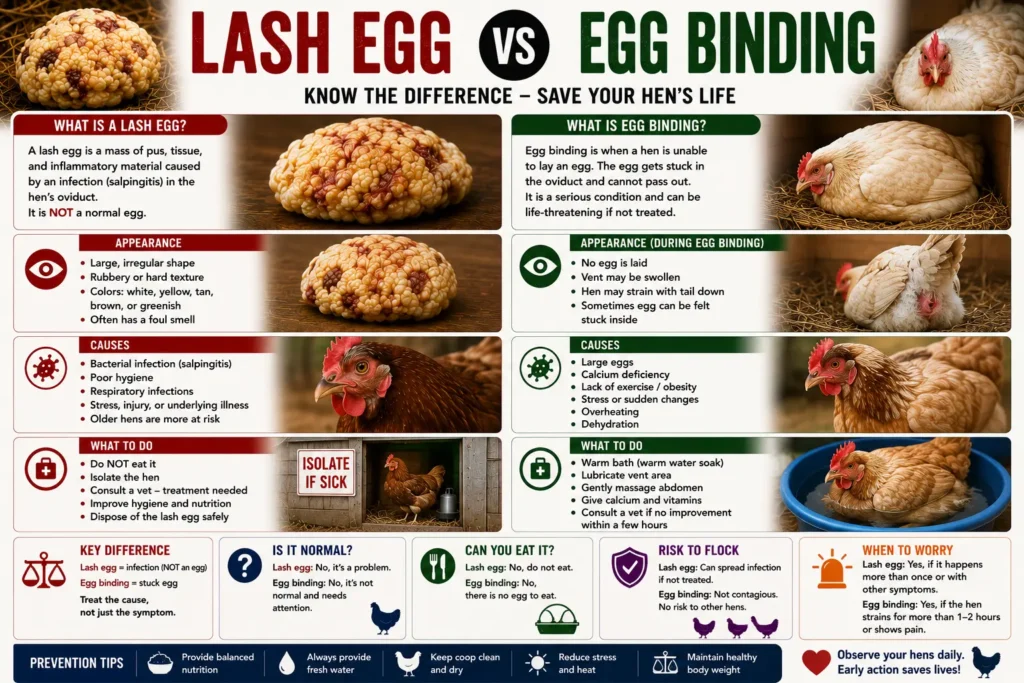
A lash egg is a mass of infected tissue passed from an inflamed oviduct. Egg binding is when a hen physically cannot pass an egg that’s stuck inside her. Knowing which one you’re dealing with changes how fast you need to act.
Table of Contents
What Is Egg Binding?
Egg binding happens when an egg gets stuck somewhere along a hen’s reproductive tract and she can’t push it out on her own. It’s considered a true emergency in backyard poultry medicine, because a hen that can’t pass a stuck egg can decline rapidly.
According to the Merck Veterinary Manual, egg binding is more common in hens laying their first eggs, hens with calcium deficiencies, overweight hens, and hens laying unusually large or misshapen eggs.
What Causes Egg Binding?
- Calcium deficiency, which weakens the muscles needed to push an egg out
- Obesity, which crowds the reproductive tract and reduces muscle tone
- Laying too early, before a young hen’s body is fully ready
- An oversized or double-yolked egg that’s simply too large to pass easily
- Dehydration or poor overall nutrition
- Underlying illness, including reproductive tract infections that affect muscle function
What Is a Lash Egg?
A lash egg is where the lash egg vs egg binding comparison shifts to a completely different problem. It isn’t a stuck egg at all — it’s a mass of pus, tissue debris, and inflammatory material that a hen expels from the vent.
Vets call this material caseous exudate, a cheese-like discharge produced when the body walls off infection. It’s a classic sign of salpingitis, an infection or inflammation of the oviduct, and one of the more common reproductive illnesses in laying hens.
Why These Two Conditions Get Confused
Both egg binding and a lash egg involve straining, discomfort, and something unusual near the vent. That surface overlap is exactly why people search “lash egg vs egg binding” instead of assuming one or the other right away. The real difference shows up in what actually comes out, or fails to come out, of the hen.
Quick Answer: Egg binding means a hen has a stuck egg and cannot pass it — a true emergency. A lash egg means a hen has already passed infected tissue from an oviduct infection — serious, but not the same immediate life-threatening emergency as a stuck egg.
Read More: https://lashegg.com/lash-egg-vs-soft-shell-egg/
Lash Egg vs Egg Binding: Side-by-Side Comparison
| Feature | Egg Binding | Lash Egg |
| What’s happening | A real egg is stuck and cannot be passed | Infected tissue has already been expelled |
| Urgency level | Emergency — can be fatal within 24–48 hours | Serious, but usually not an immediate life-threat |
| Straining | Frequent, often unproductive straining | May strain briefly while passing the mass |
| Vent appearance | Often nothing visible, or a bulge felt internally | A rubbery or waxy mass is visibly passed |
| Droppings | Often reduced or absent | Usually normal, aside from the mass itself |
| Underlying cause | Calcium deficiency, obesity, oversized egg | Bacterial or viral infection of the oviduct |
| Immediate action needed | Yes, same-day vet care if not resolved quickly at home | Vet visit recommended, but less time-critical |
Recognizing the Symptoms of Each
Signs of Egg Binding
- Repeated straining with nothing produced
- A hunched, penguin-like posture
- Lethargy or reluctance to move
- Pale or dull comb color
- Tail pumping or wagging without laying
- Loss of appetite
- A firm swelling felt in the lower abdomen
Signs Following a Lash Egg
- Reduced appetite or picky eating
- A pale or droopy comb
- General lethargy
- A drop in overall egg production
- A foul odor near the vent area
- A swollen or firm abdomen in more advanced cases
When to Call a Vet
Egg binding is one of the few backyard chicken issues that qualifies as a true emergency. Call a vet immediately, or seek emergency poultry care, if a hen is straining without producing anything, seems weak, or hasn’t improved within a few hours of basic home care. For a lash egg, a vet visit is strongly recommended within a day or two, sooner if the hen shows lethargy, appetite loss, or a swollen abdomen.
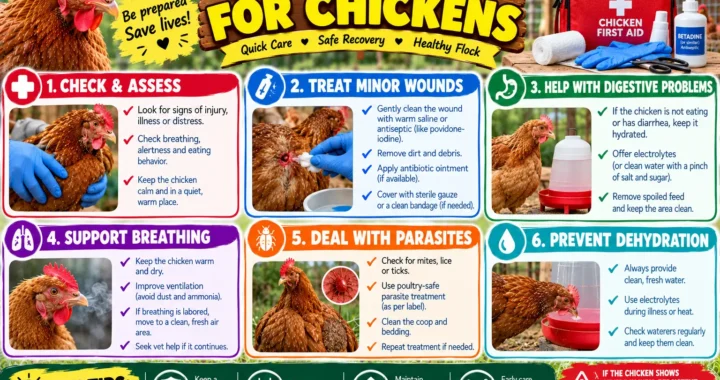
What to Do If You Suspect Egg Binding
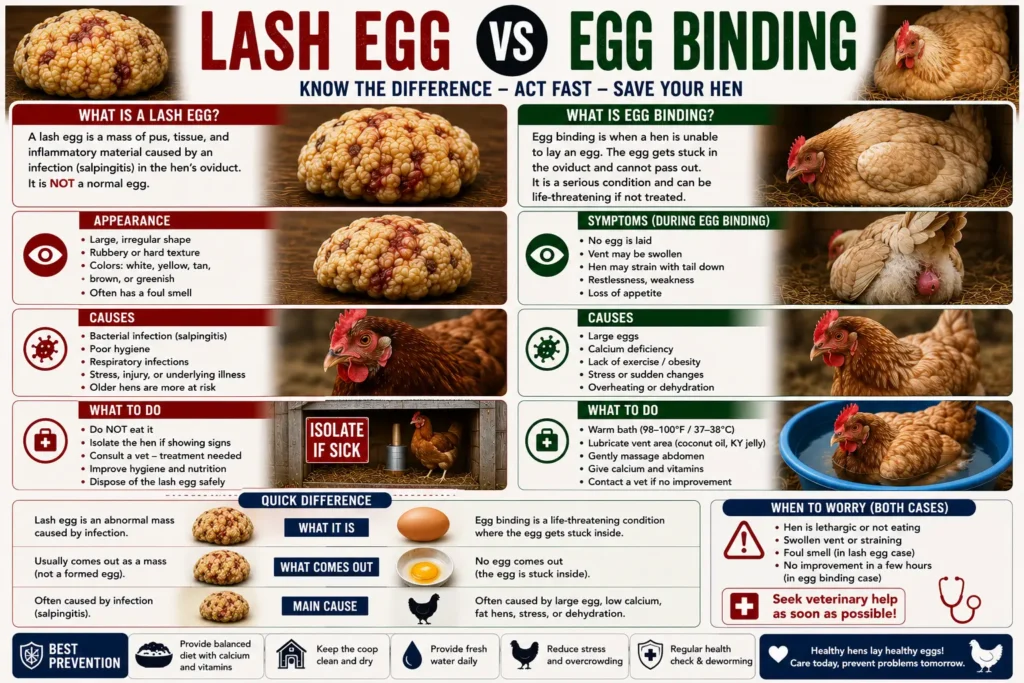
- Move the hen to a warm, quiet space, away from the rest of the flock.
- Give her a warm bath in shallow water for 15–20 minutes to help relax the muscles around the vent.
- Apply a water-based lubricant around the vent opening gently, without forcing anything inside.
- Offer calcium, such as a calcium supplement recommended by a vet, since low calcium is a common underlying cause.
- Keep her warm and calm after the bath, in a dim, low-stress area.
- Call a vet immediately if she hasn’t passed the egg within an hour or two of these steps, or if she seems to be declining.
Warning: Never try to physically pull an egg out or insert anything rigid into the vent. This can cause the egg to break internally or seriously injure the hen. Home care is meant to support her, not replace professional treatment for a hen that isn’t improving.
What to Do If You Find a Lash Egg
- Remove and safely dispose of the mass, away from pets and other animals.
- Observe the hen closely for the next 24–48 hours.
- Note any other symptoms, including appetite, comb color, and energy level.
- Isolate the hen if she’s showing signs of illness, to reduce stress and monitor her more closely.
- Schedule a vet visit, since salpingitis rarely improves without treatment.
Expert Tip: Keep a simple log of any hen that shows straining, unusual eggs, or a lash egg, including the date and any other symptoms. This kind of history genuinely helps a vet arrive at a diagnosis faster.
Common Mistakes Chicken Keepers Make
- Waiting too long with suspected egg binding. This condition can turn fatal quickly, so hours matter, not days.
- Assuming a lash egg is the same emergency as egg binding. It’s serious, but it doesn’t carry the same immediate life-threatening timeline.
- Trying to manually extract a stuck egg. This risks breaking the egg internally, which can lead to serious infection or injury.
- Ignoring repeated straining because “she seems fine otherwise.” Early, subtle straining is often the first sign of egg binding.
Did You Know?
A hen can appear almost normal right up until egg binding becomes critical, since chickens are prey animals that instinctively hide signs of weakness until they can no longer manage. That’s part of why any unusual straining is worth taking seriously right away, rather than waiting to see if it resolves.
Recovery and Outlook
| Scenario | Typical Outlook |
| Egg binding caught early, resolved with home care and warmth | Good, often resolves within hours |
| Egg binding not resolved within a few hours | Requires urgent veterinary intervention; risk increases with time |
| Single lash egg, hen otherwise active | Vet exam recommended; often responds well if treated early |
| Repeated lash eggs or visible illness | Suggests chronic salpingitis; needs ongoing veterinary management |
A vet may need to manually assist an egg-bound hen, provide calcium or hormone therapy, or in severe cases perform surgery. For lash eggs, a vet can evaluate the hen for antibiotics or supportive care depending on the underlying cause. Neither condition has a reliable purely at-home cure, which is why professional care matters once symptoms go beyond the basics.
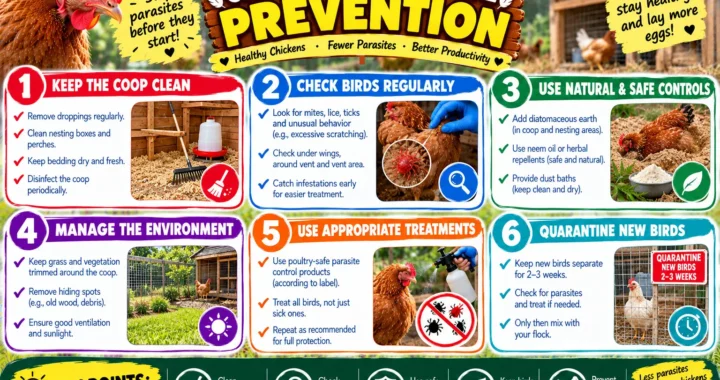
Preventing Egg Binding and Lash Eggs
- Provide free-choice calcium, such as crushed oyster shell, alongside a complete layer feed
- Keep hens at a healthy weight through balanced feeding and enough space to move
- Reduce heat and social stress, both of which affect reproductive health
- Watch young hens closely as they start laying, since first eggs carry higher binding risk
- Ask your vet about infectious bronchitis vaccination if it’s a known regional risk, since it’s linked to both reproductive tract damage and lash eggs
- Inspect the coop daily so you catch straining, unusual eggs, or a lash egg as early as possible
- Separate any hen showing symptoms until you can get a vet’s input
Frequently Asked Questions
What is the difference between lash egg vs egg binding? Egg binding means a hen has a real egg stuck inside her that she cannot pass, and it’s a true emergency. A lash egg means a hen has already expelled a mass of infected tissue from an oviduct infection, which is serious but typically not as immediately life-threatening.
Can egg binding and a lash egg happen at the same time? It’s possible, especially if chronic salpingitis has damaged the oviduct enough to interfere with normal egg passage. A vet can help determine whether both issues are present.
How long can a hen survive with egg binding? Without treatment, egg binding can become fatal within roughly 24 to 48 hours, which is why prompt home care and quick veterinary follow-up matter so much.
Does a lash egg mean my hen is egg bound? Not necessarily. A lash egg is a sign of infection, not a stuck egg. However, chronic oviduct damage from repeated infections can sometimes contribute to future egg-passing problems.
Can I treat egg binding at home without a vet? Mild cases sometimes resolve with warmth, a warm bath, and gentle lubrication. If the hen doesn’t improve within a couple of hours, or seems to be declining, emergency veterinary care is necessary.
Is a lash egg always a sign of a serious problem? Yes, in the sense that it always points to some degree of oviduct infection or inflammation. The severity varies, but it’s never something to dismiss as normal.
What should I feed my hens to help prevent both conditions? A complete layer feed with free-choice calcium, like crushed oyster shell, supports both healthy shell formation and overall reproductive health, lowering the risk of both egg binding and reproductive infections over time.
Final Thoughts
Understanding lash egg vs egg binding comes down to one key difference: whether an egg is stuck or has already passed as infected tissue. Egg binding calls for fast action, since a hen’s condition can worsen within hours. A lash egg calls for close monitoring and a vet visit, since it points to an infection that rarely clears on its own. Either way, don’t wait out unusual straining, discharge, or behavior changes in your flock. Quick attention and professional veterinary care, when needed, give your hens the best chance at a full recovery.