Lash Egg vs Salpingitis: Understanding the Real Connection

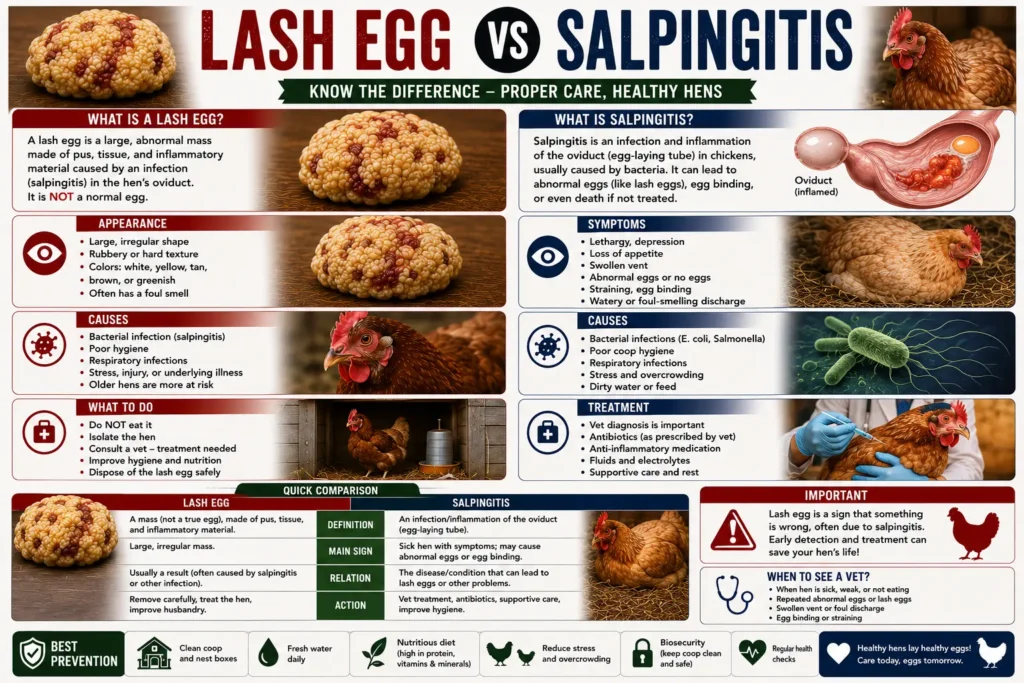
Search “lash egg vs salpingitis” and you might expect two separate conditions to compare, the way you’d compare two different illnesses. That’s not quite what’s happening here. A lash egg isn’t a rival condition to salpingitis — it’s one of the clearest visible signs that salpingitis is already present.
Salpingitis is the underlying infection or inflammation of a hen’s oviduct. A lash egg is the physical evidence that shows up when that infection produces enough inflammatory material for the hen’s body to expel. Understanding how these two connect helps you respond the right way instead of treating them as unrelated mysteries.
Table of Contents
What Is Salpingitis in Chickens?
Salpingitis is inflammation or infection of the oviduct, the tube responsible for forming and moving eggs through a hen’s reproductive tract. According to the Merck Veterinary Manual, it’s one of the most significant causes of reproductive illness and mortality in laying hens, both in commercial flocks and backyard settings.
The oviduct can become inflamed for several reasons, and once it is, the tissue often produces thick, cheese-like material called caseous exudate as part of the body’s attempt to wall off the infection.
What Causes Salpingitis?
- Bacterial infection, most often E. coli, along with Salmonella and other bacteria in some cases
- Infectious bronchitis virus (IBV), which can damage the oviduct lining and set the stage for secondary infection
- Egg drop syndrome and other reproductive viruses
- Chronic stress or poor nutrition, both of which weaken immune defenses
- Age, since older hens with irregular laying cycles face higher risk of reproductive tract disease
What Is a Lash Egg, Exactly?
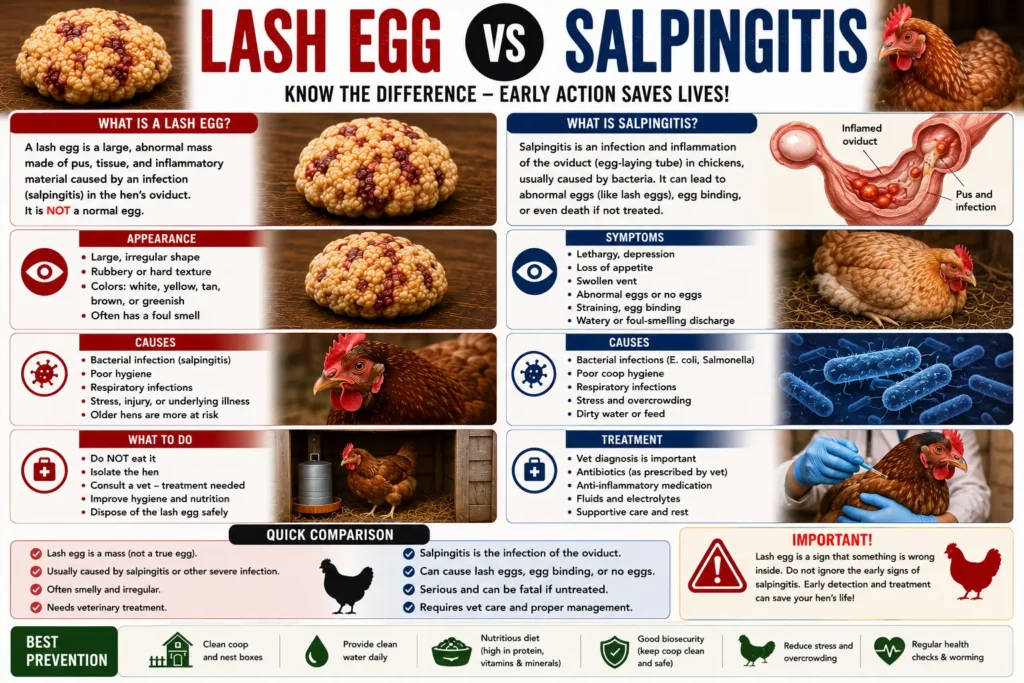
A lash egg is the mass of caseous exudate — that cheese-like inflammatory material — that a hen with salpingitis eventually passes through the vent. It’s often layered and rounded, which is why it can resemble a soft-shelled or malformed egg from the outside.
Cut one open, though, and there’s no yolk. Instead, you’ll typically find rings of solid, waxy, yellowish or tan material, often with a foul or sulfur-like smell.
Read More:https://lashegg.com/lash-egg-vs-egg-binding/
So Is a Lash Egg the Same Thing as Salpingitis?
Not exactly, and that distinction matters. Salpingitis is the disease process happening inside the hen. A lash egg is the visible output of that disease process. You can think of it the way a cough relates to a respiratory infection: the cough isn’t the illness itself, but it’s strong evidence the illness is present.
Quick Answer: Salpingitis is the underlying oviduct infection or inflammation. A lash egg is the physical mass of infected material that a hen with salpingitis passes. Finding a lash egg means salpingitis is very likely already happening.
Lash Egg vs Salpingitis: How the Two Relate
| Aspect | Salpingitis | Lash Egg |
| What it is | The underlying infection or inflammation of the oviduct | The visible mass of tissue and discharge produced by that infection |
| Can you see it? | Not directly; it happens internally | Yes, it’s the physical evidence passed through the vent |
| Does one always mean the other? | A hen can have salpingitis without visibly passing a lash egg yet | A lash egg strongly suggests active or recent salpingitis |
| Diagnosis | Often requires a vet exam, sometimes imaging or lab work | Can sometimes be suspected just by finding and examining the mass |
| Treatment | May include antibiotics, supportive care, or in severe cases, surgery or euthanasia | The mass itself isn’t treated; the underlying salpingitis is |
Can a Hen Have Salpingitis Without Ever Producing a Lash Egg?
Yes. Salpingitis can be present and progressing internally for a while before a hen ever passes a visible lash egg, if she passes one at all. Some hens show only subtle signs, like reduced laying or mild lethargy, without a lash egg ever appearing.
This is part of why a lash egg is useful information but not the whole picture. Its absence doesn’t rule out an oviduct infection, and its presence confirms one is very likely underway.
Does Every Lash Egg Mean Advanced Salpingitis?
Not necessarily advanced, but it does mean active. A single lash egg can appear relatively early in the disease process. Repeated lash eggs over time usually point to a more chronic or advanced case that needs closer veterinary attention.
Symptoms That Point to Salpingitis
Beyond a lash egg itself, watch for these signs in your flock:
- A drop in egg-laying frequency or total stopped laying
- A pale, dull, or droopy comb
- Lethargy or reduced activity
- Reduced appetite
- A swollen or firm lower abdomen
- A hunched or “penguin” posture
- Foul odor near the vent
When to Call a Vet
Contact a poultry-experienced veterinarian if a hen passes a lash egg, shows a swollen abdomen, or has stopped laying with no clear explanation. Early veterinary evaluation gives the best chance of managing salpingitis before it becomes chronic or leads to more serious complications.
How Vets Diagnose Salpingitis
- Physical exam, checking the abdomen, comb condition, and overall body weight
- History review, including recent laying patterns and any lash eggs found
- Imaging, such as radiographs or ultrasound in some cases, to assess the reproductive tract
- Lab testing, which may include bloodwork or culture of any discharge to identify the specific bacteria involved
- Response to treatment, since improvement after antibiotics can help confirm a bacterial cause
Expert Tip: If you find a lash egg, take a photo before disposal and note the hen’s recent behavior, appetite, and laying pattern. This information helps a vet build a faster, more accurate picture of what’s happening internally.
Treatment Options for Salpingitis
| Treatment Approach | What It Involves | When It’s Used |
| Antibiotics | Prescribed based on suspected or confirmed bacterial cause | Early to moderate cases with a likely bacterial component |
| Supportive care | Fluids, nutrition support, stress reduction | Alongside other treatments, in most cases |
| Hormonal or dietary adjustment | Managing laying frequency to reduce reproductive strain | Hens prone to repeated reproductive issues |
| Surgery | Removal of the oviduct in select cases | Severe, recurrent, or non-responsive cases, decided with a vet |
| Euthanasia | A humane option discussed directly with a vet | Advanced, chronic cases with poor quality of life |
There’s no reliable home remedy for salpingitis. Any treatment decision should come from a vet familiar with poultry medicine, since the right approach depends heavily on how advanced the infection is and the hen’s overall condition.
Common Mistakes Chicken Keepers Make
- Assuming a lash egg is a one-time fluke. It almost always reflects an active infection that needs follow-up, not a random occurrence.
- Waiting to see if salpingitis “clears up” on its own. It rarely does without treatment, and delaying often allows the infection to progress.
- Not checking the rest of the flock for a shared underlying cause, like infectious bronchitis, when one hen shows signs of salpingitis.
- Feeding a lash egg to pets or other animals, thinking it’s just an odd-looking egg. It’s infected material and should be disposed of, not fed to anyone.
Did You Know?
A hen’s oviduct can develop salpingitis from a respiratory infection she had weeks or even months earlier, since infectious bronchitis virus can damage reproductive tissue well after the initial respiratory symptoms have resolved. That delayed connection is one reason salpingitis can seem to appear “out of nowhere.”
Prevention: Reducing the Risk of Salpingitis and Lash Eggs
- Vaccinate against infectious bronchitis where it’s a known regional risk, based on your vet’s guidance
- Feed a complete, age-appropriate layer diet to support immune and reproductive health
- Reduce flock stress through consistent routines, adequate space, and stable social groups
- Maintain good coop hygiene to lower overall bacterial exposure
- Monitor older hens more closely, since age is a known risk factor for reproductive tract disease
- Isolate any hen showing symptoms promptly, both for her care and to observe whether others in the flock are affected
Frequently Asked Questions
What is the difference between lash egg vs salpingitis? Salpingitis is the underlying infection or inflammation of the oviduct. A lash egg is the visible mass of infected tissue that a hen with salpingitis eventually passes. They’re closely connected rather than separate conditions.
Can a hen recover fully from salpingitis after passing a lash egg? Some hens do recover well, especially with early veterinary treatment. Others develop a chronic pattern of repeated lash eggs, which usually points to a more advanced or ongoing infection.
Is salpingitis contagious to other hens? Salpingitis itself generally isn’t directly contagious, but an underlying cause like infectious bronchitis virus can spread through a flock, meaning multiple hens could develop reproductive issues from the same source.
Does a lash egg always mean my hen needs antibiotics? Not automatically, but a vet exam is the only reliable way to know. Some cases respond well to antibiotics, while others need a broader treatment plan depending on the cause and severity.
Can diet prevent salpingitis? Good nutrition supports immune function and can lower overall risk, but it can’t guarantee prevention, since bacterial and viral causes play a major role as well.
How soon after salpingitis develops does a lash egg usually appear? This varies significantly between hens. Some pass a lash egg relatively early, while others show only subtle symptoms for a while before any visible mass appears.
Should I cull a hen that produces a lash egg? Not automatically. Many hens improve with proper veterinary treatment. Culling is sometimes discussed for chronic, non-responsive cases, but that decision should be made with a vet’s guidance, based on the hen’s specific condition and quality of life.
Final Thoughts
Framing this as lash egg vs salpingitis can make it sound like a competition between two separate problems, but the real relationship is much simpler: salpingitis is the disease, and a lash egg is the clearest sign that it’s happening. If you find one in your coop, don’t treat it as a strange, isolated event. Watch your hen closely, note any other symptoms, and get a veterinary opinion. Catching salpingitis early gives your flock the best shot at a full recovery.