Molting Chickens and Egg Production: Why Laying Stops and What Happens Next

If you keep backyard hens, you’ve probably noticed feathers piling up in the coop and an empty egg basket at the same time. Molting chickens and egg production have a direct, well-documented relationship: when a hen molts, her body redirects energy away from egg-laying and toward growing new feathers. This is normal, temporary, and actually a sign of a healthy bird cycling through her natural rhythm.
Quick Answer: Molting chickens stop or slow egg production because feather regrowth requires the same protein and energy reserves that egg-laying does. Most hens pause laying for 4 to 12 weeks during a molt, then return to normal or even improved production once new feathers finish growing in.
This guide covers why molt happens, how it affects laying, how long it lasts, and what you can do to support your flock through it — plus when a lack of eggs might mean something other than molt.
Table of Contents
What Is Molting in Chickens?
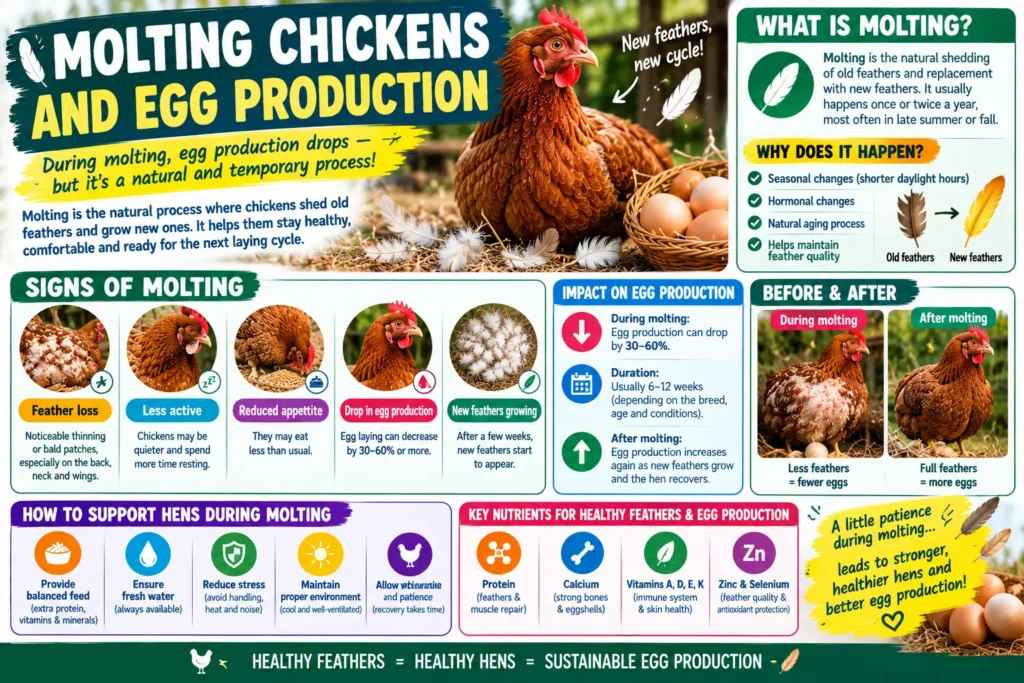
Molting is the natural process where chickens shed old, worn feathers and grow new ones. It typically happens once a year, usually triggered by shortening daylight hours in late summer or fall. Feathers wear out from sun exposure, dust bathing, and daily wear, so replacing them keeps a hen insulated and able to fly or escape predators.
A molt usually starts at the head and neck, then moves down the back, breast, and tail, ending at the wing flight feathers. This pattern is called “top-down molting,” and it’s the order most healthy hens follow.
Why Molting Chickens and Egg Production Are Connected
Feathers are made almost entirely of protein — specifically keratin, the same protein found in hair and nails. Egg production also demands large amounts of protein, since each egg contains yolk, albumen, and a calcium-rich shell built from a hen’s daily nutrient intake.
A hen’s body can’t fully support both processes at once. When she molts, her hormone levels shift: estrogen drops, which slows the reproductive system, while resources are prioritized for feather growth. This is why molting and eggs rarely happen together in the same bird at the same time.
How Molting Affects Egg-Laying Hens
Do Chickens Stop Laying Eggs During Molt?
Most hens stop laying entirely during a heavy molt. Some hens, especially younger birds or those in a light or “soft” molt, may continue laying at a reduced rate instead of stopping completely. Chickens not laying during molt is one of the most common reasons backyard keepers see a sudden drop in the egg basket each fall.
How Long Does Molting Last, and When Will Egg Production Return?
| Molt Type | Duration | Typical Egg Impact |
| Light (soft) molt | 3–6 weeks | Slight drop in laying rate |
| Normal molt | 8–12 weeks | Laying pauses fully or nearly fully |
| Hard molt | 12–16 weeks | Extended pause; heavy feather loss |
| First-year pullets | Often none or very light | Usually keep laying through their first fall |
Recovery time varies by breed, age, and diet. Older hens (3+ years) tend to molt harder and take longer to resume laying than younger birds. Once new feathers finish coming in, egg production typically resumes within 2 to 4 weeks and can even exceed pre-molt levels for a while.
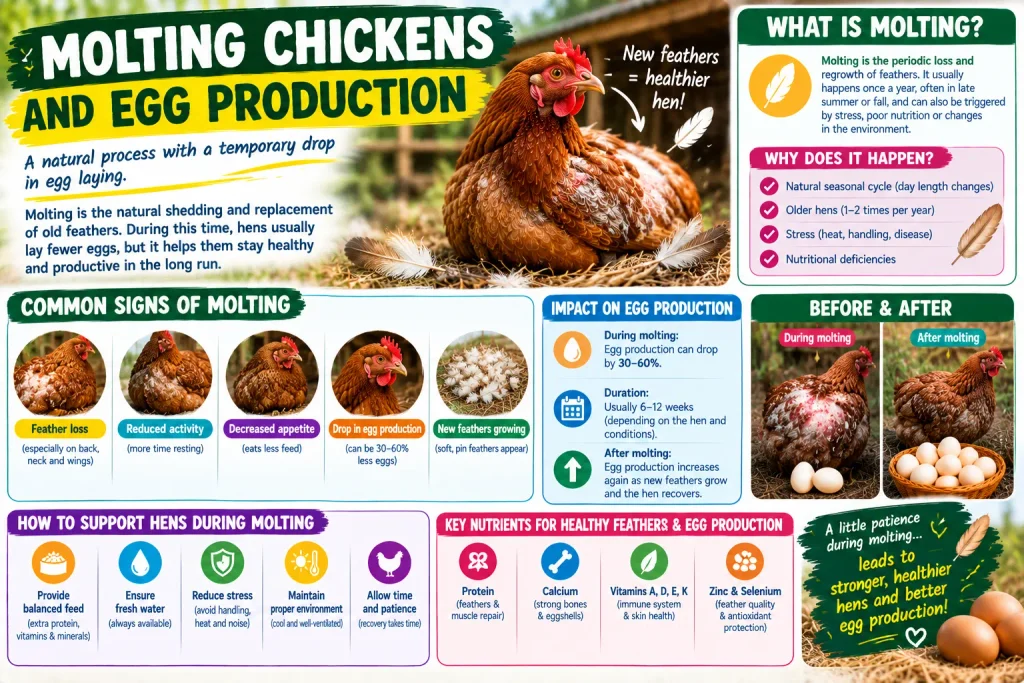
Signs a Hen Is Molting Versus Sick
It helps to tell the difference between normal feather loss and a health problem before assuming it’s “just molt.”
- Molting: Gradual feather loss in a top-down pattern, new pin feathers visible, hen still eats, drinks, and moves normally.
- Illness or parasites: Patchy or bald spots in odd places, skin irritation, lethargy, pale comb, weight loss, or feathers that look chewed rather than shed.
Warning: If a hen shows bald patches only around the vent, back, or neck along with red or scabbed skin, check for mites, lice, or feather-picking from flockmates rather than assuming molt.
Read More: https://lashegg.com/supplements-for-laying-hens/
Why Do Chickens Molt? Common Triggers
- Seasonal daylight change — the most common trigger, usually late summer through fall.
- Age — most hens molt annually starting around 16–18 months old.
- Stress — sudden diet change, extreme heat, predator scares, or a move to a new coop can trigger an early or “stress molt.”
- Broodiness recovery — hens that have been sitting on eggs sometimes molt afterward.
- End of a laying cycle — after months of steady laying, a molt naturally resets the reproductive system.
Did You Know?
A hen is born with roughly 8,500 feathers, and she’ll regrow nearly all of them during a single molt. That feather regrowth alone can use up more protein than laying an egg every day for weeks.
Molt and Eggs: What Keepers Commonly Get Wrong
Common Mistakes
- Increasing light artificially during molt to force laying. This can stress hens and interrupt healthy feather regrowth.
- Assuming no eggs means a dead or “spent” hen. Molt is often the real cause, especially in fall.
- Feeding regular layer feed only. Layer feed is lower in protein than what a molting hen needs.
- Culling hens too early. Many keepers give up on a hen mid-molt, not realizing she’ll resume laying once feathers regrow.
- Ignoring calcium needs. Even though she isn’t laying, a hen still needs balanced nutrition to prepare her body for the next cycle.
How to Support Chickens Through Molt for Better Egg Recovery
Nutrition Adjustments
Switching to a higher-protein feed during molt supports both feather regrowth and a faster return to laying.
| Feed Type | Protein % | Best Used For |
| Standard layer feed | 16–18% | Regular laying hens |
| Grower/flock raiser feed | 18–20% | Molting hens, mixed-age flocks |
| High-protein molt supplement | 20–30% | Hard molts, older hens |
Expert Tip: Adding a scoop of black soldier fly larvae, mealworms, or a boiled egg a few times a week gives molting hens an extra protein boost without overhauling their whole diet.
Step-by-Step: Supporting a Molting Flock
- Switch feed to a higher-protein formula as soon as you notice feather loss.
- Reduce stress by keeping the coop calm, avoiding introducing new birds, and limiting handling.
- Check for parasites like mites or lice, which slow recovery and worsen feather loss.
- Keep water and calcium available even though laying has paused, so her body stays ready.
- Watch for the tail feathers growing back in — this usually signals molt is nearing its end.
- Resume regular layer feed gradually once new feathers are mostly grown in and laying restarts.
When to Call a Vet
Most molts need no veterinary care at all. Contact a vet or experienced poultry professional if you notice:
- No eggs for more than 16 weeks with no visible new feather growth
- Signs of illness alongside feather loss (lethargy, discharge, labored breathing)
- Severe weight loss during molt
- Bleeding pin feathers that won’t stop, or open wounds from feather-picking
According to the Merck Veterinary Manual, prolonged production loss without feather regrowth can point to underlying disease, nutritional deficiency, or parasite load rather than a normal seasonal molt, and warrants a closer look by a veterinarian familiar with poultry.
Breed Differences in Molting and Laying Recovery
Some breeds molt faster and resume laying sooner than others. Heritage breeds and older hybrid layers often take longer, while modern high-production hybrids tend to have shorter, lighter molts.
| Breed Type | Typical Molt Length | Laying Recovery |
| Production hybrids (e.g., ISA Brown) | Shorter, lighter | Fast, often within 4–6 weeks |
| Heritage breeds (e.g., Plymouth Rock) | Longer, heavier | Slower, 8–12+ weeks |
| Bantams | Variable | Often quick due to smaller feather mass |
Molting Chickens and Egg Production Through the Seasons
Fall molt is the most common because shortening daylight naturally slows both feather retention and hormone-driven laying. Many keepers notice their whole flock molting within a few weeks of each other in September or October, followed by a slow winter with few eggs until daylight increases again in late winter or spring.
Some keepers choose to use supplemental light in the coop during winter to keep production steady, but this should wait until a molting hen has finished regrowing her feathers — adding light too early can push her system before she’s ready.
People Also Ask
Will my chickens ever lay eggs again after molting? Yes. Molting is temporary. Once feather regrowth finishes, most hens return to normal egg production within a few weeks, sometimes producing even better than before.
Why did my chickens stop laying eggs suddenly in the fall? A sudden drop in fall is most often caused by molt triggered by shorter daylight hours, though stress, illness, or reduced daylight alone (without molt) can also play a role.
How can you tell if a chicken is molting or just losing feathers from stress? Molting follows a predictable top-down pattern with visible pin feathers regrowing. Stress-related or parasite-related feather loss tends to be patchy, localized, and paired with skin irritation or behavior changes.
Do you need to change chicken feed during molt? A higher-protein feed, around 18–20% or more, supports feather regrowth better than standard 16% layer feed and can shorten the time until laying resumes.
Can you speed up a chicken’s molt? You can’t force feathers to grow faster, but good nutrition, low stress, and parasite control help a hen molt as efficiently as her body allows.
5. FAQ
Q: How long does chicken molting last before egg production restarts? A: Most hens go through molting for 8 to 12 weeks, though a light molt can be as short as 3 weeks and a hard molt can stretch past 16 weeks. Egg production usually resumes within a few weeks after new feathers finish growing in.
Q: Is it normal for all my hens to stop laying at once during molt? A: Yes. Since molt is triggered by seasonal daylight changes, hens of similar age often molt around the same time, which can mean a temporary flock-wide drop in eggs.
Q: Should I give molting hens extra protein? A: Yes. Feathers are made of protein, so switching to a feed with 18–20% protein, or adding protein-rich treats, supports faster feather regrowth and a quicker return to laying.
Q: Do young hens (pullets) molt and stop laying in their first year? A: Most pullets skip or have a very light first molt and continue laying through their first fall, since they haven’t built up a full year of worn feathers yet.
Q: What if my chicken hasn’t laid an egg in months and doesn’t look like she’s molting? A: If there’s no visible feather loss or regrowth and laying has stopped for an extended period, this may not be molt-related. Check for illness, parasites, age-related decline, or reproductive issues, and consult a vet or poultry extension service if needed.