What Causes Rubber Eggs in Chickens?

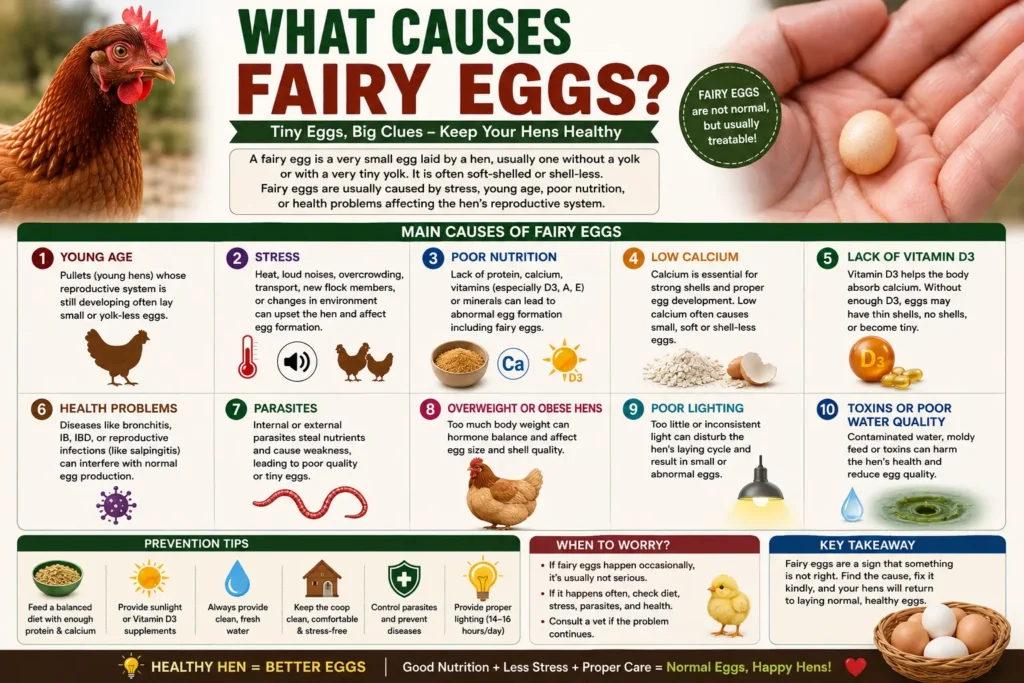
If a hen just laid a soft, bendable egg with no hard shell, you’re probably wondering what causes rubber eggs in the first place. It almost always comes down to one thing: the shell gland didn’t get enough time or enough calcium to build a proper shell before the egg was laid.
That single mechanism can be triggered by several different things — some as simple as a missing calcium supplement, others tied to hormones, heat, age, or illness. This guide sorts every known cause into clear categories, so you can quickly narrow down which one applies to your flock.
Quick Answer
Rubber eggs are caused by an interrupted shell-building process, most often from low calcium, low vitamin D3, stress, or a young or aging reproductive system. Less commonly, an infectious disease is behind it. Sorting causes by category makes it much faster to identify the right fix.
Table of Contents
The Four Categories Behind Every Rubber Egg
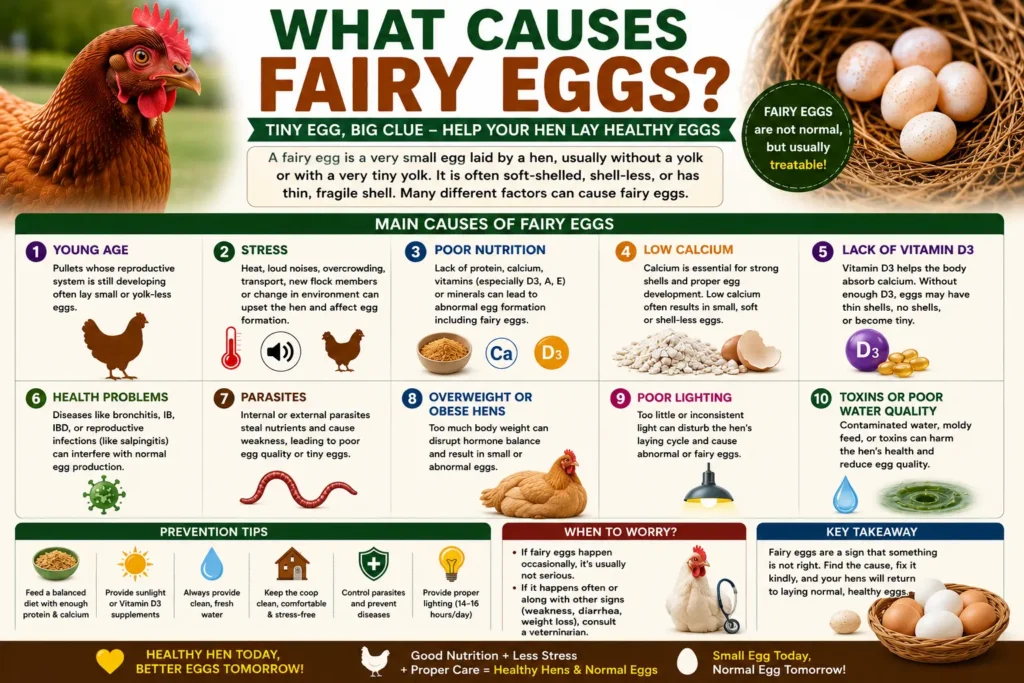
Nearly every rubber egg cause falls into one of four buckets: nutritional, environmental, biological, or medical. Working through them in that order — starting with the most common and easiest to fix — is the fastest way to solve the problem.
| Category | Examples | How Common |
| Nutritional | Calcium deficiency, vitamin D3 deficiency, phosphorus imbalance | Most common |
| Environmental | Stress, heat, sudden routine changes | Very common |
| Biological | Pullet’s first eggs, aging hen, hormone timing | Common |
| Medical | Infectious bronchitis, Egg Drop Syndrome, reproductive tract issues | Least common but most serious |
Category 1: Nutritional Causes
Calcium Deficiency
Calcium is the single biggest factor in what causes rubber eggs. A hen needs about 3.5–4.5 grams of calcium daily to build a normal shell. If her diet leans too heavily on treats, scratch grains, or a non-layer feed, that number drops fast, and the shell gland simply runs out of material to work with.
Read More: https://lashegg.com/rubber-egg-chicken-causes/
Vitamin D3 Deficiency
Calcium intake means little if the body can’t absorb it, and vitamin D3 is what makes that absorption possible. Hens with limited sunlight exposure or unfortified feed are at higher risk, even if their calcium intake looks adequate on paper.
Phosphorus Imbalance
Phosphorus works alongside calcium in bone and shell mineral balance. An imbalance between the two, usually from an unbalanced homemade diet, can interfere with shell hardening even when calcium alone seems sufficient.
Category 2: Environmental Causes
Acute Stress
Stress hormones can rush an egg through the shell gland before it collects enough calcium. Common triggers include:
- A predator attack or near-miss
- Introducing new birds to an established flock
- Sudden loud noise, like construction or fireworks
- Overcrowding or a recent coop move
Heat Stress
Hot weather changes two things at once: hens eat less (lowering calcium intake) and eggs move through the reproductive tract faster (shortening the shell gland’s working window). Both push toward a rubber egg, which is why this cause spikes in summer months.
Sudden Routine Disruption
Even a change that seems minor to a keeper — a new feeder, a different coop layout, a shifted feeding schedule — can act as a low-grade stressor for a few days.
Category 3: Biological Causes
New Pullets
A hen’s very first eggs sometimes come out shell-less or rubbery while her reproductive hormones are still syncing up. This is typically self-resolving within one to two weeks and needs no treatment.
Aging Hens
Hens past their second or third laying year naturally produce weaker shells more often, since the shell gland becomes less efficient with age even on an ideal diet. This is a gradual shift, not a sudden problem.
Egg-Laying Timing
Occasionally, two eggs enter the reproductive tract close together, and the second one moves through faster than usual, arriving with an incomplete shell. This is uncommon but not abnormal on its own.
Category 4: Medical Causes
Infectious Bronchitis Virus (IBV)
IBV specifically targets the reproductive tract in laying hens. Per the Merck Veterinary Manual, this virus can cause soft-shelled and shell-less eggs alongside a broader, flock-wide drop in egg production, which is the clearest sign this cause is at play rather than diet.
Egg Drop Syndrome (EDS)
EDS is a viral cause more common in commercial flocks but possible in backyard settings, specifically affecting shell quality without always producing other visible symptoms.
Reproductive Tract Abnormalities
A permanent or temporary defect in the shell gland, sometimes following a prior infection or egg-binding episode, can cause repeated rubber eggs from the same hen rather than a single occurrence.
Medication or Toxin Exposure
Some dewormers, excess dietary salt, or a sudden feed switch can temporarily disrupt shell formation. This cause typically resolves once the trigger is removed.
Rubber Egg Causes Ranked by Likelihood
| Rank | Cause | Category |
| 1 | Calcium deficiency | Nutritional |
| 2 | Stress | Environmental |
| 3 | Vitamin D3 deficiency | Nutritional |
| 4 | Young pullet | Biological |
| 5 | Aging hen | Biological |
| 6 | Heat stress | Environmental |
| 7 | Infectious bronchitis | Medical |
| 8 | Reproductive tract abnormality | Medical |
| 9 | Egg Drop Syndrome | Medical |
Did You Know?
A hen’s calcium demand roughly quadruples the moment she starts laying regularly compared to her pre-laying diet. Many keepers get caught off guard because the feed hasn’t changed, but the hen’s body suddenly needs far more than it used to.
How to Narrow Down the Cause in Your Flock
Step-by-Step Diagnostic Approach
- Check the pattern. One hen, one time, points toward diet, stress, or age. Multiple hens, same week, points toward disease.
- Review the diet first. Confirm a complete layer feed makes up most of the intake, with free-choice oyster shell available separately.
- Think about the last week. New birds, predator activity, a heat wave, or a coop change are all common triggers.
- Note the hen’s age and laying history. A brand-new layer or a hen well into her third year explains a lot without further digging.
- Watch for additional symptoms. Coughing, sneezing, nasal discharge, or lethargy shift suspicion toward medical causes.
- Give it a week. Most nutritional and environmental causes resolve within seven days of correction.
- Escalate if unresolved. A vet visit is the right next step if the pattern continues or spreads to other hens.
Expert Tip
Work through the categories in order — nutritional, then environmental, then biological, then medical. Since nutritional and environmental causes account for the large majority of cases, checking them first solves most rubber egg situations before you ever need to consider disease.
Common Mistakes to Avoid
- Jumping straight to worrying about disease before checking the diet
- Mixing oyster shell into feed instead of offering it free-choice
- Overlooking heat as a seasonal cause
- Assuming one rubber egg means a hen is seriously ill
- Ignoring a repeated pattern from the same hen, assuming it will resolve on its own
When Rubber Egg Causes Point to Something Serious
Warning
Treat it as more than diet or stress when you see:
- Several hens affected within the same week
- A noticeable drop in total flock egg production
- Coughing, sneezing, or nasal discharge
- Lethargy, reduced appetite, or ruffled feathers
- Straining, a wide stance, or visible abdominal swelling
- The pattern continuing past one to two weeks despite dietary correction
When to Call a Vet
Reach out to a poultry veterinarian if the underlying cause doesn’t resolve within a week of dietary and environmental correction, if more than one hen shows the same symptom, or if respiratory or behavioral changes appear alongside it. According to the Merck Veterinary Manual, infectious causes of poor shell quality usually show up as a flock-wide drop in production, which is one of the most reliable ways to separate a disease cause from a nutritional one.
Fixing Each Category of Cause
| Category | Home Fix | When a Vet Is Needed |
| Nutritional | Free-choice oyster shell, complete layer feed, D3 exposure | Rarely, unless severe or long-standing |
| Environmental | Remove stress trigger, manage heat with shade and water | Rarely |
| Biological | Time and monitoring for pullets; extra calcium for aging hens | Only to rule out other causes |
| Medical | Not treatable at home | Yes, always |
Preventing Rubber Eggs Across All Categories
- Feed a complete, age-appropriate layer ration as the bulk of the diet
- Offer free-choice crushed oyster shell at all times
- Ensure consistent sunlight or D3-fortified feed
- Keep 14–16 hours of daylight for actively laying hens
- Build a low-stress, predator-proof coop
- Prepare for heat waves with shade and extra water access
- Practice solid biosecurity to limit disease introduction
- Reassess flock nutrition every few months, especially as hens age
Most rubber eggs trace back to something fixable within a week: calcium, stress, or the natural rhythm of a young or aging hen. Understanding what causes rubber eggs by category, rather than guessing at a single cause, makes it far easier to solve the problem quickly and know when it’s time to bring in a vet instead.
5. FAQ
What causes rubber eggs the most often? Calcium deficiency is the single most common cause, followed closely by stress and vitamin D3 deficiency. Together these nutritional and environmental factors explain the majority of cases.
Are rubber egg causes different for young and old hens? Yes, though the result looks the same. Young pullets lay rubber eggs while their reproductive system calibrates, while older hens do so because the shell gland naturally becomes less efficient with age.
Can weather really be one of the rubber egg causes? Yes. Heat stress reduces feed and calcium intake while speeding up how quickly an egg moves through the reproductive tract, both of which can result in a rubber egg during hot spells.
Is disease a common cause of rubber eggs? No, medical causes like infectious bronchitis virus are less common than nutritional or environmental causes, but they’re the most important to rule out when multiple hens are affected at once.
How can I tell which cause applies to my flock? Start with diet and recent stress, since these explain most cases. If the pattern continues past a week or spreads to multiple hens, medical causes become more likely.
Do rubber egg causes ever overlap? Often, yes. A hen with mild calcium deficiency may also be dealing with heat stress or aging, and correcting the diet usually improves shell quality even when more than one factor is involved.