Signs of a Sick Chicken: Why Early Detection Matters

Chickens are prey animals, and prey animals hide weakness. That instinct kept their ancestors alive in the wild, but it means the signs of a sick chicken are often subtle until the illness has already taken hold.
By the time a chicken looks obviously sick, standing apart from the flock or unable to move normally, she may have been unwell for several days already. Learning the early, easy-to-miss signs gives you a real head start.
Table of Contents
Quick Answer: The earliest signs of a sick chicken include reduced appetite, a drop in egg production, quieter-than-usual behavior, and subtle posture changes. More advanced signs include labored breathing, diarrhea, discharge, and reluctance to move.
This guide walks through every category of symptom, from the ones you’ll only catch by watching closely to the emergencies that need same-day veterinary care.
Read More: https://lashegg.com/common-chicken-diseases/
The Baseline: Know What Normal Looks Like
You can’t spot the signs of a sick chicken without knowing your flock’s normal behavior first. Spend a few minutes most days simply observing.
- Normal chickens are alert, curious, and move toward you or their feed readily
- Feathers should lie smooth and glossy, not ruffled or dull
- Droppings vary but shouldn’t be watery, bloody, or unusually foul day after day
- Combs and wattles should be full, warm, and richly colored for the breed
- Egg-laying hens should follow a fairly consistent personal pattern
Expert Tip: Handle each bird occasionally, not just watch from a distance. Weight loss and muscle condition are much easier to detect by touch than by sight, especially under a full set of feathers.
Early and Subtle Signs of a Sick Chicken
These are the signs most owners miss, because they’re small changes rather than dramatic symptoms.
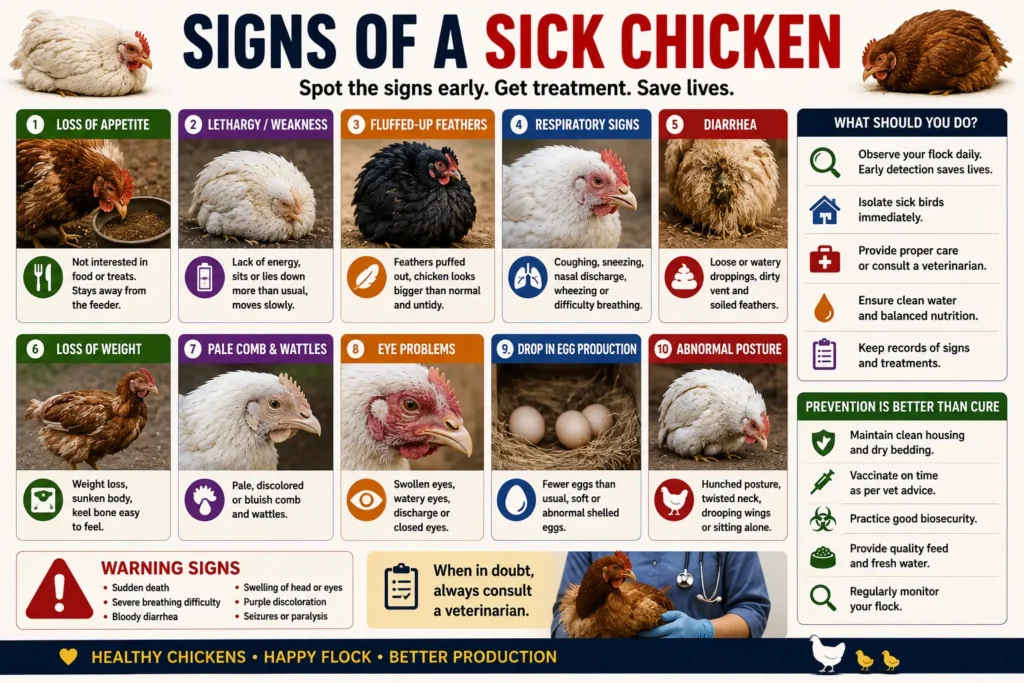
- Slightly reduced appetite – eating less than usual, even if she’s still eating something
- Quieter behavior – less vocal, less interested in normal flock activity
- Standing apart from the group – even briefly, without being at the bottom of the pecking order
- Slower movement – a bit more hesitant getting up, walking, or reaching food
- Slight drop in egg production – one skipped day isn’t unusual, but a pattern is worth noting
- Duller feather appearance – less preening than normal
Did You Know? Egg production is often one of the very first things to change when a hen isn’t feeling well, sometimes days before any other visible sign of a sick chicken appears.
Physical Signs of a Sick Chicken
Comb and Wattle Changes
A pale, dark purple, or shriveled comb can signal poor circulation, dehydration, or systemic illness. A healthy comb is typically plump, warm, and vividly colored for the breed and age.
Eyes and Face
Watery eyes, swelling around the face, or crusty discharge near the eyes or nostrils point toward respiratory infection or, in some cases, a vitamin A deficiency.
Feathers and Skin
Ruffled feathers held away from the body, bald patches, or visible parasites (tiny moving specks, especially around the vent) are all physical signs of a sick chicken worth investigating.
Legs and Feet
Limping, swelling, scaly or crusty patches on the legs, or reluctance to bear weight can point to bumblefoot, mite infestation, or nutritional deficiency.
Vent Area
Discharge, swelling, or matted feathers near the vent can indicate a reproductive issue, parasites, or digestive illness.
Table 1: Physical Signs of a Sick Chicken and What They May Indicate
| Body Area | What to Look For | Possible Cause |
| Comb/wattles | Pale, purple, or shriveled | Poor circulation, illness, dehydration |
| Eyes/face | Discharge, swelling | Respiratory infection, vitamin deficiency |
| Feathers/skin | Ruffled, bald patches, parasites | External parasites, stress, illness |
| Legs/feet | Limping, scaly patches | Bumblefoot, scaly leg mites, injury |
| Vent | Discharge, swelling, matting | Reproductive issue, parasites, digestive illness |
Behavioral Signs of a Sick Chicken
Behavior changes are often more telling than any single physical symptom, and they’re usually the first thing an experienced flock owner notices.
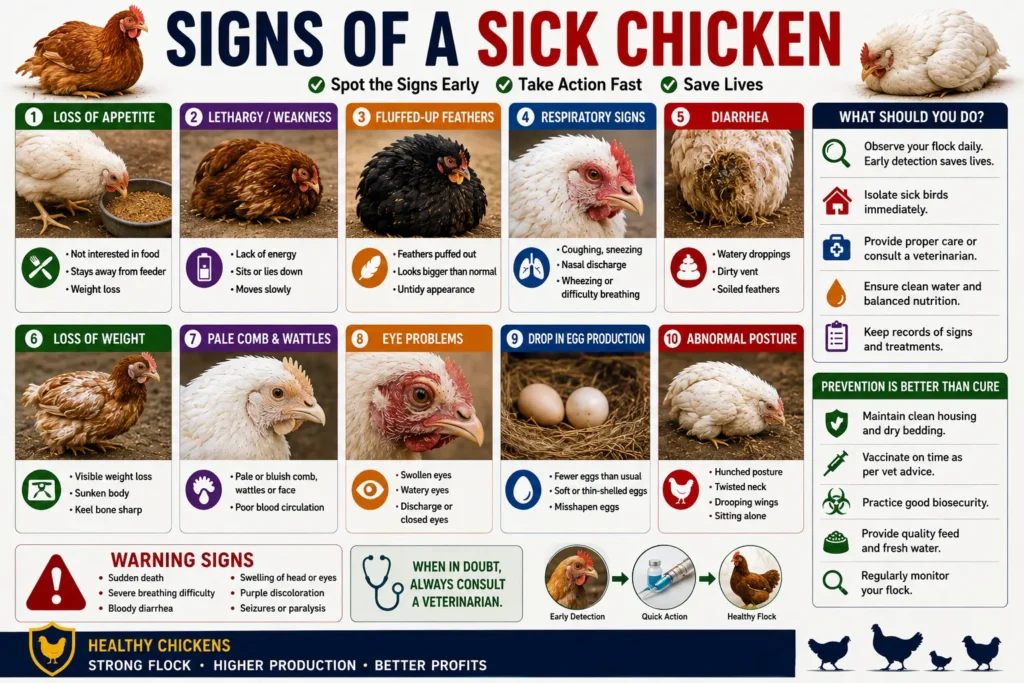
- Isolating from the flock without being bullied or at the bottom of the pecking order
- Sitting hunched with fluffed feathers, especially during the day when the bird should be active
- Head tucked under a wing persistently, not just during normal rest
- Reluctance to roost at the usual bedtime, staying on the ground instead
- Reduced interest in dust bathing or foraging, even when weather and conditions are normal
Common Mistakes:
- Assuming a quiet bird is “just tired” without checking further
- Mistaking normal molting for illness, or the reverse
- Waiting for dramatic symptoms before separating a bird from the flock
- Not comparing a bird’s behavior to her own normal baseline
Respiratory Signs of a Sick Chicken
Respiratory symptoms deserve their own category because they often signal fast-spreading illness that can affect the whole flock, not just one bird.
- Coughing, sneezing, or audible clicking while breathing
- Gasping or open-mouth breathing
- Nasal or eye discharge
- Swelling around the face or wattles
According to the Merck Veterinary Manual, respiratory disease in poultry can spread rapidly through direct contact and airborne particles, which is why isolating a bird with these symptoms matters more than with most other sign categories.
Digestive Signs of a Sick Chicken
- Watery, bloody, or unusually discolored droppings
- Visible weight loss despite normal or increased feed intake
- Straining or apparent discomfort passing droppings
- Sudden lethargy paired with digestive changes
Warning: Bloody diarrhea, especially in young chicks, should be treated as an emergency. It’s a classic sign of coccidiosis, which can cause rapid decline without prompt treatment.
Neurological Signs of a Sick Chicken
These are less common but among the most serious signs of a sick chicken.
- Leg or wing paralysis
- Head or neck twisting
- Tremors, stumbling, or loss of balance
- Uneven or irregular pupil size
Neurological symptoms often point toward Marek’s disease or an advanced viral infection and generally require veterinary evaluation to identify the underlying cause.
Reproductive Signs of a Sick Hen
- Straining repeatedly with no egg produced
- A sudden, unexplained drop in egg-laying rate
- Consistently abnormal eggs (soft, wrinkled, or misshapen shells)
- Swelling or discharge near the vent
A hen straining without producing an egg may be egg bound, which can become life-threatening within 24 to 48 hours without treatment.
Signs of a Sick Chicken by Age Group
Table 2: Age-Based Symptom Patterns
| Age Group | Common Early Signs | Higher Risk Illness |
| Chicks (0–8 weeks) | Huddling, peeping excessively, poor growth | Coccidiosis, Salmonella |
| Pullets (8–20 weeks) | Slow development, respiratory signs | Infectious bronchitis, Marek’s disease |
| Laying hens | Egg production changes, comb color changes | Reproductive issues, Mycoplasma |
| Older hens | Reduced activity, thinner egg shells | Age-related decline, chronic illness |
What to Do When You Spot Signs of a Sick Chicken
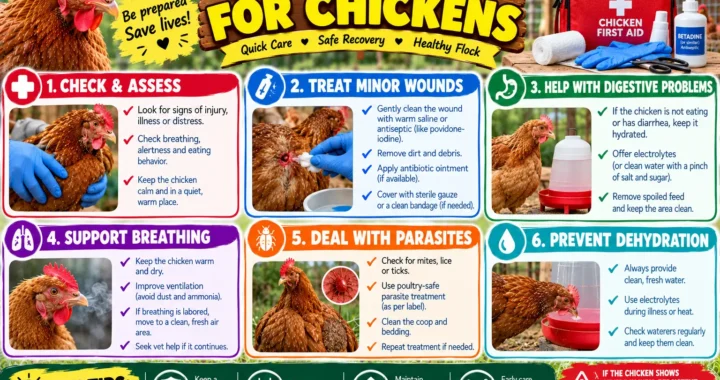
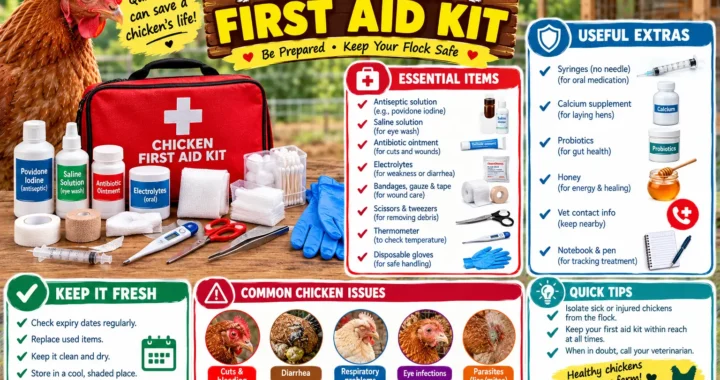
- Isolate the bird in a separate, quiet space away from the flock.
- Check hydration and appetite by offering fresh water and familiar feed.
- Note every symptom and when it started, since timing helps a vet narrow down causes.
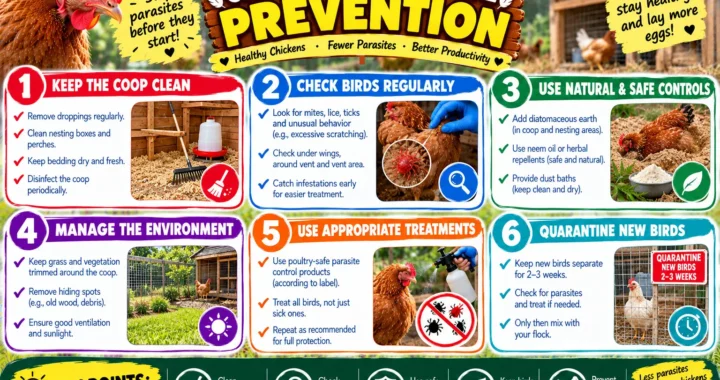
- Check for visible parasites on the skin, feathers, and around the vent.
- Review recent changes, like new birds, feed changes, or weather shifts.
- Contact a vet if symptoms are severe, worsening, or affecting more than one bird.
- Continue monitoring the rest of the flock for a few days, since some illnesses spread quickly.
When to Call a Vet
When to Call a Vet:
- Labored breathing, gasping, or persistent coughing
- Bloody diarrhea, especially in chicks
- Paralysis, tremors, or a twisted neck
- A hen straining with no egg produced
- Sudden death in the flock, especially more than one bird
- Any sign of a sick chicken lasting more than a day or two with no improvement
A veterinarian can run tests home observation can’t, including fecal analysis, bloodwork, and in flock-wide outbreaks, necropsy. University extension services and state poultry labs often provide these diagnostics at low cost, and the AVMA maintains directories to help locate poultry-experienced veterinarians.
How to Prevent Illness Before You See the Signs
- Watch your flock daily, even briefly, to build a strong sense of their normal baseline.
- Quarantine new birds for two to four weeks before introducing them.
- Keep the coop clean and well-ventilated to reduce disease pressure.
- Feed a complete, age-appropriate diet to support strong immune function.
- Control pests and wild bird contact, both common disease carriers.
- Reduce stress from overcrowding, predator exposure, and sudden changes.
Groups like the USDA and university poultry extension programs consistently point to daily observation and strong biosecurity as the two most effective tools for catching illness early, often before obvious signs appear.
5. FAQ
Q: What are the earliest signs of a sick chicken? A: The earliest signs of a sick chicken are usually subtle: reduced appetite, quieter behavior, a slight drop in egg production, and standing apart from the flock without being bullied.
Q: How to tell if a chicken is sick versus just molting? A: Molting causes feather loss and some behavior changes but shouldn’t include diarrhea, discharge, labored breathing, or a total loss of appetite. Those additional symptoms point to illness rather than molting.
Q: What sick chicken symptoms mean I should call a vet immediately? A: Labored breathing, bloody diarrhea, paralysis, tremors, sudden death in the flock, and a hen straining without laying an egg are all sick chicken symptoms that need same-day veterinary attention.
Q: Can one sick chicken affect the whole flock? A: Yes, especially with respiratory illness, which spreads quickly through direct contact and shared air space. Isolating a sick bird promptly helps protect the rest of the flock.
Q: Do signs of a sick chicken look different in chicks versus adult hens? A: Yes. Chicks more often show huddling, poor growth, and digestive symptoms like coccidiosis, while adult hens more often show egg production changes and comb color shifts.
Q: How long can I wait before calling a vet about a sick chicken? A: Mild, isolated symptoms in one bird can often be monitored for a day or two at home. Severe symptoms, or any sign affecting multiple birds, warrant a same-day call.
Q: What’s the fastest way to check if a chicken is sick? A: Compare her behavior, appetite, droppings, and comb color to her own normal baseline. A change in any of these, especially combined with others, is a reliable early sign of a sick chicken.