Chicken Behavior Before Laying a Lash Egg: What Changes First

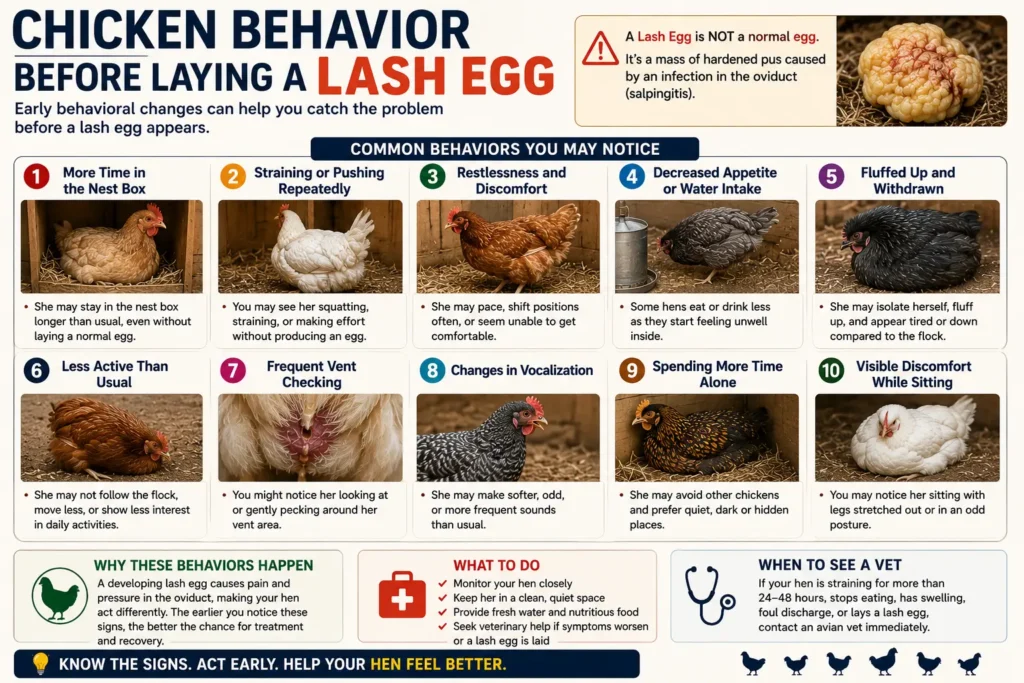
Chicken behavior before laying a lash egg usually shifts before anything physical shows up in the coop. A hen might grow quiet, move less, or drift away from the flock days before an actual lash egg ever appears in her nesting box. Reading these behavioral clues is often the fastest way to catch trouble early.
A lash egg forms when a hen’s oviduct becomes infected, a condition known as salpingitis. Before that infection produces a visible mass, it usually produces changes in how the hen acts. This guide breaks down exactly what those behavior shifts look like, why they happen, and how to tell ordinary sick chicken behavior from something more serious.
Quick Answer: Chicken behavior before laying a lash egg typically includes reduced activity, isolation from the flock, quieter vocalizations, a hunched or upright stance, less interest in food, and spending more time near or inside the nesting box. These behavioral changes often appear one to several days before a lash egg is physically found.
Table of Contents
Why Behavior Changes Before Physical Symptoms Appear
Hens are prey animals by instinct, so they tend to mask illness for as long as possible. This protective instinct means physical symptoms, like a visible lash egg, often show up later than behavioral ones. A hen’s actions frequently give the first real warning.
H3: How Chicken Behavior Before Laying a Lash Egg Differs From a Healthy Hen
| Behavior Category | Healthy Hen | Hen Developing a Lash Egg |
| Activity level | Active foraging, dust bathing, exploring | Sitting still, reduced movement |
| Flock interaction | Stays close to flock, normal pecking order | Isolates herself, avoids interaction |
| Vocalization | Normal clucking and chatter | Quieter than usual, or occasional distress sounds |
| Nesting behavior | Enters nest briefly to lay | Lingers in or near the nest box longer than normal |
| Appetite | Eats readily at feeding time | Picks at food or ignores it |
Specific Behavioral Signs to Watch For
Changes in Activity and Movement
- Reduced foraging. A hen that normally scratches and explores may stay in one spot for long periods.
- Slower movement. Walking may look stiff, hesitant, or generally lower energy.
- Reluctance to jump or perch. Roosting behavior can change if abdominal discomfort is present.
Changes in Flock Interaction
- Self-isolation. A hen may separate from the group even before she looks visibly sick.
- Drop in pecking order confidence. Illness can cause a normally assertive hen to become more passive.
- Avoiding the rooster or other hens. Reduced social interaction is a common early behavioral clue.
Changes in Vocalization
- Quieter than normal. Many hens simply talk less when they don’t feel well.
- Occasional distress calls. Some hens vocalize discomfort, especially if straining occurs.
Changes Around the Nesting Area
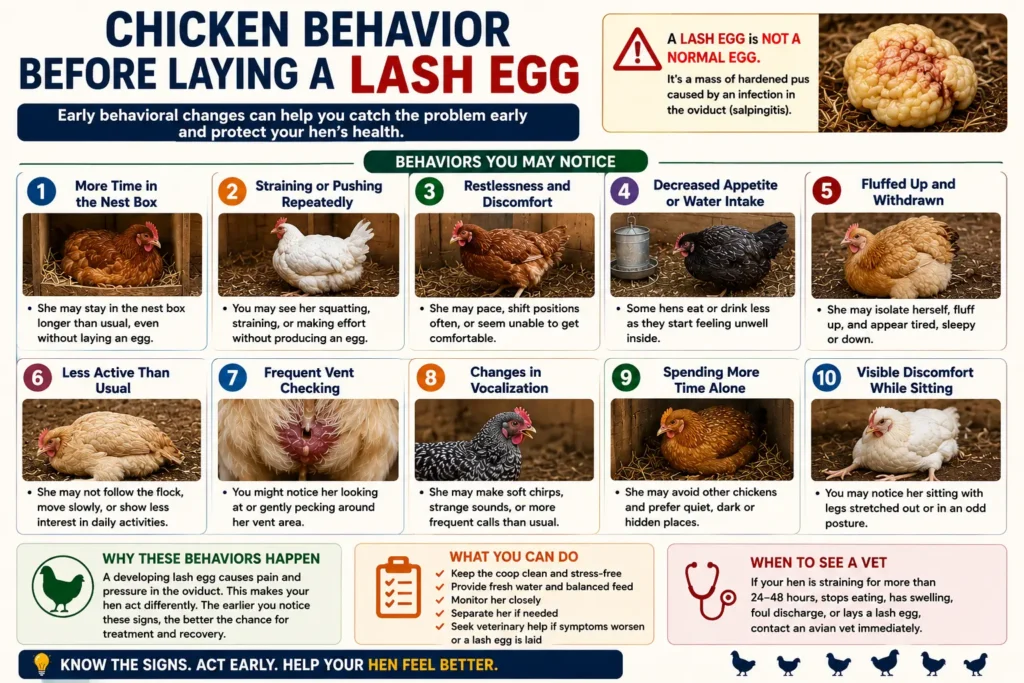
- Extended time in the nesting box. A hen may sit in the nest well beyond the time it takes to lay a normal egg.
- Repeated visits without laying. She may enter and exit the nesting box multiple times.
- Straining posture. Visible effort while in the nest can signal reproductive discomfort.
Did You Know? A hen’s instinct to mask illness evolved because sick or weak birds are more likely to be targeted by predators or bullied within the flock. This instinct is exactly why behavioral changes, subtle as they are, matter so much for early detection.
Sick Chicken Behavior vs. Lash Egg-Specific Behavior
Not all sick chicken behavior points toward a lash egg. Respiratory illness, parasites, and heat stress can all cause similar general symptoms. The table below highlights where lash egg-related behavior tends to differ.
| Symptom | General Sick Chicken Behavior | Lash Egg-Specific Behavior |
| Breathing | Normal unless respiratory illness is present | Can become labored if abdominal swelling develops |
| Posture | Puffed feathers, hunched | Upright “penguin” stance from internal pressure |
| Nesting habits | Usually unaffected | Lingering, repeated visits, straining |
| Egg laying | May continue normally | Often reduced, irregular, or stopped |
| Comb color | Can be pale in many illnesses | Pale, sometimes alongside abdominal firmness |
H4: Why the Nesting Box Behavior Matters Most
Of all the behavioral clues, changes around the nesting box are often the most specific to reproductive issues. A hen lingering in the nest, straining, or making repeated unsuccessful visits is showing a pattern tied directly to her reproductive tract rather than a general illness.
Read More: https://lashegg.com/early-signs-of-a-lash-egg/
How to Track Behavioral Changes at Home
- Observe the flock at the same time each day. Consistency makes changes easier to spot.
- Note which hens interact normally and which ones isolate. A simple daily glance can reveal patterns over a week.
- Watch nesting box activity. Pay attention to how long each hen spends inside and whether she strains.
- Track vocal patterns. A hen that goes quiet compared to her normal chatter is worth watching closely.
- Record laying patterns. Skipped days alongside behavior changes strengthen the case for a closer look.
Expert Tip: Behavioral changes are most meaningful when they cluster together. One quiet moment means little, but a hen that is quiet, isolated, and lingering in the nest box on the same day deserves attention.
What Causes These Behavior Changes?
The behavioral shifts tied to a developing lash egg trace back to salpingitis, inflammation or infection of the oviduct. Common contributing factors include:
- Bacterial infection, frequently E. coli, entering through the vent or spreading internally.
- Viral respiratory disease, including infectious bronchitis virus (IBV), which can affect the reproductive tract.
- High egg production demands, especially in heavy-laying breeds.
- Age-related reproductive decline, more common in hens over two years old.
- Environmental stress, such as overcrowding or sudden changes in the coop.
According to information from sources like the Merck Veterinary Manual, reproductive tract disorders remain among the leading causes of illness and death in laying hens, which underscores why behavioral monitoring plays such an important early-warning role.
When Behavior Changes Signal an Emergency
Most early behavior changes call for closer observation rather than panic. Certain combinations, however, point toward a more urgent situation.
- Complete refusal to eat or drink for more than a day.
- Labored or open-mouth breathing.
- Visible abdominal swelling combined with lethargy.
- Collapse, inability to stand, or extreme weakness.
Warning: If a hen shows any of the signs above, treat it as an emergency rather than something to monitor overnight. Rapid decline can occur once an infection spreads to the abdominal cavity.
When to Call a Vet
When to Call a Vet: Reach out to a poultry or avian veterinarian if behavioral changes persist beyond 48 hours, if a hen stops eating, or if nesting box straining continues without a normal egg being laid. Behavioral clues combined with a skipped laying pattern are often reason enough to seek guidance even before a lash egg physically appears.
Local university extension services and state poultry diagnostic labs can help connect backyard keepers with veterinarians experienced in flock health when a dedicated avian vet isn’t nearby.
Common Mistakes When Reading Chicken Behavior
Common Mistakes: A frequent mistake is assuming quiet or isolated behavior is just a personality trait rather than a health signal, especially in naturally calm hens. Another common mistake is waiting for a lash egg to physically appear before taking behavior changes seriously, which delays treatment during the window when it works best.
Getting to know each hen’s normal personality, energy level, and social habits makes it far easier to notice when something is genuinely off.
Supporting a Hen Showing Behavior Changes
While only a veterinarian can diagnose salpingitis, a few supportive steps can help a hen showing early behavior changes.
- Move her to a quiet, separate space to reduce flock stress.
- Offer fresh water and easily digestible food.
- Keep the space warm and free of drafts.
- Log her behavior daily, including activity level, appetite, and nesting habits, so you can share accurate details with a vet.
These steps support comfort and observation. They are not a substitute for professional diagnosis or treatment once symptoms are confirmed.
Preventing Illness-Related Behavior Changes
- Maintain clean, dry nesting boxes to reduce bacterial exposure.
- Provide a balanced layer feed to support reproductive health.
- Avoid overcrowding, which increases stress and illness risk.
- Ask a poultry veterinarian about vaccination options for infectious bronchitis if it is common in your area.
- Quarantine new birds before introducing them to the flock.
- Handle hens regularly so behavioral baselines are easy to recognize.
Conclusion
Chicken behavior before laying a lash egg often changes well before any physical sign shows up in the nest. Reduced activity, isolation, quieter vocalization, and lingering nesting box visits are among the clearest behavioral clues that something may be wrong. Watching for these patterns, keeping a simple daily log, and reaching out to a veterinarian when behavior changes persist gives a hen the best possible chance at early treatment and recovery.
FAQ
What is the first behavior change before a lash egg appears? Reduced activity and mild isolation from the flock are often among the earliest behavior changes, sometimes appearing a day or more before any physical symptoms.
Does a hen act sick before or after passing a lash egg? Behavior changes commonly begin before a lash egg is passed, since the underlying infection develops gradually before producing a visible mass.
How can I tell normal sick chicken behavior from lash egg-specific behavior? General sick chicken behavior can appear with many illnesses, but lingering in the nesting box, straining, and irregular laying patterns point more specifically toward a reproductive issue.
Do all hens show behavior changes before a lash egg? Not always. Some hens hide illness well and show few visible behavior changes until the condition is more advanced, which is why regular observation matters.
Is isolating a sick-acting hen from the flock helpful? Yes, isolating her reduces stress, allows closer monitoring, and limits potential exposure to other birds while you determine whether veterinary care is needed.
Can stress alone cause chicken behavior before laying a lash egg without infection? Stress can contribute to reproductive strain, but the behaviors themselves are typically tied to an active infection like salpingitis rather than stress alone.