When Do Chickens Start Laying Eggs? The Short Answer

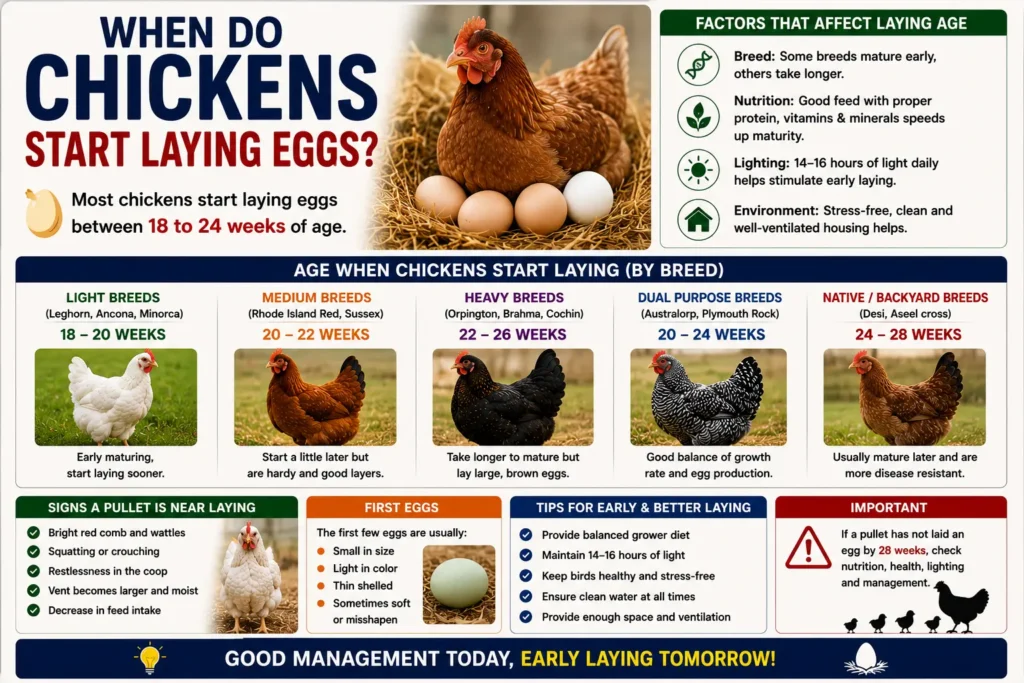
When do chickens start laying eggs is one of the first questions anyone asks before bringing home chicks, and it’s worth understanding well before that first egg is even possible. Most hens begin laying somewhere between 18 and 24 weeks of age, though the exact chicken laying age depends heavily on breed, season, and how well a bird has been raised along the way.
This guide works as a complete reference rather than a troubleshooting checklist. It covers average pullet laying age across breed categories, the biological factors that influence timing, and what new keepers can realistically expect during a flock’s first year of production.
Quick Answer: Chickens typically start laying eggs between 18 and 24 weeks old. Production breeds often begin closer to 18 weeks, while heritage and larger breeds can take until 24 to 28 weeks. Season, nutrition, and body condition all shift this timeline slightly in either direction.
Table of Contents
Average Chicken Laying Age by Breed
Why Breed Is the Biggest Factor
Genetics play the largest role in determining chicken laying age. Hybrid layers have been selectively bred over generations specifically for early, high-frequency laying, while heritage breeds were developed with a broader set of traits in mind, including meat production, hardiness, and brooding ability.
| Breed Category | Examples | Average Laying Age |
| Production hybrids | ISA Brown, Golden Comet, Red Star | 18–20 weeks |
| Standard dual-purpose | Plymouth Rock, Wyandotte, Rhode Island Red | 20–24 weeks |
| Heritage breeds | Orpington, Brahma, Cochin | 24–28 weeks |
| Bantam breeds | Various | 20–24 weeks, with wide variation |
| Silkies | Silkie | 24–30 weeks, sometimes longer |
Using This Table Realistically
These ranges represent averages, not guarantees. Individual pullet laying age can vary by a few weeks in either direction even within the same breed and same hatch date, simply due to natural variation between individual birds.
Read More: https://lashegg.com/why-are-young-chickens-not-laying-eggs/
What Determines Exactly When a Chicken Starts Laying
1. Body Development
A pullet needs to reach sufficient skeletal and reproductive maturity before her body is ready to produce eggs. This typically lines up with reaching a breed-appropriate target weight, not just a specific age in isolation.
2. Daylight Hours
Light exposure triggers the hormone signals responsible for starting egg production. Pullets maturing during long summer days often begin laying closer to the early end of their breed’s typical range, while those maturing in fall or winter may show a delayed start until daylight increases again.
3. Nutrition During Growth
Proper protein levels during the grower phase support the physical development needed for timely laying. Diets lacking adequate nutrition during this window can push the chicken laying age later than a breed’s typical average.
4. Overall Health and Stress
A pullet dealing with parasites, illness, or ongoing stress during her growth phase may show a delayed start compared to a healthy, well-supported bird of the same breed and age.
Did You Know? A pullet’s reproductive system is essentially fully formed before hatching, containing thousands of microscopic egg cells that remain dormant until hormonal signals activate the laying process months later.
What to Expect in the First Weeks and Months of Laying
The First Eggs
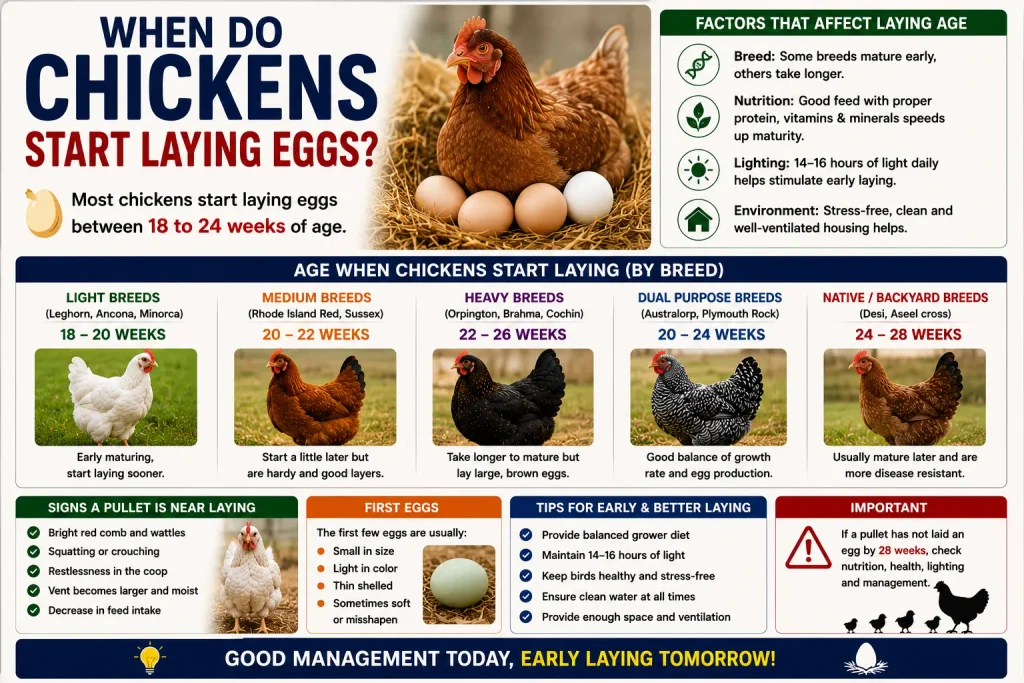
Early eggs are often smaller than a hen’s eventual average size and may show soft shells, odd shapes, or occasional double yolks as her reproductive system calibrates. This is a normal part of reaching full pullet laying age and typically evens out within a few weeks.
Building Toward Full Production
| Timeframe After First Egg | What’s Typical |
| Weeks 1–2 | Irregular timing, smaller or oddly shaped eggs |
| Weeks 3–6 | Increasing consistency, size stabilizing |
| Months 2–6 | Peak production for most breeds |
| Year 2 onward | Gradual, natural decline begins |
Preparing the Coop Ahead of Time
- Install nesting boxes before the expected laying window. This encourages proper laying habits from the very first egg rather than floor-laying.
- Switch to layer feed at the right time. Most keepers transition around 16 to 18 weeks or at the first sign of laying readiness, whichever comes first.
- Offer free-choice calcium separately. A side dish of crushed oyster shell lets pullets self-regulate intake as their bodies prepare.
- Keep the environment calm. Minimizing major changes as pullets approach their expected laying age supports a smoother, more on-time start.
- Watch for physical readiness signs. Comb color, squatting behavior, and nesting box interest all signal that laying is close.
Chicken Laying Age: Common Questions New Keepers Have
Do All Hens in a Flock Start at the Same Time?
No. Even within a single breed and hatch date, individual pullets can start laying days to weeks apart, and mixed-breed flocks will show an even wider natural spread.
Does a Rooster Affect When Hens Start Laying?
No, a rooster’s presence has no effect on when hens begin laying. Roosters are only necessary for fertilizing eggs meant for hatching, not for triggering egg production itself.
Can You Speed Up When Chickens Start Laying?
Supplemental light and proper nutrition can support a pullet reaching her natural potential on schedule, but aggressively forcing early laying through excessive light before physical maturity is reached isn’t recommended, since it can strain a body that isn’t fully ready.
Expert Tip
Mark the hatch date of each pullet, or the approximate age if purchased as started birds, and compare it against the breed-specific ranges above rather than a single flock-wide average. This small step prevents a lot of unnecessary worry when one bird in a mixed flock takes longer than another.
Common Mistakes to Avoid
- Comparing a heritage breed’s pace to a production hybrid’s pace and assuming something is wrong
- Introducing layer feed, high in calcium, too early before a pullet actually needs it
- Adding aggressive supplemental light before pullets reach appropriate body weight
- Expecting perfectly sized, uniform eggs right from the very first one
- Assuming a slightly later start within the normal range signals a health problem
Warning
If a pullet significantly exceeds her breed’s expected laying age range, particularly past 30 weeks, and also shows poor growth, lethargy, or other signs of illness, this combination is different from normal individual variation and deserves a closer look rather than continued waiting.
When to Call a Vet
Contact a poultry veterinarian if a pullet is well past the expected chicken laying age for her breed and shows signs like poor body condition, lethargy, or abnormal behavior alongside the delay. A vet can also help rule out uncommon reproductive abnormalities that occasionally prevent normal laying onset in an otherwise healthy-looking bird.
People Also Ask
When do chickens start laying eggs on average? Most chickens start laying between 18 and 24 weeks old, though the exact timing depends on breed, season, and overall development.
What is the earliest chicken laying age recorded for common breeds? Some production hybrids can begin as early as 16 to 17 weeks under ideal conditions, though 18 to 20 weeks is a more typical earliest range.
Does pullet laying age vary by season? Yes, pullets maturing during long summer days often start closer to the early end of their range, while those maturing in fall or winter may start later.
How do I know my pullet is close to laying her first egg? Watch for a brighter, larger comb, squatting behavior when touched on the back, and increased interest in the nesting box as reliable signs she’s close.
Is it bad if my chicken starts laying earlier than expected? Laying that starts slightly early, especially in production breeds, is usually fine, though very early laying in an underdeveloped bird can sometimes lead to complications like smaller pelvic space for passing eggs.
Final Thoughts
When do chickens start laying eggs comes down to a predictable but flexible range shaped by breed, season, nutrition, and individual development. Most hens fall somewhere between 18 and 24 weeks, with heritage breeds often taking a few extra weeks compared to production-focused hybrids.
Use the breed-specific ranges here as a planning guide rather than a strict deadline, and reach out to a poultry veterinarian if a pullet falls well outside her expected chicken laying age while also showing signs of poor health.
5. FAQ
Q: When do chickens start laying eggs compared to when they hatch? A: Most chickens start laying between 18 and 24 weeks after hatching, meaning roughly four to six months of growth before the first egg typically appears.
Q: Does chicken laying age differ between hens raised from chicks versus started pullets? A: No, the underlying biological timeline is the same either way; buying started pullets simply means less waiting time from the point of purchase rather than a different developmental schedule.
Q: What’s a normal pullet laying age range for a backyard mixed flock? A: In a typical mixed flock, expect a spread of about 18 to 28 weeks depending on the breeds involved, with some individual variation even within the same breed.
Q: Can poor nutrition really delay when chickens start laying? A: Yes, inadequate protein or overall poor nutrition during the growing phase can meaningfully push back a pullet’s chicken laying age compared to a well-fed bird of the same breed.
Q: Should I worry if one pullet in my flock starts laying much later than the others? A: Not necessarily, especially in a mixed-breed flock, though it’s worth checking her body condition and overall health if the gap is unusually large or paired with other symptoms.