
Why Chickens Lay Abnormal Eggs: The Short Answer

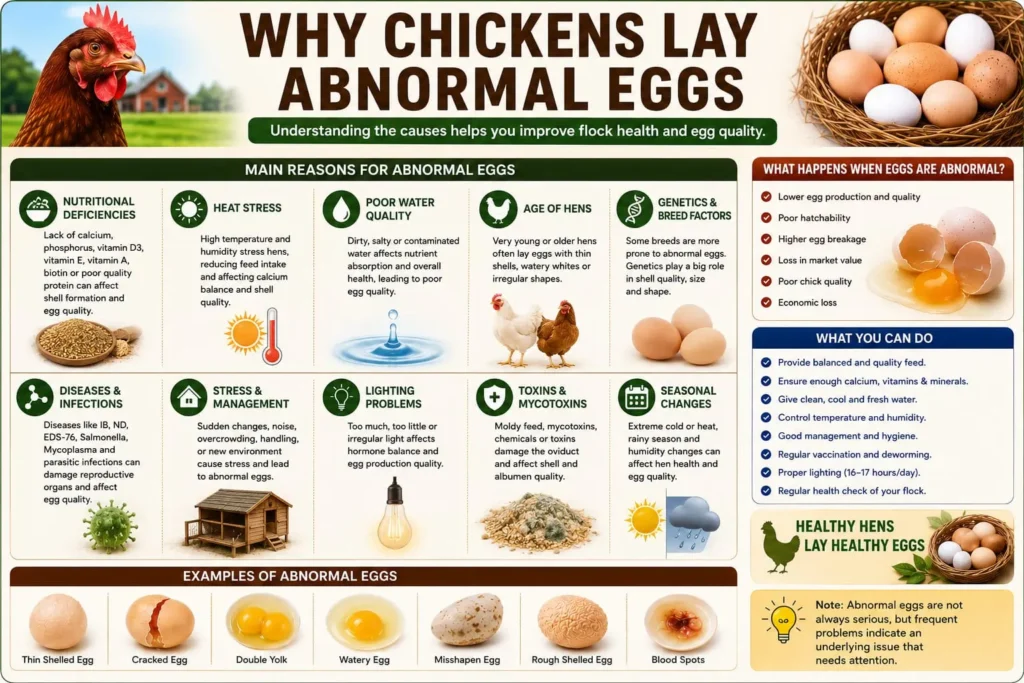
You reach into the nesting box and find a soft-shelled egg, or a shell with ridges, or one that’s oddly small. Your first question is simple: why do chickens lay abnormal eggs at all?
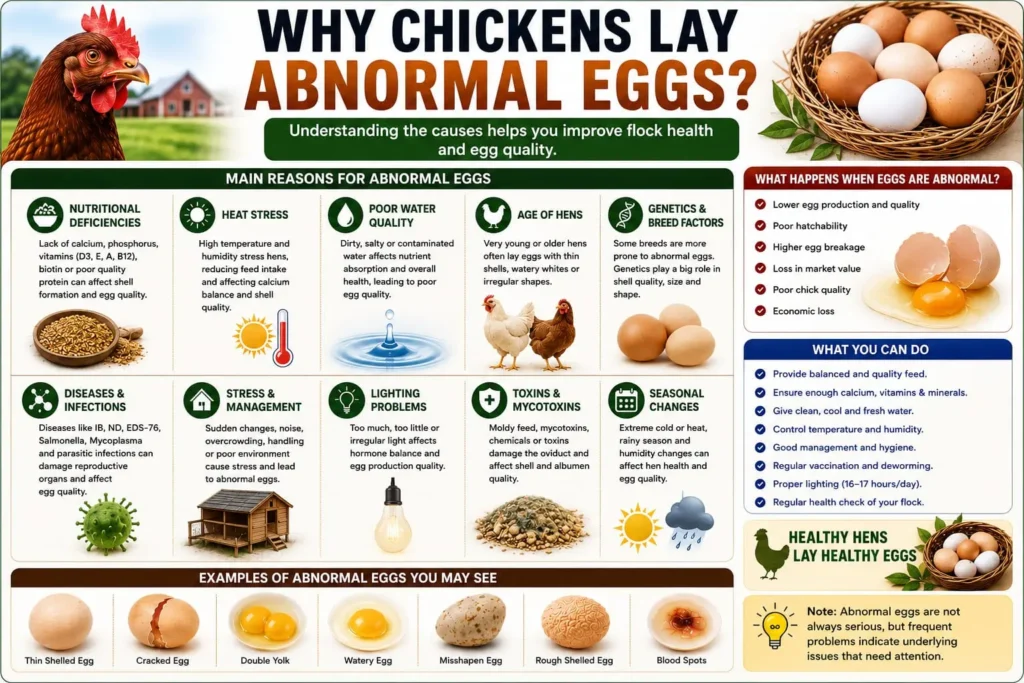
The answer usually comes down to one of nine factors: age, nutrition, stress, heat, genetics, disease, medication, egg-laying cycle timing, or a one-off glitch in the reproductive tract. Most causes are manageable. A few need a veterinarian.
Table of Contents
Quick Answer: Chickens lay abnormal eggs mainly because of hen age, calcium or vitamin deficiency, heat or environmental stress, or infectious disease affecting the reproductive tract. Occasional abnormal eggs are normal. Frequent ones deserve investigation.
This guide goes cause by cause, so you can match what you’re seeing in the nesting box to what’s actually happening inside your flock.
Read More: https://lashegg.com/chicken-egg-defects/
How an Egg Forms (Why This Explains So Much)
Before diving into causes, it helps to understand the roughly 24 to 26-hour process that builds every egg. Almost every reason chickens lay abnormal eggs traces back to a disruption somewhere in this timeline.
- Ovulation – a yolk releases from the ovary
- Magnum – albumen (egg white) forms around the yolk
- Isthmus – shell membranes wrap the egg
- Shell gland (uterus) – the hard shell forms over about 20 hours
- Vagina – the egg is laid
A disruption at any single stage — even a brief one — changes the outcome. That’s the core reason chickens lay abnormal eggs in so many different forms: soft shells, wrinkles, odd shapes, missing yolks, and more.
Reason 1: Hen Age
Age is the single most common reason chickens lay abnormal eggs, and it shows up at both ends of a hen’s laying life.
Young Pullets
A hen’s reproductive system needs time to fully mature after she starts laying. In the first few weeks, it’s normal to see:
- Tiny “fairy” eggs with no yolk
- Soft or thin shells
- Occasional double yolks
Aging Hens
As hens get older, egg production slows and quality naturally declines. Older hens more often lay:
- Larger, sometimes double-yolked eggs
- Thinner, more fragile shells
- Watery egg whites
Did You Know? A hen’s peak shell quality typically happens in her second year of laying, not her first. Both very young and older hens are more prone to abnormal eggs than hens in their prime laying years.
Reason 2: Nutritional Deficiencies
Diet gaps are a major reason chickens lay abnormal eggs, and they’re also one of the easiest problems to fix.
| Nutrient | Deficiency Sign in Eggs | Fix |
| Calcium | Thin, soft, or shell-less eggs | Add free-choice crushed oyster shell |
| Vitamin D3 | Poor calcium absorption, weak shells | Ensure feed includes D3 or sunlight exposure |
| Phosphorus | Shell texture and strength issues | Balanced layer feed with proper mineral ratio |
| Manganese | Thin shells, reduced hatchability | Complete commercial layer ration |
| Protein | Smaller eggs, reduced yolk size | Age-appropriate protein percentage in feed |
Expert Tip: Don’t just add more calcium and hope for the best. Offer it free-choice alongside a complete layer feed so hens can regulate their own intake instead of over- or under-consuming it.
Reason 3: Heat and Environmental Stress
Heat is one of the most overlooked reasons chickens lay abnormal eggs. In hot weather, hens eat less to reduce their metabolic heat load, and that drop in feed intake means less calcium reaching the shell gland.
Signs of heat-related abnormal eggs include:
- Thinner shells during summer months
- A sudden dip in shell weight and strength
- More cracked eggs at collection, even with careful handling
Providing shade, good airflow, and consistently cool water helps hens maintain normal feed intake even during heat waves.
Reason 4: Stress and Disturbance
Chickens are creatures of routine, and disruptions to that routine are a well-known reason chickens lay abnormal eggs.
Common stress triggers include:
- Predator activity near the coop
- Loud, sudden noises (construction, fireworks, dogs)
- Overcrowding or a new pecking-order conflict
- Moving hens to a new coop or introducing new flock members
Stress interrupts the shell gland’s steady 20-hour work cycle, which is why wrinkled and ridged shells often follow a stressful event by a day or two.
Reason 5: Genetics and Breed Tendencies
Some hens are simply wired to produce more abnormal eggs than others. Breeds developed for very high egg output are more prone to:
- Double yolks, since ovulation timing is pushed faster
- Blood spots, more common in brown-egg-laying breeds
- Occasional yolkless eggs early in the laying cycle
This isn’t a health problem. It’s a genetic trade-off that comes with breeding for high production.
Reason 6: Infectious Disease
Disease is the reason chickens lay abnormal eggs that flock owners most need to watch for, since it can affect an entire flock at once and often comes with other health symptoms.
Infectious Bronchitis
A respiratory virus frequently cited by veterinary references, including the Merck Veterinary Manual, as a cause of wrinkled, thin, and misshapen shells, often paired with a sudden production drop.
Egg Drop Syndrome
This virus targets the shell gland directly, leading to soft-shelled or shell-less eggs and a steep decline in flock-wide egg output.
Newcastle Disease
Alongside serious respiratory and neurological symptoms, Newcastle disease can cause thin, rough, or discolored shells.
Mycoplasma Infections
Bacterial respiratory infections that reduce shell quality and are usually accompanied by nasal discharge or facial swelling.
Warning: If abnormal eggs appear alongside coughing, sneezing, lethargy, or a flock-wide production crash, treat it as a possible disease outbreak. Isolate affected birds and contact a poultry veterinarian promptly.
Table: Disease-Related Causes at a Glance
| Disease | Typical Egg Sign | Other Symptoms |
| Infectious bronchitis | Wrinkled, thin, misshapen shells | Respiratory signs, drop in lay rate |
| Egg drop syndrome | Soft or shell-less eggs | Often none besides production drop |
| Newcastle disease | Thin, rough, pale shells | Respiratory and nervous system signs |
| Mycoplasma infection | Reduced shell quality | Nasal discharge, facial swelling |
Reason 7: Medications and Toxin Exposure
Certain medications, including some antibiotics and dewormers, can temporarily affect shell gland function as a side effect. Environmental toxins, like mold in feed or contaminated water, are a less common but documented reason chickens lay abnormal eggs. If you’ve recently started a new medication or feed source and abnormal eggs appear shortly after, that timing is worth noting for your vet.
Reason 8: Disrupted Egg-Laying Cycle Timing
Sometimes two eggs move through the reproductive tract closer together than normal, which is what causes double yolks, misshapen eggs, or rarely, an egg-within-an-egg. This kind of abnormal egg laying is usually a one-time mechanical event rather than an ongoing health issue.
Reason 9: Random, One-Off Events
Not every abnormal egg has a clear explanation. A single strange egg from an otherwise healthy hen, with no repeat pattern, is often just a one-time hiccup in an incredibly complex biological process. Veterinary references generally treat isolated abnormal eggs as normal background variation rather than a diagnostic red flag.
How to Tell If Abnormal Egg Laying Is Serious
Common Mistakes:
- Panicking over a single odd egg from one hen
- Adding calcium supplements without checking the full diet first
- Ignoring a pattern because only “one or two” hens seem affected
- Not separating a sick-looking bird from the rest of the flock
- Overlooking heat stress as a seasonal cause
Use this simple framework to sort a harmless event from a real concern:
- How many hens are affected? One hen, low concern. Multiple hens, higher concern.
- Is it a one-time egg or a repeating pattern? Patterns over several days matter more than isolated eggs.
- Are there other symptoms? Coughing, lethargy, or appetite loss raise the concern level significantly.
- Has anything changed recently? New feed, weather shift, predator scare, or new flock members can explain a temporary dip.
When to Call a Vet
When to Call a Vet:
- Abnormal egg laying affects more than one or two hens at once
- You see respiratory symptoms like coughing or nasal discharge
- Flock-wide egg production drops suddenly and sharply
- A hen shows discharge, swelling, or blood near the vent
- The pattern continues beyond a week despite ruling out diet, heat, and stress
A veterinarian or poultry diagnostic lab can run tests that pinpoint the exact viral or bacterial cause behind flock-wide abnormal egg laying, something home observation alone can’t confirm.
How to Prevent Abnormal Egg Laying
- Feed a complete, age-appropriate layer ration with balanced calcium, phosphorus, and vitamin D3.
- Offer free-choice oyster shell so hens can regulate their own calcium intake.
- Manage summer heat with shade, ventilation, and cool water access.
- Reduce sudden disturbances around the coop, especially predator exposure and loud noise.
- Keep a consistent lighting schedule, since light exposure drives the laying cycle.
- Watch for early illness signs and isolate any bird that seems off before symptoms spread.
- Maintain clean, dry coop conditions to lower overall disease pressure.
University extension services, the USDA, and the AVMA all point to the same two levers as the biggest ones flock owners actually control: nutrition and stress management.
Are Abnormal Eggs Safe to Eat?
In most cases, yes. Double yolks, blood spots, wrinkled shells, and watery whites don’t make an egg unsafe. The exception is a cracked or shell-less egg left unrefrigerated, since a compromised shell allows bacteria like Salmonella easier access to the contents. When unsure, cook thoroughly or discard the egg.
5. FAQ
Q: Why do chickens lay abnormal eggs occasionally even when healthy? A: Even healthy hens produce an odd egg from time to time because egg formation is a complex 24-to-26-hour process. A single isolated abnormal egg is usually just background variation, not a sign of illness.
Q: Why do young hens lay more abnormal eggs than older ones? A: A pullet’s reproductive system takes a few weeks to fully mature after she starts laying, which is why small, yolkless, or soft-shelled eggs are common early on.
Q: Can stress really cause abnormal egg laying? A: Yes. Loud noises, predator scares, and sudden environmental changes can interrupt the shell-forming process, often producing wrinkled or misshapen eggs a day or two later.
Q: What nutrient deficiency causes the most egg problems? A: Calcium deficiency is the most common nutritional reason chickens lay abnormal eggs, typically showing up as thin, soft, or shell-less eggs.
Q: When does abnormal egg laying mean disease? A: When abnormal eggs appear across multiple hens, especially alongside respiratory symptoms or a sudden drop in flock-wide production, it often points to a viral or bacterial infection that needs veterinary evaluation.
Q: Does heat weather affect egg quality? A: Yes. Hot weather reduces feed intake, which lowers calcium absorption and often leads to thinner, weaker shells during summer months.
Q: Are double-yolk eggs a symptom of a problem? A: No. Double yolks are usually genetic or related to young, high-production hens and aren’t a sign that anything is wrong.