What Are Chicken Egg Defects?

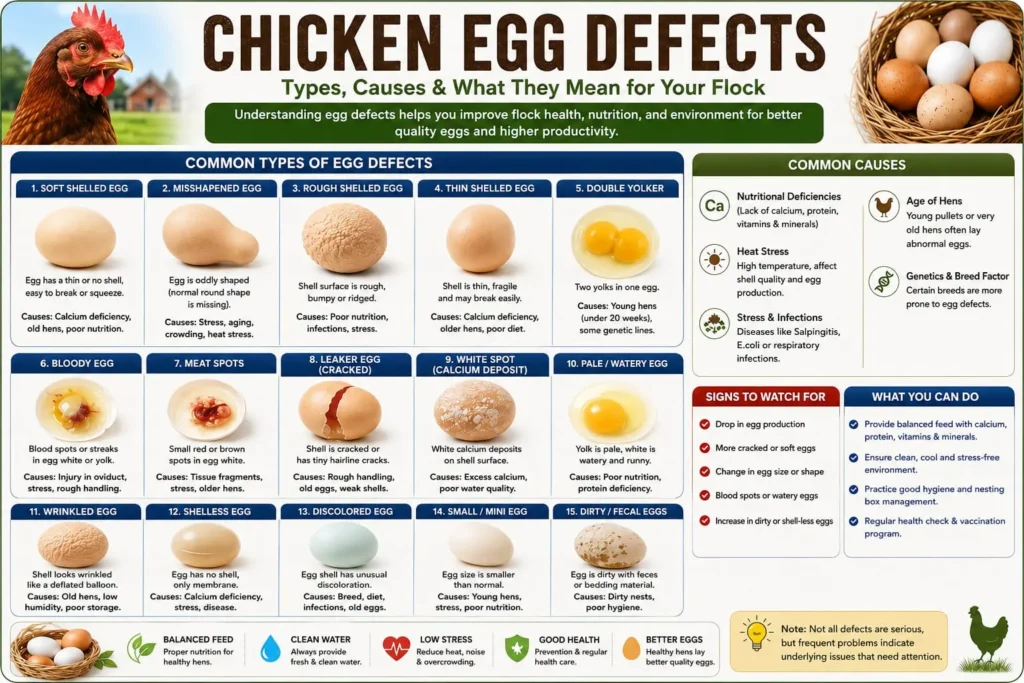
Crack open enough eggs and you’ll eventually hit one that looks wrong. Chicken egg defects cover any flaw in an egg’s shell, shape, size, or internal contents that sets it apart from a normal, market-quality egg.
Some defects are cosmetic and harmless. Others are early warning signs of a nutrition gap, a stressed flock, or a viral infection working through your birds. Knowing the difference saves you unnecessary worry and helps you catch real problems early.
Table of Contents
Quick Answer: Chicken egg defects usually fall into three buckets: shell defects, internal defects (yolk, white, blood spots), and size or shape defects. Most trace back to a hen’s age, diet, environment, or an underlying illness.
This article walks through every major defect type, what causes it, how commercial graders classify it, and when it’s worth a call to your veterinarian.
Read More: https://lashegg.com/common-egg-abnormalities/
Why Chicken Egg Defects Happen: The Formation Process
An egg takes about 24 to 26 hours to build inside a hen, moving through several distinct stages. Understanding this timeline explains why chicken egg defects show up in such different forms.
- Ovary: the yolk is released (ovulation)
- Magnum: albumen (egg white) layers form around the yolk
- Isthmus: shell membranes wrap the developing egg
- Shell gland (uterus): the hard shell forms over roughly 20 hours, with pigment added last
- Vagina: the finished egg is laid
Anything that disrupts one of these stages — illness, stress, poor nutrition, a hen’s age — can produce a visible or internal defect. That’s why defects are grouped by where in the process the disruption happened.
Shell-Related Chicken Egg Defects
Shell defects are the easiest for flock owners to spot, since they’re visible before you even crack the egg open.
Soft-Shelled or Shell-less Eggs
The shell gland fails to deposit a full calcium layer, leaving a rubbery membrane instead of a hard shell. This is common in pullets just starting to lay and can also appear when a hen’s laying cycle moves too fast for her body to keep up.
Thin or Weak Shells
Shells that crack under light pressure usually point to insufficient dietary calcium, low vitamin D3, or heat stress reducing feed intake. Older hens also naturally produce thinner shells as their reproductive system ages.
Wrinkled and Ridged Shells
Small wrinkles or raised ridge lines form when the egg briefly pauses partway through shell formation. Respiratory disease, most notably infectious bronchitis, is a documented and well-studied cause according to veterinary references such as the Merck Veterinary Manual.
Misshapen Shells
Flat sides, tapered ends, or lopsided shapes usually happen when two eggs meet in the oviduct at the same time, or when normal muscle contractions during shell formation are interrupted.
Rough or Chalky Shell Texture
Extra calcium carbonate deposited unevenly on the surface creates a gritty, sandpaper-like texture. It’s a cosmetic defect and doesn’t affect the egg inside.
Body-Checked Eggs
A crack forms inside the hen during formation and partially heals before the egg is laid, leaving a visible seam or bumpy repair line on the shell.
Table 1: Shell Defect Quick Reference
| Defect Type | What It Looks Like | Primary Cause | Egg Safety |
| Soft-shelled | No hard shell, rubbery | Young hen, low calcium | Safe if eaten fresh |
| Thin shell | Cracks under light pressure | Calcium/vitamin D deficiency, heat | Safe if intact |
| Wrinkled | Fine surface creases | Stress, respiratory illness | Safe unless cracked |
| Misshapen | Irregular shape | Two eggs colliding in oviduct | Safe |
| Chalky | Rough, gritty surface | Excess calcium deposit | Safe |
| Body-checked | Visible repaired crack line | Internal crack that partially healed | Check for full seal before eating |
Internal Chicken Egg Defects
Not all defects show on the outside. Some of the most common chicken egg defects only appear once you crack the shell.
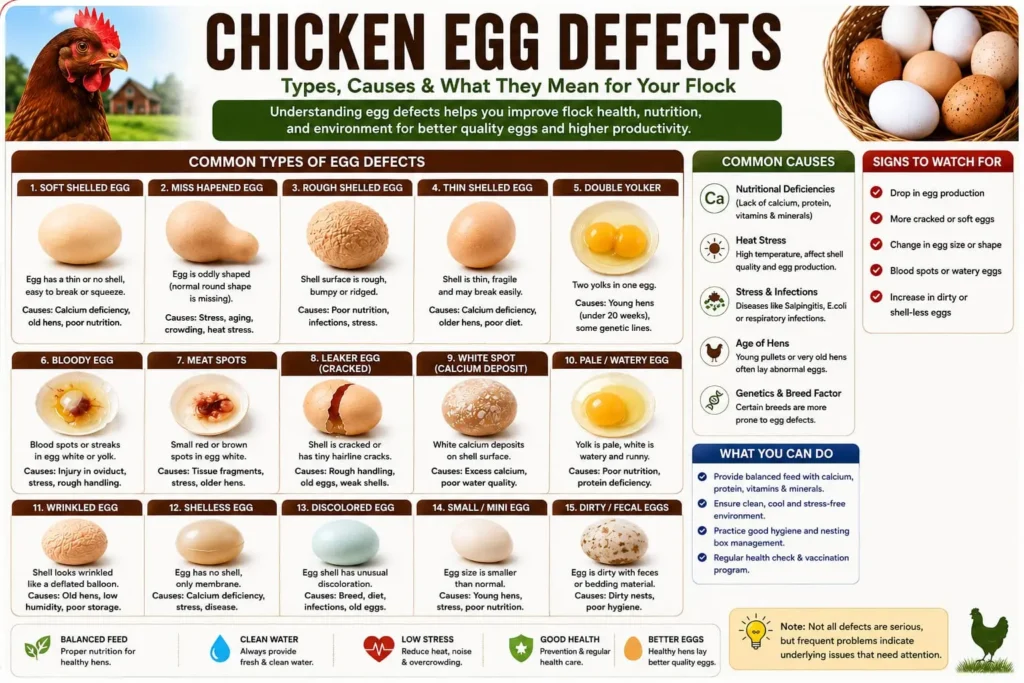
Double Yolks
Two yolks in one shell happen when ovulation releases two yolks close together. It’s common in young, high-production hens and in certain breeds with a genetic tendency toward it.
Yolkless (Wind) Eggs
A stray bit of tissue in the oviduct can trigger the whole egg-forming process without a yolk ever being present. These small, yolk-free eggs are most common at the very start of a pullet’s laying career.
Blood Spots
A minor blood vessel ruptures near the yolk during ovulation, leaving a small red or brown dot. It’s cosmetic, more frequent in brown-egg breeds, and doesn’t make the egg unsafe.
Meat Spots
Small tissue fragments shed from the oviduct wall show up as brownish specks in the egg white. Like blood spots, these are a quality issue rather than a safety issue.
Watery or Thin Albumen
As hens age, or as eggs sit too long in warm storage, the thick albumen layer breaks down and becomes runny. This lowers grading quality but doesn’t make the egg unsafe if properly refrigerated and cooked.
Egg-Within-an-Egg
A rare defect where a fully formed egg is pulled back up the oviduct by reverse muscle contractions and gets a second shell built around it.
Expert Tip: If you candle your eggs before selling or hatching them, internal defects like blood spots and yolkless anomalies are often visible without cracking the shell. Candling is standard practice in commercial grading for exactly this reason.
Size and Shape Chicken Egg Defects
Undersized or “Fairy” Eggs
Tiny eggs, sometimes with no yolk at all, typically appear when a hen is just beginning or just ending her laying cycle.
Oversized Eggs
Unusually large eggs are most often double yolks, though occasionally extra albumen fluid accumulates around a foreign particle, producing a jumbo-sized single-yolk egg.
Egg-Within-an-Egg vs. Double Yolk: Key Differences
| Feature | Double Yolk | Egg-Within-an-Egg |
| Frequency | Fairly common | Very rare |
| Cause | Two yolks ovulated together | Reverse oviduct contraction |
| Shell appearance | Normal, often larger | Two shells nested inside each other |
| Concern level | None | None, just unusual |
Common Causes of Chicken Egg Defects
Most chicken egg defects come down to a short list of underlying causes. Pinpointing the right one usually points straight to the fix.
- Hen age – Pullets and aging hens produce the widest range of defects
- Nutrition – Low calcium, phosphorus, or vitamin D weakens shell and internal quality
- Heat stress – Reduces feed intake and calcium absorption
- Environmental stress – Loud noise, predator threats, and overcrowding disrupt the laying cycle
- Genetics – Some breeds are more prone to double yolks or blood spots
- Disease – Viral and bacterial infections directly damage shell gland function
- Medications or toxins – Certain substances interfere with normal reproductive tract function
Chicken Egg Defects Caused by Disease
A single defective egg from one hen is rarely a health emergency. A pattern of chicken egg defects spreading across a flock is a different story, and it often points to infectious disease.
Infectious Bronchitis
One of the most frequently documented causes of shell defects in commercial and backyard flocks alike, according to veterinary sources like the MSD Veterinary Manual. Affected flocks often show wrinkled, thin, or misshapen shells alongside a sudden production drop.
Egg Drop Syndrome
This virus targets the shell gland specifically, producing soft-shelled or shell-less eggs and a steep decline in egg output, most often in older laying flocks.
Newcastle Disease
Beyond its serious systemic symptoms, Newcastle disease can cause thin, rough, and discolored shells as part of a broader flock health crisis.
Mycoplasma Infections
Bacterial respiratory infections in the Mycoplasma family reduce shell quality and are usually paired with nasal discharge or facial swelling.
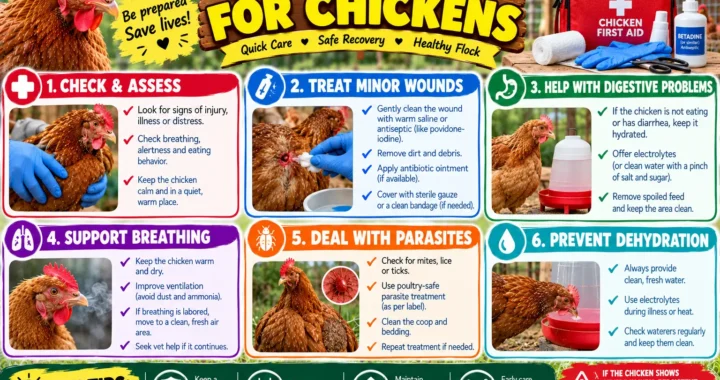
Warning: If chicken egg defects show up alongside coughing, sneezing, lethargy, or a sharp drop in flock-wide egg production, treat it as a potential disease event. Isolate affected birds immediately and contact a poultry veterinarian for diagnosis.
Table 2: Defect Patterns Linked to Disease
| Disease | Egg Defect Pattern | Additional Flock Symptoms |
| Infectious bronchitis | Wrinkled, thin, misshapen shells | Respiratory signs, lower lay rate |
| Egg drop syndrome | Soft or shell-less eggs | Often no other visible signs |
| Newcastle disease | Thin, rough, pale shells | Respiratory and nervous system signs |
| Mycoplasma infection | Reduced overall shell quality | Nasal discharge, facial swelling |
How Commercial Graders Classify Egg Defects
Large-scale egg production uses standardized grading systems, often guided by USDA quality standards, to sort eggs by shell soundness, shape, interior quality, and air cell size. Eggs with major shell defects are typically pulled and sold as “checks” or used in processed egg products rather than sold as whole shell eggs. Backyard flock owners can apply the same basic logic: candle and visually inspect eggs, and set aside anything with a compromised shell for cooking rather than fresh sale or long storage.
When to Call a Vet
When to Call a Vet:
- Multiple hens show chicken egg defects at the same time
- Defects appear alongside respiratory symptoms or lethargy
- Flock-wide egg production drops suddenly
- You notice blood, swelling, or discharge around a hen’s vent
- Defects continue for more than a week despite ruling out diet, heat, and stress
Diagnosing the exact viral or bacterial cause behind a flock-wide defect pattern requires testing that only a veterinarian or diagnostic lab can perform. Home observation is a starting point, not a diagnosis.
Common Mistakes When Handling Egg Defects
Common Mistakes:
- Assuming every unusual egg means a sick flock
- Adding extra calcium without evaluating the full diet first
- Ignoring a defect pattern because “it’s just one hen”
- Skipping candling before selling or hatching eggs
- Waiting too long to isolate a bird showing illness signs
Preventing Chicken Egg Defects
- Feed a complete, age-appropriate layer ration with balanced calcium, phosphorus, and vitamin D3.
- Offer free-choice calcium, such as crushed oyster shell, separate from the main feed.
- Manage heat stress with shade, airflow, and consistently cool drinking water.
- Limit sudden disturbances like predator scares or abrupt schedule changes.
- Keep lighting consistent, since laying cycles are closely tied to light exposure.
- Watch flock health daily and isolate any bird with respiratory or digestive symptoms.
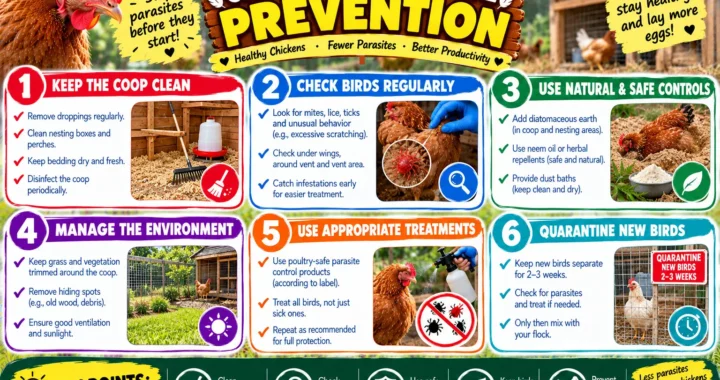
- Maintain clean, dry coop conditions to lower disease pressure and parasite load.
Organizations like the USDA, AVMA, and university extension services consistently point to nutrition and stress management as the two factors flock owners have the most direct control over.
Are Eggs With Defects Safe to Eat?
Most chicken egg defects — blood spots, meat spots, double yolks, wrinkled shells, watery whites — don’t make an egg unsafe to eat. The main exception is a cracked or shell-less egg that has sat unrefrigerated, since a compromised shell exposes the contents to bacteria like Salmonella more easily. When in doubt, cook thoroughly or discard.