Chicken Health Checklist: Building a Routine That Actually Works

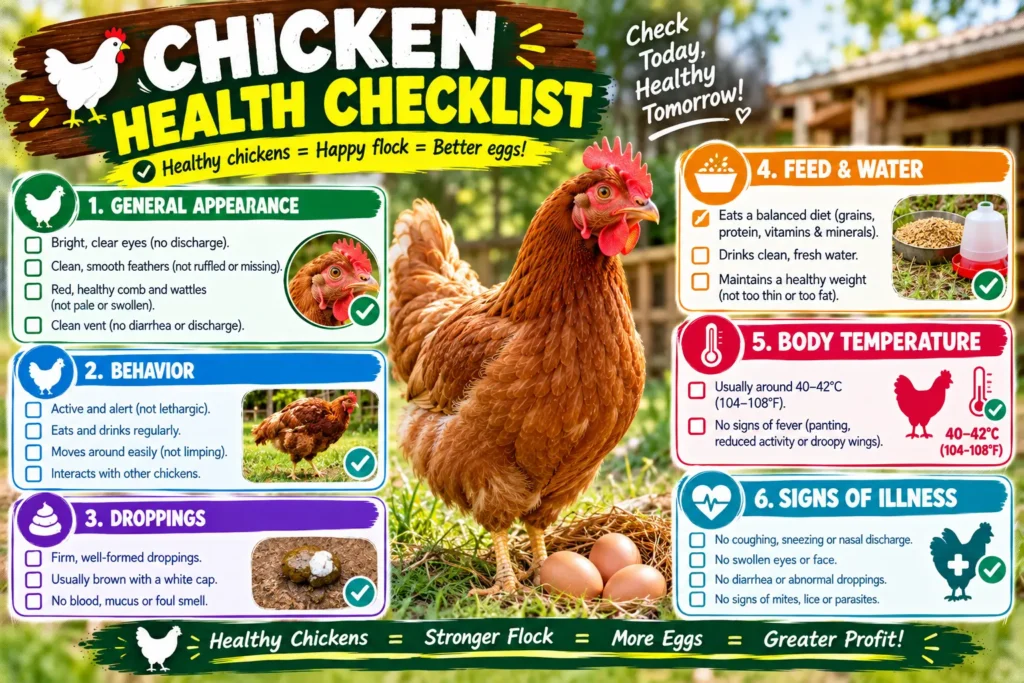
A chicken health checklist works best as an ongoing system, not a one-time read. Rather than assessing a single bird’s condition in the moment, which is covered elsewhere, this backyard chicken checklist focuses on the recurring tasks, daily, weekly, monthly, and seasonal, that keep a flock healthy over the long run.
This guide organizes flock management by frequency, so you can build these tasks naturally into your existing routine rather than trying to remember everything at once.
Quick Answer: A solid chicken health checklist includes daily tasks (food, water, egg collection, quick visual check), weekly tasks (coop cleaning, deeper observation), monthly tasks (hands-on health checks, weighing), and seasonal tasks (parasite treatment, winterizing, deep coop cleaning). Quarantine protocols for new birds and basic record-keeping round out a complete flock health checklist.
Table of Contents
Daily Chicken Health Checklist Tasks
The Essentials Every Day
- Provide fresh water and check that waterers aren’t fouled, frozen, or empty
- Provide adequate feed and check that feeders are functioning and accessible
- Collect eggs promptly to reduce breakage and contamination risk
- Do a quick visual scan of the flock for any bird acting unusually
- Let the flock out of the coop and secure it again at dusk for predator protection
| Daily Task | Why It Matters |
| Fresh water | Supports every aspect of health, including egg production |
| Feed check | Ensures consistent nutrition, catches feeder problems early |
| Egg collection | Reduces breakage, contamination, and egg-eating habits |
| Visual flock scan | Catches obvious changes before they become serious |
| Secure coop at dusk | Protects against nighttime predator activity |
Did You Know? Many keepers find that egg collection time doubles as one of the best natural opportunities for a quick visual flock check, since it already requires walking through the coop and observing the birds up close.
Weekly Chicken Health Checklist Tasks
Building on the Daily Basics
- Clean and refill waterers thoroughly, not just topping off
- Rake or spot-clean bedding and remove heavily soiled areas
- Check nesting boxes for cleanliness and adequate bedding
- Observe the flock more closely for feather condition, activity level, and social dynamics
- Check feed storage for freshness, pests, or moisture issues
| Weekly Task | Why It Matters |
| Thorough waterer cleaning | Prevents algae and bacterial buildup |
| Bedding maintenance | Reduces parasite and bacteria load |
| Nesting box check | Supports clean egg collection, reduces breakage |
| Closer flock observation | Catches subtler changes daily scans might miss |
| Feed storage check | Prevents mold and pest contamination |
Monthly Chicken Health Checklist Tasks
The Hands-On Check
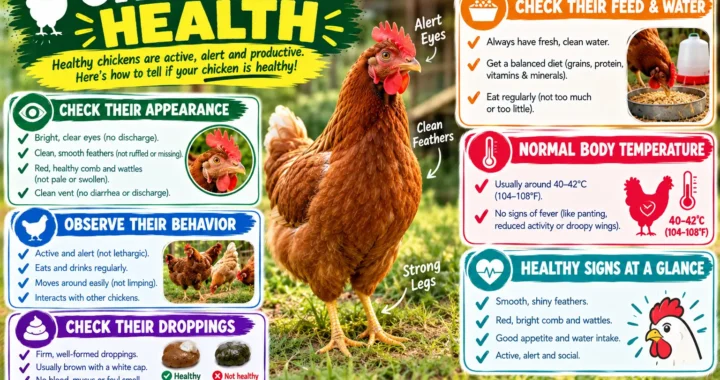
- Perform an individual hands-on health check on each bird (comb, eyes, feathers, body condition, vent area)
- Weigh each bird if possible and track over time
- Check for external parasites, mites and lice, up close
- Review egg production patterns and note any flock-wide or individual changes
- Deep clean the coop, including full bedding replacement
Step-by-Step: The Monthly Individual Check
- Handle each bird individually. This builds familiarity and makes changes easier to notice over time.
- Check comb, eyes, and overall face. Compare against known healthy signs.
- Feel body condition along the keel bone. Note any significant change from the previous check.
- Fan through feathers, checking for parasites. Pay particular attention to under the wings and around the vent.
- Record findings. A simple notebook or spreadsheet makes patterns over time much easier to spot.
Read More: https://lashegg.com/chicken-health/
Seasonal Chicken Health Checklist Tasks
Spring
- Deep clean and inspect the coop after winter
- Begin or resume parasite prevention routines as needed
- Assess flock for post-winter body condition
Summer
- Increase water checks to at least twice daily during heat
- Provide shade and improve ventilation
- Watch closely for heat stress signs during peak temperatures
Fall
- Prepare for molting season with increased dietary protein
- Consider supplemental lighting plans for shorter days ahead
- Winterize the coop: insulation, draft-proofing, ventilation balance
Winter
- Check water sources for freezing multiple times daily
- Monitor for cold stress and frostbite risk on combs and wattles
- Maintain consistent feeding despite shorter, colder days
| Season | Top Priority Tasks |
| Spring | Deep clean, parasite prevention, post-winter assessment |
| Summer | Heat management, water frequency, shade/ventilation |
| Fall | Molt support, lighting planning, winterizing |
| Winter | Freeze prevention, cold stress monitoring, consistent feeding |
Quarantine and New Bird Protocol
Why This Belongs on Every Backyard Chicken Checklist
Introducing new birds without proper quarantine is one of the most common ways illness and parasites enter an otherwise healthy flock. A dedicated quarantine step protects your existing investment in flock health.
Step-by-Step: Quarantining New Birds
- Separate new birds completely for at least two weeks. Use a different space with no shared equipment.
- Observe daily for any signs of illness. Watch closely during this window before any integration begins.
- Wash hands and change footwear between handling groups. This prevents accidental cross-contamination during the quarantine period.
- Introduce gradually after quarantine clears. Visual contact first, then supervised interaction, before full integration.
Expert Tip
Keep quarantine equipment, feeders, waterers, and any tools, completely separate from your main flock’s equipment. Even careful hand-washing can miss contamination transferred through shared bowls or tools.
Simple Record-Keeping for Flock Health
What to Track
- Daily or weekly egg counts
- Individual bird weights from monthly checks
- Any observed symptoms or concerns, with dates
- Vaccination or treatment history, if applicable
- New bird introduction dates and quarantine completion
Why Records Matter More Than Memory
A written record makes it far easier to notice gradual trends, like a slow decline in one hen’s weight, that would be nearly impossible to catch relying on memory alone across a busy season.
Common Mistakes to Avoid
- Treating a chicken health checklist as a one-time read rather than an ongoing routine
- Skipping quarantine for new birds because they “look fine”
- Doing thorough hands-on checks only when a bird already seems sick
- Letting seasonal tasks slip because they aren’t part of the daily routine
- Relying on memory instead of simple written records for tracking changes over time
Warning
Skipping quarantine, even for birds from a seemingly reputable source, is one of the most common ways preventable illness and parasites spread into an established flock. This single step is worth the inconvenience every time new birds are added.
When to Call a Vet
Contact a poultry veterinarian if your routine checklist checks reveal a concerning pattern, such as a bird with declining weight over several monthly checks, or if any bird shows acute symptoms between scheduled checks. A consistent chicken health checklist makes it easier to know when something is genuinely different rather than simply normal variation.
People Also Ask
What should be on a daily chicken health checklist? Fresh water, adequate feed, egg collection, a quick visual flock scan, and securing the coop at dusk cover the essential daily tasks for most backyard flocks.
How often should I do a full flock health checklist review? A monthly hands-on individual check, combined with daily visual observation and weekly coop maintenance, covers most flocks well without becoming overwhelming.
Is quarantine really necessary for every new bird? Yes, even birds that appear healthy can carry illness or parasites without obvious symptoms, making quarantine one of the most important items on any backyard chicken checklist.
What seasonal tasks matter most for flock health? Heat management in summer and freeze prevention in winter are generally the most time-sensitive seasonal priorities, though molt support and winterizing in fall also matter significantly.
Do I need special tools for a flock health checklist? No, a simple scale for weighing, a notebook or spreadsheet for records, and your own hands and eyes for checks are sufficient for most backyard operations.
Final Thoughts
A chicken health checklist works best when it’s built into your existing routine rather than treated as an occasional task. Daily basics, weekly maintenance, monthly hands-on checks, and seasonal adjustments together cover the full range of what a backyard flock needs.
Add quarantine and simple record-keeping to complete the system, and reach out to a poultry veterinarian whenever your ongoing checks reveal a pattern or symptom that doesn’t fit the expected routine.
5. FAQ
Q: How long should a new chicken health checklist quarantine period last? A: At least two weeks is generally recommended, giving enough time for most illnesses to show visible symptoms before integration with the existing flock.
Q: What’s the difference between a chicken health checklist and checking if one bird is healthy? A: This checklist covers ongoing flock management tasks by frequency, while assessing an individual bird’s condition in the moment is a separate, more immediate kind of check.
Q: Can I skip monthly hands-on checks if my flock seems fine? A: It’s not recommended, since chickens instinctively hide illness, meaning hands-on checks often catch issues before they become visible from a distance.
Q: How detailed should flock health checklist records be? A: Simple is fine; tracking egg counts, individual weights, and any observed symptoms with dates provides enough detail to spot meaningful trends over time.
Q: What’s the most commonly skipped item on a backyard chicken checklist? A: Quarantine for new birds is probably the most frequently skipped step, often because new arrivals look outwardly healthy despite potentially carrying illness or parasites.