Supplements for Healthy Egg Laying: What Actually Helps

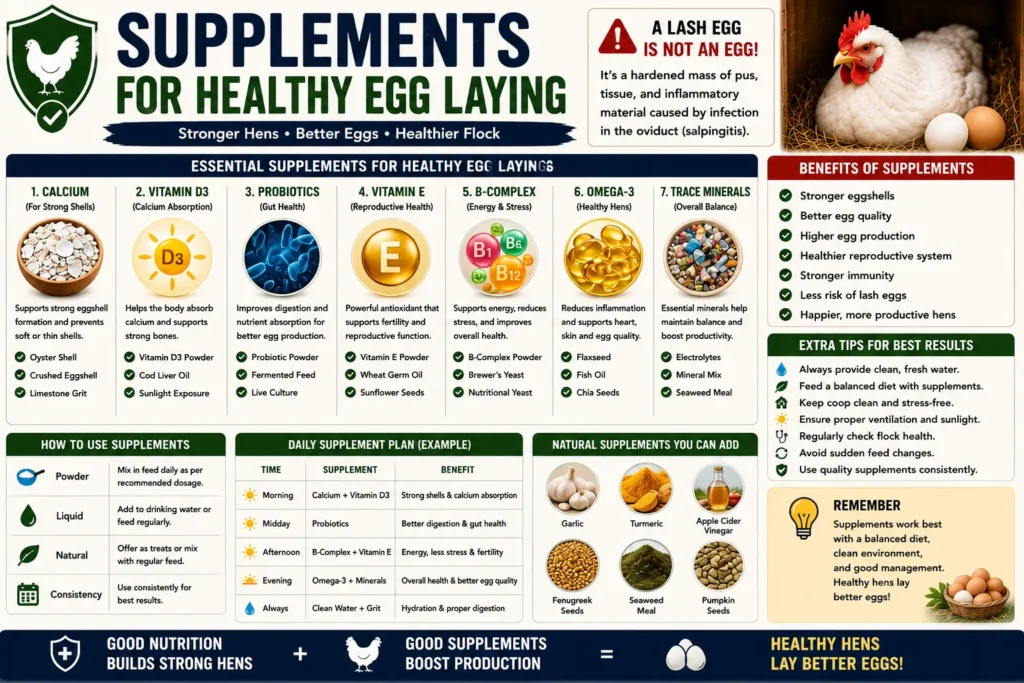
If your hens are laying fewer eggs, thinner shells, or seem sluggish during peak season, you’re probably looking into supplements for healthy egg laying rather than a full diet overhaul. The truth is most hens on a good layer feed don’t need extra supplements at all — but specific situations, like molting, heat stress, aging flocks, or recovery from illness, genuinely benefit from targeted support.
This guide breaks down which supplements actually make a measurable difference, which vitamins for hens matter most, and which trendy add-ins are mostly marketing. You’ll get a clear, evidence-based picture instead of a shopping list built on guesswork.
Quick Answer: For most backyard flocks, the most useful supplements for healthy egg laying are free-choice calcium (oyster shell), a B-complex or electrolyte boost during stress or illness, and probiotics during antibiotic recovery. Vitamin D3, vitamin E, and selenium matter most when a flock shows specific deficiency signs, not as a default daily add-on.
Table of Contents
Do Hens on Layer Feed Even Need Supplements?
A complete, fresh layer feed already contains the vitamins and minerals formulated for active laying hens, including vitamin D3, vitamin E, B vitamins, and trace minerals. Most healthy hens eating a properly stored layer feed do not need daily supplements.
Supplements become useful in specific situations:
- Molting recovery, when feather regrowth pulls protein and amino acids from the body.
- Heat stress, which increases electrolyte loss and reduces feed intake.
- Illness recovery, especially after antibiotics disrupt gut bacteria.
- Older hens with declining shell quality despite adequate calcium intake.
- Flocks on a homemade or unbalanced diet rather than commercial feed.
Why Vitamins for Hens Aren’t a One-Size-Fits-All Answer
Different vitamins address different problems. Giving a general vitamin blend when a flock has a specific deficiency, like low vitamin D3 from lack of sunlight, may not fix the actual issue if the dose or type isn’t matched to the cause.
Key Supplements for Healthy Egg Laying, Explained
1. Calcium (Oyster Shell)
Calcium is the most important supplement for egg-laying hens, since laying nearly depletes a hen’s daily calcium intake through shell formation. Offer crushed oyster shell free-choice in a separate dish rather than mixed into feed, so each hen regulates her own intake based on her laying rate.
2. Vitamin D3
Vitamin D3 allows the body to absorb and use dietary calcium. Hens with limited sun exposure, especially in winter or in mostly indoor coops, may benefit from a D3-fortified feed or supplement, since skin exposure to sunlight is one natural source of D3 production.
Read More: https://lashegg.com/best-diet-to-prevent-lash-eggs/
3. B-Complex Vitamins
B vitamins support nerve function, metabolism, and energy production. They’re commonly added to poultry electrolyte and vitamin supplements used during stress, transport, heat waves, or recovery from illness.
4. Vitamin E and Selenium
This pair works together to support immune function and reproductive health. Deficiency is uncommon on a complete commercial feed but can appear in flocks on poor-quality or old feed, or homemade diets lacking trace minerals.
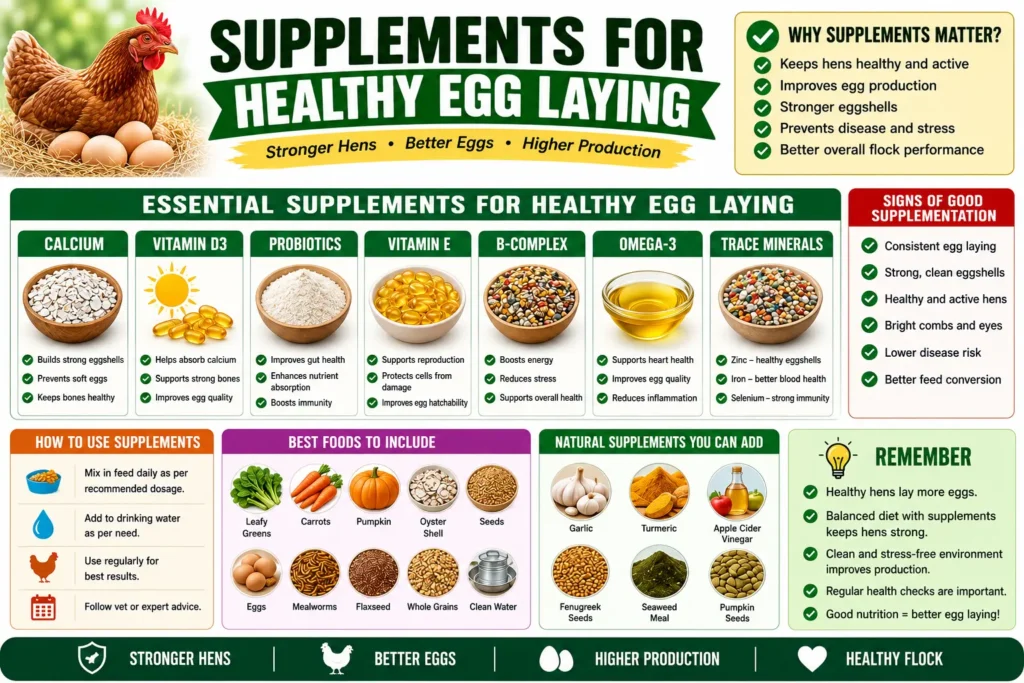
5. Probiotics
Probiotics help restore healthy gut bacteria, particularly after antibiotic treatment or digestive upset. A balanced gut microbiome supports nutrient absorption, which indirectly supports consistent laying.
6. Electrolytes
Electrolyte supplements (added to water) help hens recover from heat stress, transport stress, or illness by replacing lost sodium, potassium, and other minerals faster than feed alone.
7. Protein and Amino Acid Boosters
During heavy molting, extra protein (mealworms, black soldier fly larvae, or a higher-protein feed) supports feather regrowth without stealing resources from egg production.
| Supplement | Best Used For | How Often |
| Oyster shell (calcium) | Shell strength, ongoing laying support | Free-choice, always available |
| Vitamin D3 | Limited sunlight, poor calcium absorption | As needed, check feed levels first |
| B-complex | Stress recovery, illness, transport | Short-term, during recovery |
| Vitamin E + selenium | Immune support, deficiency correction | Only if deficiency signs appear |
| Probiotics | Post-antibiotic gut recovery | 1–2 weeks after treatment |
| Electrolytes | Heat stress, dehydration, illness | Short-term, in water |
| Extra protein | Molting, feather regrowth | During molt season only |
Expert Tip: Before adding any supplement, check your feed’s guaranteed analysis tag first. Many “deficiencies” are actually just poor feed storage or an expired bag losing potency, not a true dietary gap.
Vitamins for Hens: A Closer Look at Each One
Vitamin A
Supports vision, immune function, and healthy mucous membranes. Deficiency can show as reduced hatch rates and lower disease resistance, though it’s rare on complete commercial feed.
Vitamin D3
Already covered above, but worth repeating: this is one of the more commonly under-supplied vitamins for hens kept in low-sunlight climates or mostly enclosed runs.
Vitamin E
Works as an antioxidant and supports fertility and immune response. Often paired with selenium in supplement products since the two work synergistically.
Vitamin K
Supports blood clotting. True deficiency is rare but can appear if a flock is on moldy feed, since certain molds interfere with vitamin K function.
B Vitamins (B1, B2, B6, B12, Biotin, Folic Acid)
Support metabolism, nerve function, and energy. Biotin specifically supports feather and foot health, which is why it shows up often in molting-support supplements.
Did You Know?
Did You Know? Riboflavin (B2) deficiency in poultry can cause a distinctive symptom called “curled toe paralysis” in chicks, which is one reason starter feeds are carefully fortified even before hens ever reach laying age.
Signs Your Flock Might Actually Need a Supplement
| Sign | Possible Cause | Supplement to Consider |
| Thin, soft, or missing shells | Calcium or D3 shortfall | Oyster shell, check D3 levels |
| Slow feather regrowth after molt | Protein/biotin shortage | Extra protein, B-complex |
| Lethargy after heat wave | Electrolyte loss | Electrolyte water additive |
| Digestive upset post-antibiotics | Disrupted gut flora | Poultry-specific probiotic |
| Pale comb, reduced egg output over weeks | Possible broader deficiency or illness | Veterinary evaluation first |
Warning: A sudden drop in egg production combined with lethargy, appetite loss, or abnormal droppings is more likely to signal illness than a vitamin gap. Supplements should never replace a veterinary check when a hen seems genuinely sick.
Common Mistakes When Using Supplements for Healthy Egg Laying
Common Mistakes:
- Adding multiple supplements at once, making it impossible to tell what’s actually helping.
- Giving high-calcium supplements to pullets, roosters, or non-laying hens, which can strain their kidneys over time.
- Assuming a supplement can fix a problem caused by dirty water, moldy feed, or parasites.
- Over-supplementing vitamin A or D, both of which can become toxic in excess, unlike water-soluble B vitamins.
- Buying human vitamin products instead of poultry-formulated ones, which may have incorrect dosing for a hen’s size.
Step-by-Step: Adding Supplements Safely
- Confirm the base diet first. Check that layer feed is fresh, properly stored, and appropriate for the flock’s age.
- Identify the specific problem. Match the symptom (soft shells, slow molt, lethargy) to a likely cause before choosing a product.
- Introduce one supplement at a time. Wait 1–2 weeks before adding another so you can track what’s working.
- Use poultry-specific products. Choose supplements formulated and dosed for chickens, not general livestock or human products.
- Reassess after two to three weeks. If there’s no improvement, the cause may not be nutritional at all.
Natural and Whole-Food Sources of Key Nutrients
Not every nutrient needs to come from a bottle or packet. Many backyard keepers cover gaps through whole foods:
- Calcium: Crushed oyster shell, baked and crushed eggshells.
- Protein: Mealworms, black soldier fly larvae, cooked eggs (in moderation).
- Vitamin A: Leafy greens, carrots, pumpkin.
- Vitamin D3: Direct sunlight exposure, D3-fortified feed.
- B vitamins: Whole grains, brewer’s yeast in small amounts.
These whole-food options work well as supplements to a complete layer feed, not as a replacement for one.
When to Call a Vet
When to Call a Vet: If egg production drops sharply, a hen shows lethargy, pale comb, labored breathing, or abnormal droppings alongside reduced laying, contact a poultry-experienced veterinarian. Vitamins and supplements for healthy egg laying support a healthy hen — they don’t treat infection, parasites, or organ-related illness.
People Also Ask
Do egg-laying hens need vitamins every day? Most hens on a fresh, complete layer feed do not need daily added vitamins. Supplements are more useful during specific stress periods like molting, illness recovery, or heat waves.
What is the best natural supplement for egg production? Free-choice oyster shell is widely considered the most impactful natural supplement, since calcium demand for shell formation is constant and high in actively laying hens.
Can too many supplements hurt a hen? Yes. Fat-soluble vitamins like A and D can build up to toxic levels with overuse, and excess calcium in non-laying birds can strain the kidneys over time.
Do vitamins for hens improve egg yolk color? Diet does influence yolk color, mainly through carotenoids found in marigold, corn, and leafy greens, rather than standard vitamin supplements alone.
How long does it take for supplements to improve egg laying? Most nutritional changes take two to three weeks to show a visible effect, since it takes time for a hen’s body to adjust and for new eggs already in development to be laid.
Conclusion
Supplements for healthy egg laying work best as targeted tools, not daily habits layered onto an already-complete diet. Free-choice calcium, situational B-complex or electrolyte support, and probiotics after illness cover most real-world needs for backyard flocks. Vitamins for hens matter most when there’s a specific, identifiable gap, not as a blanket fix for every dip in production.
Watch your flock’s shell quality, energy, and appetite closely, since these are the earliest signs of both nutritional gaps and underlying illness. When symptoms go beyond what diet can explain, a poultry-experienced veterinarian should evaluate the hen rather than adding another supplement to the feed dish.
5. FAQ
What are the best supplements for healthy egg laying in chickens? Free-choice calcium through oyster shell, situational B-complex or electrolyte support during stress, and probiotics after illness are the supplements with the clearest, most consistent benefit for laying hens.
Which vitamins for hens matter most for egg production? Vitamin D3 (for calcium absorption), B vitamins (for metabolism and stress recovery), and vitamin E with selenium (for immune and reproductive support) are the most commonly relevant vitamins for hens.
Can a complete layer feed replace the need for supplements entirely? For most healthy hens, yes. A fresh, properly stored layer feed already contains the core vitamins and minerals needed for regular laying; supplements fill gaps during stress, illness, or specific deficiencies.
Is it safe to give laying hen supplements to roosters or chicks? No, not the calcium-heavy ones. High-calcium layer supplements can harm the kidneys of roosters, chicks, and pullets not yet laying, so keep calcium free-choice and separate from general feed in mixed flocks.
How do I know if my hens need supplements for healthy egg laying? Look for specific signs like thin shells, slow feather regrowth after molt, or lethargy after heat stress. If a hen seems genuinely sick rather than just under-supported nutritionally, veterinary evaluation should come before supplementation.