Can Chickens Lay Eggs After Salpingitis?

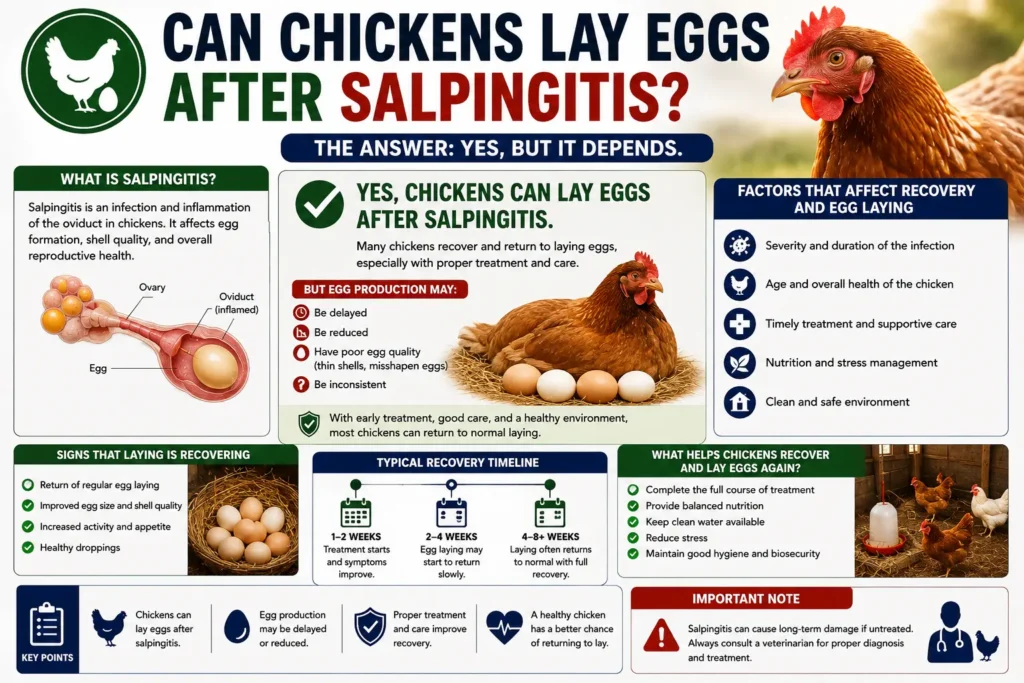
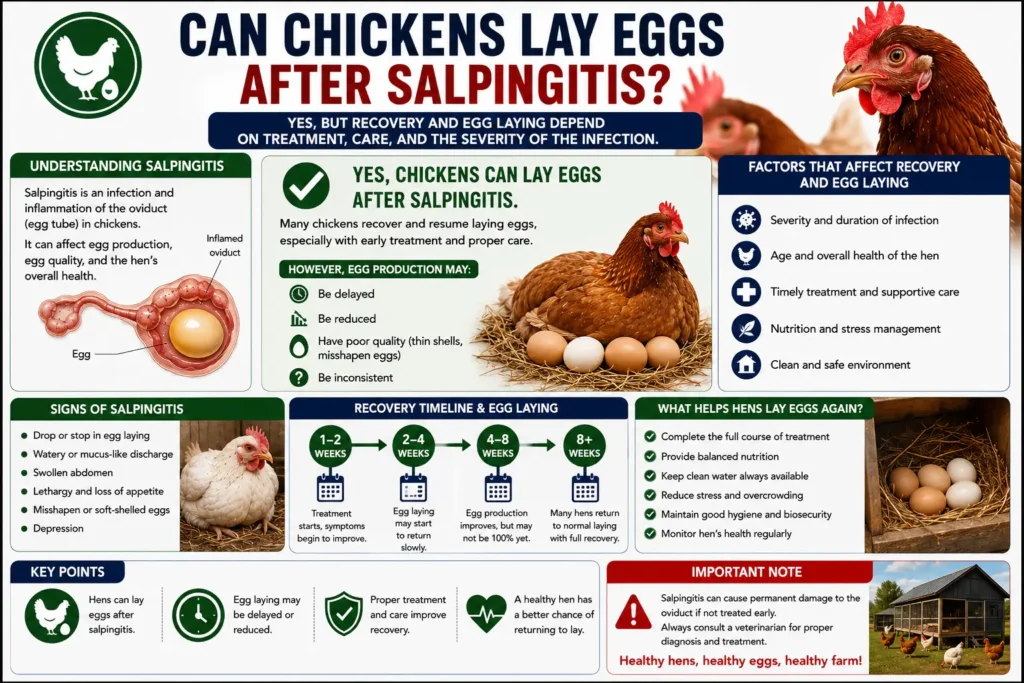
Can chickens lay eggs after salpingitis? Sometimes, yes. Some hens go on to lay normally again, some lay fewer or irregular eggs, and others stop laying permanently. There’s no single guaranteed outcome, and that uncertainty is genuinely the most honest answer any expert can give you.
What determines the outcome is how much damage the infection did to the oviduct before it was caught and treated. A hen diagnosed early, with a mild bacterial infection that responds well to antibiotics, has a real chance at returning to productive laying. A hen with extensive oviduct scarring or a severe, prolonged infection is far less likely to lay normally again, even after she physically recovers.
Quick Answer: Some chickens do lay eggs after salpingitis, but it’s not guaranteed. Egg production after recovery depends on how much oviduct damage occurred, how quickly treatment started, and the hen’s overall health. Mild cases treated early have the best odds of a return to laying.
This guide walks through what egg production after recovery actually looks like, what affects the odds, and how to support a hen through the process.
Table of Contents
Understanding What Salpingitis Does to the Oviduct
To understand why laying after salpingitis is so unpredictable, it helps to understand what the infection actually damages. Salpingitis is inflammation of the oviduct, the long tube where a hen’s egg is built, layer by layer, from yolk to shell. Bacteria such as E. coli, Salmonella, and Mycoplasma gallisepticum are common causes, along with certain viral infections that damage the reproductive tract as a secondary effect.
When the oviduct becomes inflamed and infected, it can develop scarring, blockages, or a buildup of pus and tissue debris, commonly seen as a lash egg. The oviduct’s ability to move an egg through its normal stages depends on healthy, functioning tissue and coordinated muscle contractions. Damage to that tissue is what interferes with future egg production, not the infection itself once it’s resolved.
Read More: https://lashegg.com/should-you-isolate-a-chicken-with-salpingitis/
Why Outcomes Vary So Much
- How early the infection was caught. Antibiotics work best when the infection is still contained and hasn’t caused extensive scarring.
- How severe the infection became. A soft, localized mass responds very differently to treatment than one that’s spread further into the abdominal cavity.
- Whether the cause was bacterial or viral. Bacterial cases have treatment options; viral cases don’t, and recovery depends more on the hen’s own immune response.
- The hen’s age and overall health. Younger, healthier hens generally have better recovery odds than older or already compromised birds.
- Whether complications developed. Conditions like egg yolk peritonitis or oviduct impaction significantly lower the chances of a full recovery.
What Egg Production After Recovery Actually Looks Like
Poultry health sources describe a genuinely wide range of outcomes, and it’s worth seeing them side by side rather than picking just one.
| Outcome | What It Looks Like | How Common |
| Full return to normal laying | Regular egg production resumes at pre-illness levels | Possible with mild, early-treated cases |
| Reduced or irregular laying | Fewer eggs, occasional soft-shelled or oddly shaped eggs | Common after moderate cases |
| Occasional lash eggs continue | Hen lays normally most of the time but produces another lash egg occasionally | Reported in some recovered hens |
| Permanent stop in laying | Hen survives but never lays again | Common in hens with significant oviduct damage |
| Does not survive | Infection progresses despite treatment or goes undetected | More likely in severe, advanced, or untreated cases |
There isn’t a way to predict exactly which outcome a specific hen will land in without veterinary evaluation, and even then, some uncertainty usually remains until you see how she actually responds over the following weeks and months.
Did You Know? A hen can look completely healthy and continue eating, drinking, and behaving normally for months while an oviduct infection develops internally. By the time visible symptoms or a lash egg appear, the infection has often been present for a while already, which is part of why outcomes vary so widely.
Real Stories From Chicken Keepers: Why “It Depends” Is the Honest Answer
Ask ten experienced backyard chicken keepers about a hen who’s had salpingitis, and you’ll likely hear ten different outcomes. Some describe hens who laid one lash egg years ago and have been perfectly normal layers ever since. Others describe hens who never produced another egg but lived out full, healthy lives as flock members. Still others lost a hen within months despite doing everything right.
This isn’t inconsistency in the advice; it’s an accurate reflection of how variable this condition really is. Salpingitis isn’t one single, predictable disease process. It’s inflammation with many possible causes, many possible severities, and many possible amounts of internal damage, all bundled under one diagnostic label. A hen whose salpingitis stemmed from a minor bacterial infection caught within days behaves nothing like a hen whose infection went unnoticed for months before a lash egg finally appeared.
That’s also why online forums and chicken-keeping communities are full of conflicting personal anecdotes about egg production after recovery. Both the success stories and the disappointing outcomes are true, just for different hens, under different circumstances. The most useful thing you can do with your own hen is treat her case individually rather than assuming her outcome will match a story you read online.
Should You Retire a Recovered Hen From Breeding or Egg Sales?
If you sell eggs, raise breeding stock, or run a small commercial operation, a hen recovering from salpingitis raises practical questions beyond her personal wellbeing.
- Egg sales: Eggs laid by a hen currently showing symptoms should never be sold or eaten. Once she’s fully recovered and a vet confirms she’s laying normally again, her eggs are generally treated the same as any other hen’s, though many keepers prefer a short observation period before resuming sales from her specifically.
- Breeding decisions: Hens with a history of salpingitis, especially recurrent cases, are sometimes retired from breeding programs, partly because underlying susceptibility can have a genetic or conformational component in certain lines, and partly because repeated reproductive stress isn’t ideal for a hen already managing oviduct damage.
- Commercial context: In larger commercial operations, a hen that develops salpingitis is typically culled immediately, since reduced or stopped egg production isn’t compatible with a production-focused operation. Backyard keepers usually have more flexibility to prioritize the hen’s wellbeing over her output.
None of these decisions are purely medical ones. They combine your hen’s actual prognosis, which only a vet can assess accurately, with your own goals for keeping chickens in the first place.
Signs Your Hen Might Return to Laying
While there’s no way to guarantee outcomes, a few signs during recovery are generally encouraging:
- Appetite and energy return to normal within days to a couple of weeks
- Abdominal swelling decreases and eventually resolves
- Droppings return to a normal consistency
- No additional lash eggs appear during the recovery window
- A vet confirms improvement on follow-up examination
Signs Egg Production May Not Return
- Persistent abdominal swelling or a continued “penguin” stance
- Repeated lash eggs over weeks or months
- Chronic lethargy despite treatment
- A vet identifies significant oviduct scarring, impaction, or peritonitis on exam or imaging
How Long Does Recovery Take Before Laying Resumes?
Recovery timelines vary considerably depending on severity, but a few general patterns show up across cases:
- Mild bacterial cases treated early: Some hens show improvement within one to two weeks of starting antibiotics, with laying potentially resuming within a few weeks to a couple of months.
- Moderate cases: Recovery and any return to laying may take several months, often with reduced egg frequency compared to before.
- Severe or advanced cases: Even with treatment, some hens never return to laying, and recovery focuses on quality of life rather than restoring egg production.
- Viral cases: Timeline depends heavily on the hen’s own immune response, since there’s no direct antiviral treatment available.
Veterinarians sometimes recommend intentionally pausing egg production during recovery, using reduced light exposure and a molt-supporting diet, to give the reproductive system time to rest and heal before asking it to resume normal work.
Expert Tip: Don’t judge whether egg production after recovery is “working” based on the first week or two alone. Many recovering hens need a longer runway, sometimes a full molt cycle, before their laying pattern stabilizes into whatever their new normal will be.
Supporting a Hen’s Recovery and Future Egg Production
Home Care Steps You Can Take
- Provide a high-quality layer feed with balanced calcium and protein
- Keep nest boxes and bedding clean to reduce reinfection risk
- Minimize stress by keeping her in a calm, low-competition environment during recovery
- Watch body weight, since obesity is a known risk factor for both salpingitis and complications during recovery
- Give her time and don’t rush reintroduction to a demanding flock environment
What Requires Veterinary Treatment
- Diagnosing the specific cause of salpingitis through exam, imaging, or culture
- Prescribing appropriate antibiotics for bacterial cases
- Surgical removal of the oviduct in cases where it’s severely damaged or repeatedly causing problems
- Hormonal implants to pause egg production and allow healing, when appropriate
- Assessing whether euthanasia is the kindest option in advanced or non-responsive cases
Home care supports recovery, but it doesn’t replace an actual diagnosis. A hen showing symptoms of salpingitis needs professional evaluation to have the best chance at any future egg production at all.
Warning: Never assume a hen has fully recovered just because she looks and acts normal for a few days. Salpingitis can be a slow-developing, internally hidden condition, and symptoms can return even after an apparent improvement. Follow-up monitoring matters as much as the initial treatment.
Common Mistakes Keepers Make
- Expecting an immediate return to full egg production right after treatment ends
- Assuming a hen who lays one normal egg is fully healed and needs no further monitoring
- Skipping veterinary follow-up because symptoms seem to have resolved
- Overfeeding treats during recovery, which can slow healing and worsen weight-related risk factors
- Rushing a recovering hen back into full flock competition too soon
When to Call a Vet
- At the first sign of a lash egg, abdominal swelling, or sudden lethargy
- If a treated hen’s symptoms return or worsen
- If egg production doesn’t resume within the timeframe your vet expects for her specific case
- Before making decisions about surgery, hormonal treatment, or euthanasia
- If you’re unsure whether a hen showing partial recovery is safe to return to normal flock life
Frequently Asked Questions People Also Search
Will a hen ever lay a normal egg again after a lash egg?
It’s possible, but not guaranteed. Some hens return to normal laying after a single lash egg incident, especially with prompt treatment, while others never lay again or continue to have occasional problems.
Is it worth treating a hen with salpingitis if she might not lay again?
Many backyard keepers treat hens with salpingitis regardless of future egg production, since backyard flocks often value hens as pets, not just egg producers. That decision is a personal one to make with your vet’s input on her prognosis and quality of life.
Can a chicken die from salpingitis even after treatment starts?
Yes. Some cases are advanced by the time symptoms appear, and treatment isn’t always successful, especially with severe infections or complications like peritonitis.
Should I change my hen’s diet to help her lay eggs again?
A balanced, high-quality layer feed supports recovery and reproductive health, but diet alone can’t undo oviduct damage that’s already occurred. Talk to your vet about specific nutritional support during recovery.
The Bottom Line on Laying Eggs After Salpingitis
Whether chickens lay eggs after salpingitis really does come down to the individual hen, how early her infection was treated, and how much damage occurred before recovery began. Some hens return to full, normal laying. Others lay less often, or stop altogether, while still living comfortable lives as part of the flock. Watch her symptoms closely during recovery, follow your vet’s guidance on treatment and timing, and give egg production after recovery the time it needs to settle into whatever pattern her body ends up landing on.