Early Signs of a Lash Egg Every Chicken Keeper Should Notice First

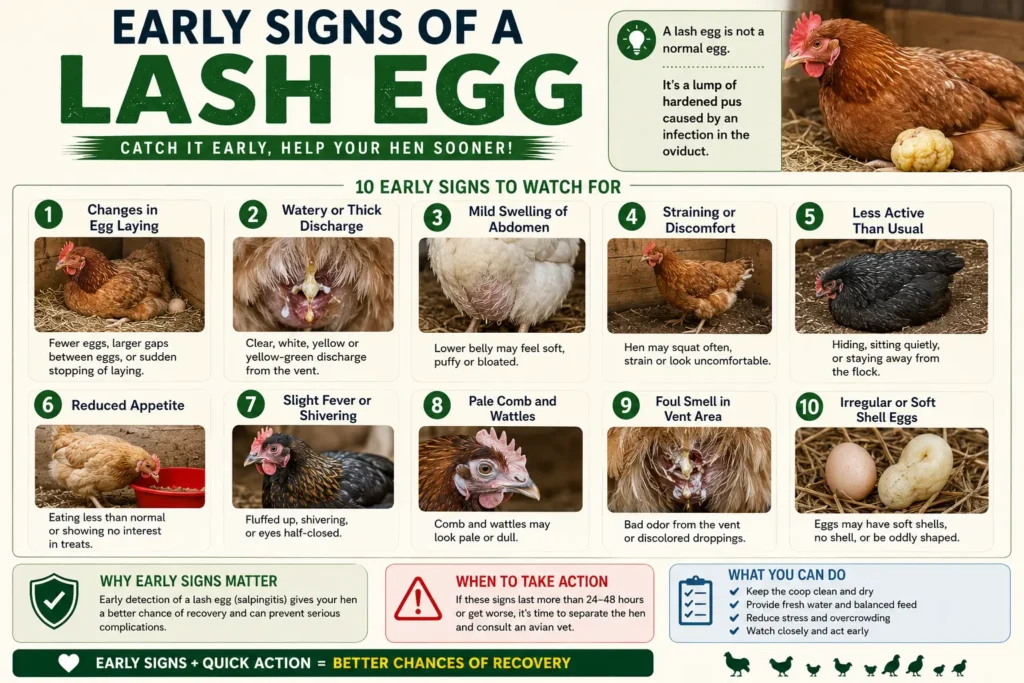
The early signs of a lash egg rarely show up in the nesting box first. They show up in the way a hen moves, eats, and carries herself days before anything unusual appears where she lays. Catching those first symptoms gives a keeper time to act before an infection spreads deeper into the reproductive tract.
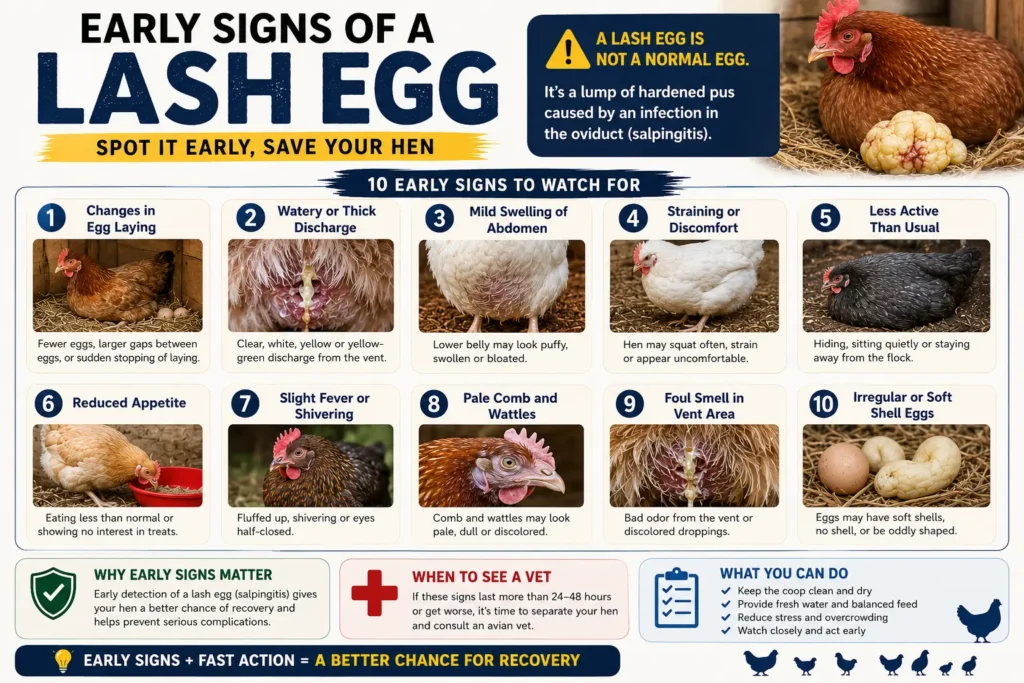
A lash egg itself is not an egg. It is a mass of pus and inflammatory tissue that forms when a hen’s oviduct becomes infected, a condition called salpingitis. By the time a lash egg physically appears, the infection has usually been building for a while. This guide focuses on the warning signs that come before that point, so problems can be caught early.
Quick Answer: The earliest signs of a lash egg include reduced appetite, a drop in egg production, a hunched or less active posture, pale comb color, and mild lethargy. These changes often appear days before an actual lash egg is found in the nest, and they are the best window for early intervention.
Table of Contents
Why Catching Early Signs of a Lash Egg Matters
Salpingitis rarely appears overnight. The oviduct lining becomes inflamed gradually, and the hen’s body responds by producing thickened, layered discharge that eventually becomes a lash egg. Recognizing the first symptoms during this build-up phase gives a far better chance at recovery than waiting until the mass is passed.
H3: The Early Signs of a Lash Egg vs. Later Symptoms
| Timeframe | Typical Signs | What’s Happening Internally |
| Earliest stage | Slight appetite drop, one or two skipped laying days | Mild inflammation is starting in the oviduct |
| Days later | Lethargy, pale comb, hunched stance | Infection is becoming more active |
| Advanced stage | Lash egg found, swollen abdomen, labored breathing | Infection has progressed, possibly spreading to the abdominal cavity |
The First Symptoms to Watch For
These are the warning signs most keepers notice before anything abnormal shows up in the nest box.
Behavioral Changes
- Reduced activity. A hen may forage less and rest more than usual.
- Isolation from the flock. Sick hens often separate themselves, even in early illness.
- Quieter than normal. Some hens become noticeably less vocal.
- Reluctance to move around the coop. Standing still or staying near the nesting box more than usual can be an early clue.
Physical Changes
- Appetite loss. Even a mild dip in food interest is worth tracking.
- Irregular egg laying. Skipped days or a smaller-than-usual egg can be one of the first symptoms.
- Pale or dull comb and wattles. A comb that loses its bright red color often signals the body is fighting something.
- Slightly puffed-up feathers. This is a general sign of illness, not specific to lash eggs, but worth noting alongside other symptoms.
- A subtle hunch in posture. Some hens start standing more upright, almost like a penguin stance, as internal discomfort develops.
Read More: https://lashegg.com/lash-egg-symptoms/
H3: Early Signs of a Lash Egg That Are Easy to Miss
- Slightly wetter or more watery droppings than usual.
- A tail held lower than normal.
- Minor weight loss that is only noticeable when handling the hen.
- A brief change in her spot in the pecking order, since illness can shift flock dynamics.
Did You Know? Hens are prey animals, and their instinct is to hide illness for as long as possible. This means the earliest warning signs are often subtle, and a keeper who checks the flock daily has a real advantage over one who only checks weekly.
What Causes These Early Warning Signs?
The underlying driver of most early lash egg symptoms is salpingitis, an infection or inflammation of the oviduct. Several factors raise the risk.
- Bacterial infection, most commonly E. coli, entering through the vent or spreading from another part of the body.
- Respiratory illness, including infectious bronchitis virus (IBV), which can affect the reproductive tract as a secondary complication.
- High egg production, since breeds that lay frequently place more strain on the oviduct over time.
- Age, with hens over two years old at higher risk of reproductive tract issues.
- Stress, including overcrowding, poor nutrition, or sudden environmental changes.
H4: Why Early Detection Depends on Knowing Your Flock
Recognizing subtle changes requires a baseline. A keeper who knows each hen’s normal appetite, comb color, and activity level will notice small shifts faster than someone unfamiliar with individual birds. Weighing hens periodically and checking comb color during regular handling builds that baseline over time.
How to Monitor for Warning Signs at Home
- Do a daily visual check. Look for hens standing apart, moving less, or looking puffed up.
- Track laying patterns. Note which hens skip days or lay smaller eggs than usual.
- Check comb color weekly. A shift from bright red to pale or dusky can be an early clue.
- Handle hens occasionally. Gently feel the abdomen for firmness or swelling, and note any unusual weight change.
- Watch droppings. Consistently watery or oddly colored droppings deserve attention.
Expert Tip: Keep a simple log of each hen’s laying pattern. A sudden change from her normal rhythm is often the very first measurable warning sign, well before other symptoms appear.
When Early Signs Point to Something More Serious
Not every appetite dip or quiet day means a hen is developing salpingitis. Weather, molting, and normal aging can all cause similar minor changes. The difference is usually in how many signs appear together and how long they last.
| Sign | Likely Minor (Monitor) | Likely Concerning (Act Soon) |
| Appetite | Slightly reduced for a day | Reduced for several days straight |
| Activity | Slower on a hot day | Consistently isolated and inactive |
| Egg laying | One skipped day | Multiple skipped days or smaller eggs repeatedly |
| Comb color | Slightly duller during molt | Persistently pale for a week or more |
| Posture | Normal resting | Hunched or upright “penguin” stance |
Warning: If a hen shows three or more of these signs together, or if any sign lasts longer than 48 hours, treat it as a reason to isolate her and seek veterinary guidance rather than waiting to see if she improves on her own.
When to Call a Vet
When to Call a Vet: Contact a poultry or avian veterinarian if early symptoms persist beyond two days, if a hen stops eating entirely, or if you notice abdominal swelling or labored breathing. Early consultation, even by phone, often costs far less than treating an advanced infection later.
University extension services and state poultry diagnostic labs can be a helpful starting point for finding a veterinarian experienced with backyard flocks, especially in areas without a dedicated avian vet nearby.
What Happens If Early Signs Are Missed
When the first symptoms go unnoticed, the infection typically progresses toward visible signs like an actual lash egg, abdominal swelling, and more severe lethargy. According to information from sources like the Merck Veterinary Manual, reproductive tract disorders including salpingitis are a leading cause of mortality in laying hens, particularly when treatment is delayed until the disease is advanced.
This is not meant to cause alarm over every skipped egg. It simply underscores why early attention to the first symptoms matters more than waiting for a confirmed lash egg to appear.
Common Mistakes: A common mistake is assuming a single off day is nothing to worry about, then missing the window where treatment works best. Another is treating symptoms with home remedies for a week or more before ever contacting a vet, which can allow the infection to progress unnecessarily.
Supporting a Hen Showing Early Warning Signs
While a veterinary diagnosis is the only way to confirm salpingitis, there are supportive steps a keeper can take once early signs appear.
- Separate the hen from the flock to reduce stress and monitor her more closely.
- Offer fresh water and easy-to-digest food.
- Keep her warm and in a quiet, low-stress space.
- Track her symptoms daily so you can report changes accurately to a vet.
These steps support the hen but do not replace professional care. Supportive measures work best alongside, not instead of, veterinary treatment once symptoms are confirmed.
Preventing Early Warning Signs From Developing
- Keep nesting boxes and coop bedding clean and dry.
- Provide a balanced layer feed with adequate protein and calcium.
- Reduce flock overcrowding to lower stress levels.
- Ask a poultry veterinarian about infectious bronchitis vaccination if it is a known risk in your region.
- Quarantine new birds before adding them to your flock.
- Check older hens more frequently, since reproductive risk increases with age.
Conclusion
Learning to spot the early signs of a lash egg gives a keeper the best chance of catching a reproductive infection before it becomes serious. Subtle changes in appetite, posture, comb color, and laying pattern are often the first symptoms, appearing well before any physical mass is found in the nest. Daily observation, a simple laying log, and prompt veterinary consultation when warning signs persist are the most reliable ways to protect a hen’s health.
FAQ
What are the very first symptoms of a lash egg? The first symptoms typically include a mild drop in appetite, a skipped laying day, slightly duller comb color, and reduced activity, often appearing before any physical mass is found.
How long before a lash egg do warning signs usually appear? This varies by hen, but subtle warning signs can appear anywhere from a few days to a couple of weeks before a lash egg is actually found in the nesting box.
Can early signs of a lash egg be mistaken for something else? Yes, early signs like reduced appetite or quieter behavior can overlap with molting, hot weather, or minor stress, which is why watching for multiple signs together matters more than any single symptom.
Is it normal for a hen to show no early warning signs at all? Some hens hide illness very well and show few visible signs until the condition is more advanced, which is why regular hands-on checks are valuable even when a flock looks healthy.
Do early warning signs mean a hen definitely has salpingitis? Not necessarily. Early signs point toward a possible reproductive issue, but only a veterinary exam can confirm salpingitis or rule out other causes.
Can diet changes reverse early signs of a lash egg? A balanced diet supports overall health but cannot reverse an active bacterial or viral infection, so persistent symptoms still need veterinary evaluation rather than diet changes alone.
Should I isolate a hen as soon as I notice early warning signs? Yes, isolating her early reduces her stress, makes monitoring easier, and limits potential exposure to other flock members while you determine next steps.