Chicken Laying Abnormal Eggs: Making Sense of What You’re Seeing

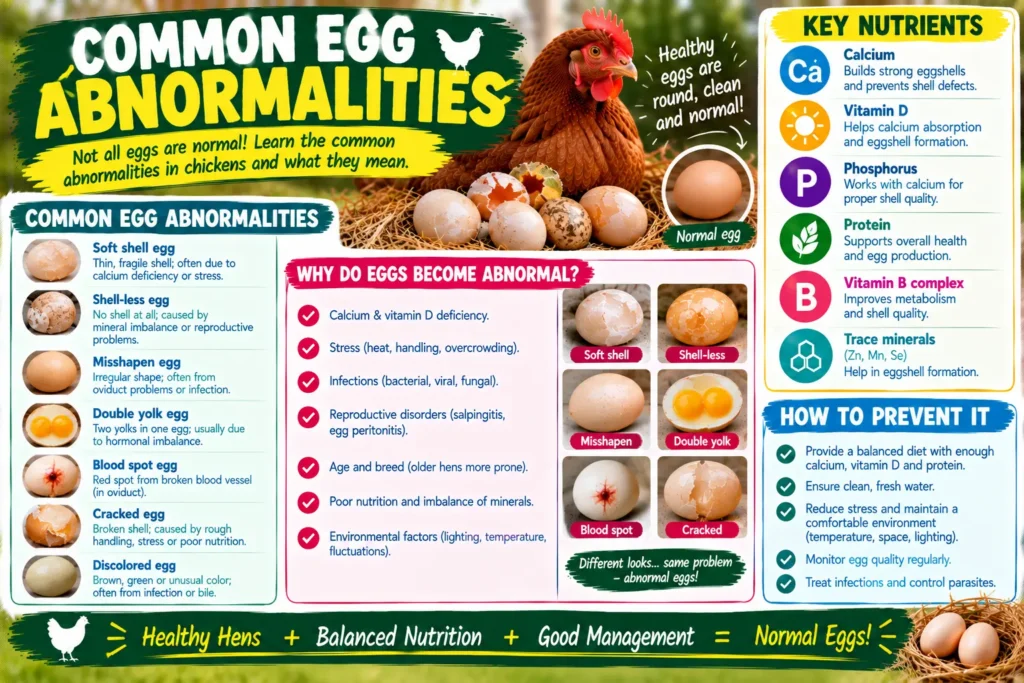
A chicken laying abnormal eggs can produce a surprising range of results, from a harmless blood speck to something that looks nothing like an egg at all. Most unusual chicken eggs fall into a handful of recognizable categories, each with its own likely explanation and its own level of concern.
Shell hardness issues, soft shells and shell-less eggs, get their own dedicated, in-depth coverage elsewhere. This guide focuses on everything else: blood and meat spots, double yolks, oddly shaped or wrinkled eggs, unusual colors, tiny “fairy eggs,” and the more serious lash egg, working as a complete identification reference for abnormal egg production.
Quick Answer: Most abnormal chicken eggs, including blood spots, double yolks, and minor shape irregularities, are harmless variations in ovulation or egg formation timing. A few types, particularly lash eggs, are a warning sign of a reproductive infection and warrant veterinary attention. Frequency matters: occasional abnormal eggs are normal, while a consistent pattern across many eggs deserves a closer look.
Table of Contents
Blood Spots and Meat Spots
What Causes Them
A blood spot results from a minor blood vessel rupture during ovulation, when the yolk releases from the ovary. A meat spot is similar but often reflects a small piece of tissue from the oviduct wall. Both are common, harmless, and don’t indicate illness.
Should You Be Concerned?
No, blood and meat spots are considered a normal biological variation and are safe to eat, though some people choose to remove the spot for aesthetic reasons before cooking.
| Feature | Blood Spot | Meat Spot |
| Cause | Minor blood vessel rupture during ovulation | Small tissue fragment from oviduct |
| Color | Red to reddish-brown | Brown to grayish-brown |
| Concern Level | None | None |
Double-Yolk Eggs
Why They Happen
A double-yolk egg occurs when two yolks release close together and become enclosed within the same shell. This is more common in young pullets whose laying cycle hasn’t fully regulated yet, and in certain breeds prone to occasional multiple ovulation.
Is It a Problem?
No, double-yolk eggs are a normal variation and safe to eat. They’re simply less common in older, more established layers than in young hens just starting to lay.
Did You Know? Extremely rarely, an egg contains three or more yolks, an even less common version of the same basic mechanism behind standard double-yolk eggs.
Wrinkled, Ridged, or Oddly Shaped Eggs
What Causes Shape and Texture Irregularities
Stress, illness, or a disruption during the shell gland stage can all cause wrinkled or ridged shell texture. Odd shapes, like an elongated or unusually round egg, often relate to how the egg moved through the oviduct rather than any nutritional cause.
Read More: https://lashegg.com/chicken-laying-shell-less-eggs/
When to Watch More Closely
Occasional oddly shaped eggs are normal, but a consistent, ongoing pattern of misshapen eggs across many cycles from the same hen may point toward a chronic reproductive tract issue worth monitoring.
| Egg Feature | Likely Cause | Concern Level |
| Occasional wrinkled texture | Minor stress or formation disruption | Low |
| Consistently ridged shells | Ongoing stress or illness | Moderate |
| Elongated or unusual shape | Oviduct movement variation | Low, if occasional |
| Repeated odd shapes, same hen | Possible chronic reproductive issue | Moderate to investigate |
Unusual Egg Colors
Normal Color Variation
Shell color is largely breed-determined and naturally varies somewhat even within the same breed and hen over time, including gradual lightening toward the end of a laying cycle.
When Color Changes Signal Something Else
A sudden, dramatic color change unrelated to normal breed variation, especially paired with other abnormalities, can occasionally indicate illness affecting the shell gland’s pigment-depositing function.
Fairy Eggs (Wind Eggs)
What They Are
A fairy egg, sometimes called a wind egg, is a tiny egg, often with no yolk at all, formed when a small piece of tissue or foreign material accidentally triggers the oviduct to form a miniature egg around it.
Are They Concerning?
Generally not; fairy eggs are more common in young pullets just starting to lay or occasionally in older hens near the end of their laying years, and they’re not associated with any known health risk on their own.
Lash Eggs: The One to Take Seriously
What a Lash Egg Actually Is
A lash egg isn’t a true egg at all. It’s a solid mass of pus, tissue, and inflammatory material expelled from the oviduct, typically associated with salpingitis, a bacterial infection of the reproductive tract.
Why This One Is Different
Unlike the other abnormal egg production described above, a lash egg is a genuine sign of active infection rather than a harmless formation variation. It often has a firm, layered, cheese-like appearance quite distinct from any normal or even shell-less egg.
| Feature | Lash Egg | Normal Abnormal Egg |
| Composition | Pus, tissue, inflammatory material | Egg components (albumen, yolk, membrane) |
| Underlying cause | Reproductive infection (often salpingitis) | Normal formation variation |
| Concern Level | High, needs veterinary attention | Low to moderate |
Other Signs That Often Accompany a Lash Egg
- Reduced or stopped egg production
- Lethargy or reduced appetite
- Vent discharge
- A swollen or uncomfortable abdomen
Warning: A lash egg is not a variation to simply monitor at home. It reflects an active reproductive infection and calls for prompt veterinary evaluation, generally involving antibiotics or other targeted treatment.
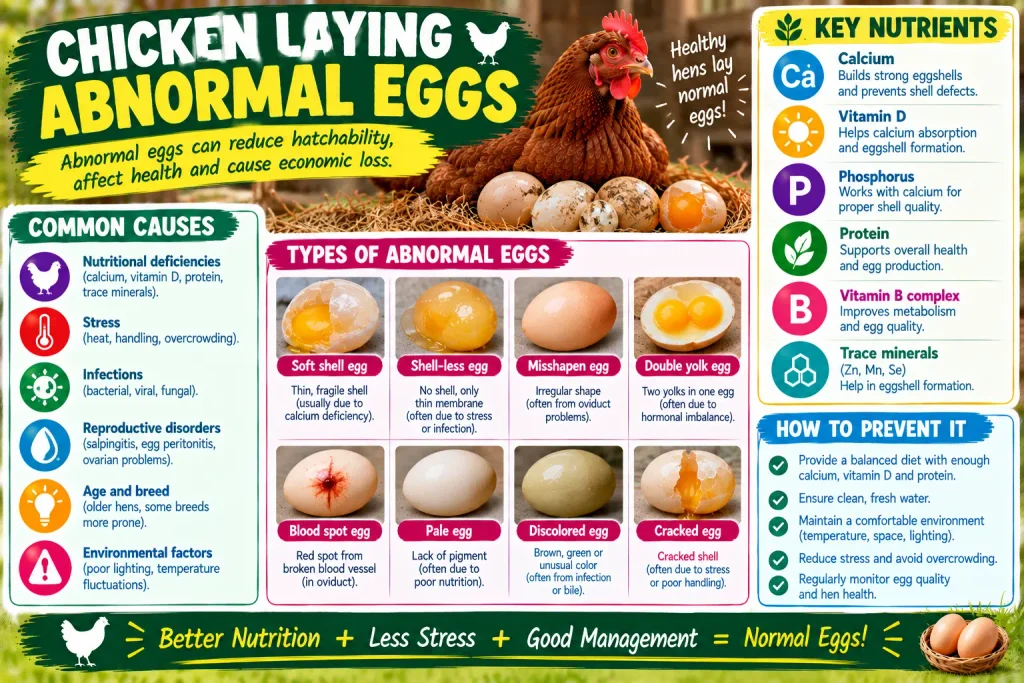
Step-by-Step: Assessing an Abnormal Egg
- Identify the specific type. Match what you’re seeing against the categories above, blood spot, double yolk, shape irregularity, or something more concerning like a lash egg.
- Check frequency. A one-time occurrence is far less concerning than a repeated pattern from the same hen.
- Assess the hen’s overall condition. Normal appetite and behavior support a low-concern explanation for most categories.
- Watch specifically for lash egg characteristics. A firm, layered, non-egg-like mass warrants immediate attention rather than a wait-and-see approach.
- Track the pattern over the following week. Continued abnormalities, especially of the same type, deserve closer investigation.
Expert Tip
Take a photo of any unusual egg before deciding whether it warrants concern. This is especially useful for comparing suspected lash eggs against normal variations, since the visual difference, once you know what to look for, is usually quite clear.
Common Mistakes to Avoid
- Assuming every abnormal egg signals a serious problem
- Overlooking a lash egg as “just an odd egg” rather than recognizing it as an infection sign
- Not tracking which specific hen is producing repeated abnormalities
- Discarding a concerning egg without documenting it, making it harder to describe to a vet later if needed
- Assuming double-yolk or blood spot eggs indicate a health problem when they’re normal variations
When to Call a Vet
Contact a poultry veterinarian immediately if you find a lash egg, or if abnormal chicken eggs are accompanied by lethargy, vent discharge, reduced appetite, or a swollen abdomen. For less concerning categories, like occasional blood spots or double yolks, veterinary care generally isn’t needed unless the pattern becomes frequent and is paired with other symptoms.
People Also Ask
What does it mean when a chicken is laying abnormal eggs frequently? Frequent abnormal eggs from the same hen may point toward chronic stress, an ongoing reproductive issue, or simply individual variation, and the specific type of abnormality helps narrow down the likely cause.
Are blood spots in eggs safe to eat? Yes, blood spots are a normal, harmless variation and the egg remains safe to eat, though some people prefer to remove the spot before cooking.
What is a lash egg and why is it different from other abnormal eggs? A lash egg is a mass of pus and tissue from an infected oviduct rather than a true egg, making it a genuine health warning sign rather than a harmless formation variation.
Do young hens lay more unusual chicken eggs than older ones? Yes, many abnormal egg types, including double yolks and fairy eggs, are more common as a young pullet’s laying cycle calibrates during her first weeks of production.
Should I worry about occasional wrinkled or oddly shaped eggs? Occasional shape or texture irregularities are usually normal, especially if isolated, though a consistent pattern from the same hen is worth monitoring more closely.
Final Thoughts
A chicken laying abnormal eggs is producing one of several recognizable variations, most of which, blood spots, double yolks, minor shape irregularities, and fairy eggs, are harmless and simply reflect the natural imprecision of a complex biological process. The clear exception is the lash egg, a genuine sign of reproductive infection that deserves prompt attention.
Identify what type of abnormal egg production you’re seeing, track whether it’s isolated or repeating, and reach out to a poultry veterinarian promptly for anything resembling a lash egg or for patterns accompanied by other signs of illness.
5. FAQ
Q: Is a chicken laying abnormal eggs occasionally something to worry about? A: No, most occasional abnormal eggs, including blood spots, double yolks, and minor shape variations, are harmless and don’t require any action.
Q: What unusual chicken eggs should I take seriously? A: A lash egg is the main type that signals a genuine health concern, since it reflects an active reproductive infection rather than a normal formation variation.
Q: Can diet cause abnormal egg production? A: Some abnormalities, particularly shell texture issues, can relate to nutrition, though many other types, like blood spots and double yolks, occur regardless of diet quality.
Q: Do fairy eggs mean something is wrong with my hen? A: No, fairy eggs are a harmless variation, most common in young pullets or older hens near the end of their laying years, without any associated health concern.
Q: How can I tell a lash egg apart from a shell-less egg? A: A lash egg has a firm, layered, cheese-like texture made of tissue and pus rather than typical egg components, while a shell-less egg still contains normal albumen and yolk inside its membrane.