Chicken Laying Shell-Less Eggs: A Different Question Than Thin Shells

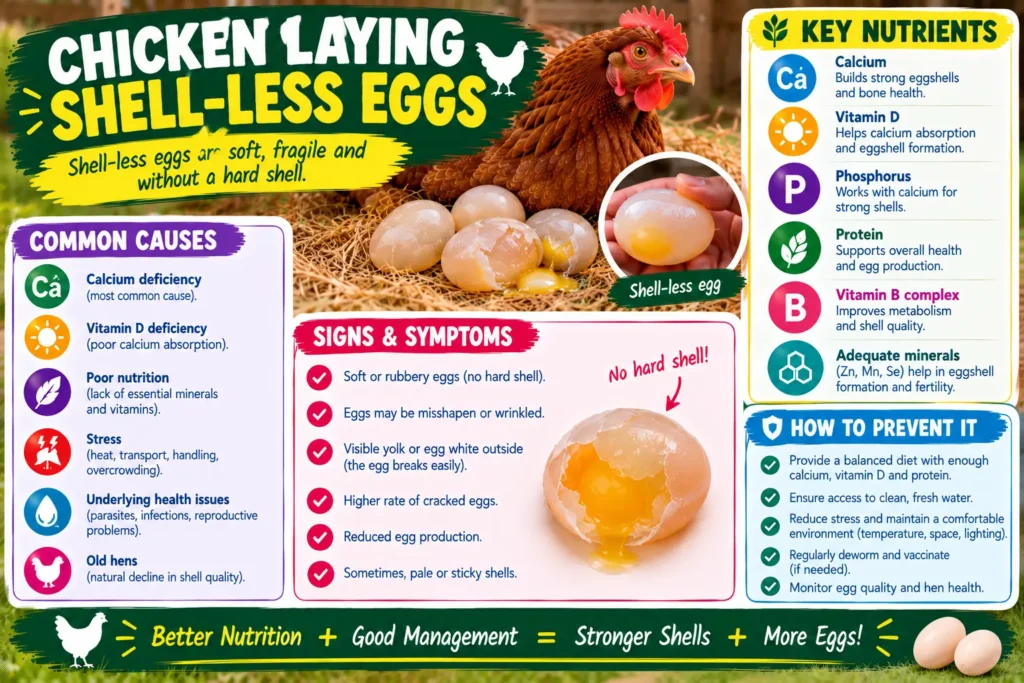
A chicken laying shell-less eggs, an egg surrounded by nothing but the membrane, is a step beyond simply having weak eggshells. While gradual, nutrition-related thinning is covered in depth elsewhere, a complete skip of the calcification stage often points toward something more specific: a single disruptive event during the overnight shell-forming window, rather than an ongoing dietary gap.
This guide focuses on that distinction: what causes eggs without shells specifically, when it’s a one-time fluke worth shrugging off, and when it’s worth watching more closely as a possible warning sign.
Quick Answer: A chicken laying shell-less eggs is most often reacting to a single acute disruption, like a fright or stress event during the overnight shell gland stage, or producing a second egg too quickly after the first in the same day. An isolated shell-less egg usually isn’t concerning. A repeated pattern, especially alongside lethargy or a swollen abdomen, can point toward a more serious reproductive issue and deserves veterinary attention.
Table of Contents
Why Shell-Less Is Different From Thin
The Shell Gland Skipped Entirely
A normal eggshell forms over roughly 18 to 20 hours in the shell gland. Shell-less egg causes typically involve this entire stage being skipped or dramatically shortened, rather than simply running short on calcium during a still-completed process, which is more often what produces a merely thin shell instead.
Why That Distinction Matters
Because the mechanism is different, so is the likely cause. Gradual, ongoing calcium or vitamin D3 shortfalls are covered in depth in the companion article on soft shell eggs; this page focuses on the more acute, often single-incident causes specific to eggs without shells entirely.
Common Causes of Eggs Without Shells
1. Acute Fright or Stress During Shell Formation
Since shell formation happens overnight while a hen rests, a sudden disturbance, a predator scare, loud noise, or being startled off the roost, during this window can interrupt the process enough to skip calcification entirely for that specific egg.
2. Two Eggs Too Close Together
Occasionally a hen ovulates a second yolk before the first egg has fully passed through the oviduct. The second egg, moving through too quickly, may exit with little to no shell formation time at all.
3. First Egg From a New Layer
A pullet’s very first few eggs occasionally lack shell entirely as her reproductive system calibrates timing for the first time, generally resolving within the first week or two of laying.
4. Reproductive Tract Irregularities
In some cases, a hen’s shell gland itself may be temporarily or chronically dysfunctional, producing shell-less or minimally shelled eggs more consistently rather than as an isolated event.
5. Severe, Acute Illness
A sudden, significant illness can disrupt the entire egg formation process abruptly enough to skip shell formation, generally alongside other clear symptoms rather than as a standalone sign.
| Cause | Pattern | Typical Frequency |
| Acute fright/stress | Tied to a specific incident | Isolated, rarely repeats |
| Two eggs too close together | Occasional, unpredictable | Isolated |
| First-time layer calibration | Early in laying life | First 1–2 weeks |
| Reproductive tract irregularity | Ongoing or recurring | Repeated |
| Severe acute illness | Sudden onset, other symptoms present | Tied to illness episode |
Did You Know? A hen’s oviduct doesn’t have a built-in “pause” function if a second ovulation happens too soon; instead, the second egg simply moves through on whatever timeline is available, which is exactly why back-to-back eggs are far more likely to include a shell-less one than eggs spaced a full cycle apart.
Read More: https://lashegg.com/chicken-laying-soft-shell-eggs/
Isolated Incident vs. Concerning Pattern
When It’s Likely Nothing to Worry About
- A single shell-less egg with no other symptoms
- Timing that lines up with a known startling event, like a predator scare
- A brand-new layer still in her first couple of weeks
- The hen otherwise eating, drinking, and behaving normally
When to Pay Closer Attention
- Shell-less eggs recurring across multiple laying cycles
- Accompanied by lethargy, reduced appetite, or a swollen abdomen
- Multiple hens affected simultaneously without an identifiable shared stress event
- A hen who previously laid normal-shelled eggs now consistently producing shell-less ones
| Pattern | Concern Level | Suggested Action |
| One isolated shell-less egg | Low | Monitor, no action typically needed |
| Tied to a clear, one-time stressor | Low | Reduce future stress exposure where possible |
| New layer’s first eggs | Low | Expect resolution within 1–2 weeks |
| Recurring pattern, same hen | Moderate to high | Investigate reproductive health |
| Paired with lethargy/swelling | High | Veterinary evaluation recommended |
Step-by-Step: Responding to a Shell-Less Egg
- Note the date and any recent events. A predator scare, loud disturbance, or new flock stress in the prior 24 hours is a strong clue.
- Check whether it’s a repeat occurrence. One egg is very different from a pattern across several days.
- Confirm the hen’s overall condition. Normal appetite and behavior support a low-concern explanation.
- Rule out a new-layer explanation. If she’s a recent pullet just starting to lay, this often resolves on its own.
- Watch for recurrence over the next week. Continued shell-less eggs from the same hen warrant closer investigation.
Expert Tip
If you suspect two eggs occurred too close together, check whether a shell-less egg followed a normal one within the same day or the following morning. This specific pattern is one of the more common, harmless explanations and doesn’t usually require any intervention.
Common Mistakes to Avoid
- Assuming a single shell-less egg always signals a serious health problem
- Overlooking a recent stressful event as the likely, low-concern explanation
- Ignoring a repeating pattern in the same hen, assuming each incident is unrelated
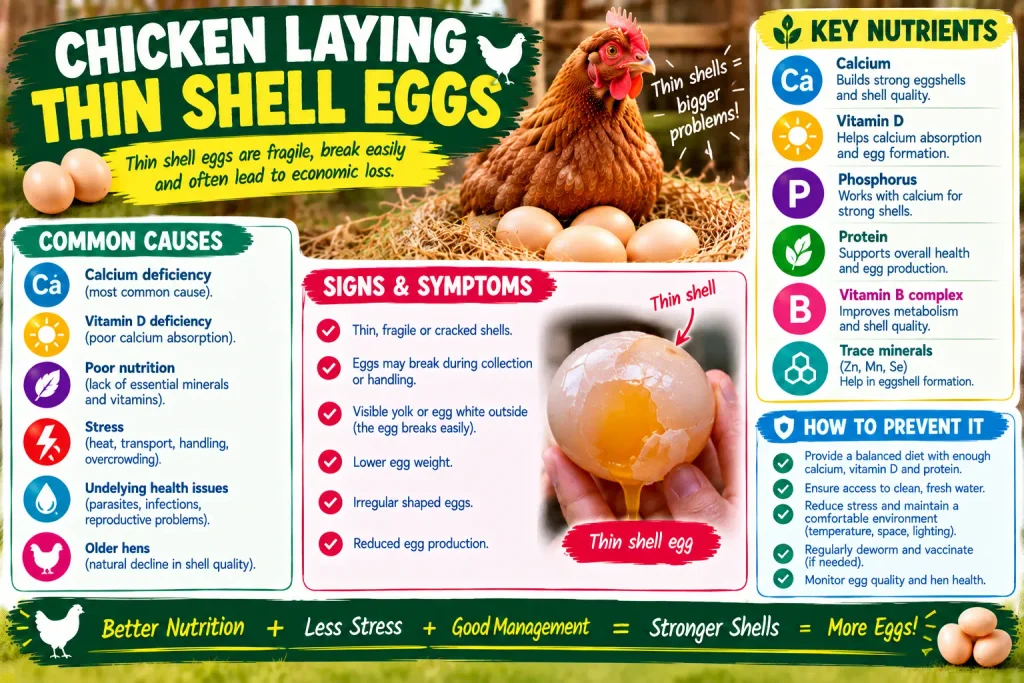
- Confusing this with the gradual, nutrition-driven thinning covered under soft shell eggs
- Failing to check overall hen behavior and appetite when assessing severity
Warning
Recurring eggs without shells, especially paired with a swollen abdomen, reduced appetite, or lethargy, can be an early sign of a reproductive issue like an oviduct problem or internal laying, where yolk material ends up in the body cavity instead of being expelled normally. This combination warrants veterinary attention rather than continued at-home monitoring alone.
When to Call a Vet
Contact a poultry veterinarian if shell-less eggs recur across multiple cycles, especially from the same hen, or if they’re accompanied by lethargy, poor appetite, or abdominal swelling. A vet can help determine whether a reproductive tract issue, rather than a one-time stress event, is behind the pattern.
People Also Ask
Is it normal for a chicken laying shell-less eggs just once? Yes, an isolated shell-less egg, especially tied to a stressful event or a new layer’s early eggs, is generally considered normal and not a cause for concern.
What’s the difference between shell-less egg causes and thin shell causes? Shell-less eggs typically involve the shell formation stage being skipped entirely due to an acute disruption, while thin shells more often reflect a gradual, ongoing nutritional gap like inadequate calcium.
Can stress alone cause eggs without shells? Yes, an acute stress event during the overnight shell formation window can interrupt the process enough to result in a shell-less egg for that specific cycle.
Should I worry if my new pullet lays a shell-less egg? Not usually; new layers often produce a few irregular eggs, including occasional shell-less ones, as their reproductive system calibrates during the first couple of weeks.
Can shell-less eggs be a sign of a serious problem? When they’re isolated, rarely; but a repeating pattern, especially with other symptoms like lethargy or a swollen abdomen, can point toward a reproductive issue worth veterinary evaluation.
Final Thoughts
A chicken laying shell-less eggs is usually reacting to a specific, identifiable event, an acute fright, a second egg formed too quickly, or the natural calibration of a brand-new layer, rather than the gradual nutritional decline behind most thin-shell cases. An isolated incident rarely signals a real problem.
Watch for a repeating pattern rather than judging from a single egg, and reach out to a poultry veterinarian if eggs without shells continue or come paired with other signs like lethargy or abdominal swelling.
5. FAQ
Q: How common is it for a chicken laying shell-less eggs occasionally? A: It’s fairly common as an isolated event, particularly in new layers or following a startling incident, and usually resolves without any intervention.
Q: Are shell-less egg causes the same as calcium deficiency? A: Not usually; calcium deficiency more typically produces consistently thin shells over time, while shell-less eggs are more often tied to a single acute disruption during shell formation.
Q: Can I still eat an egg without a shell? A: Yes, as long as the membrane is intact and the egg was collected promptly, it’s generally safe to eat like any other fresh egg.
Q: Do older hens lay more shell-less eggs than younger ones? A: Occasional shell-less eggs can happen at any age, though a recurring pattern in an older hen may relate to declining shell gland efficiency rather than a single acute cause.
Q: How many shell-less eggs before I should be concerned? A: A single isolated incident is generally not concerning, but two or more occurrences from the same hen within a short span is a reasonable point to start investigating further.