Chicken Laying Soft Shell Eggs: What’s Actually Going On

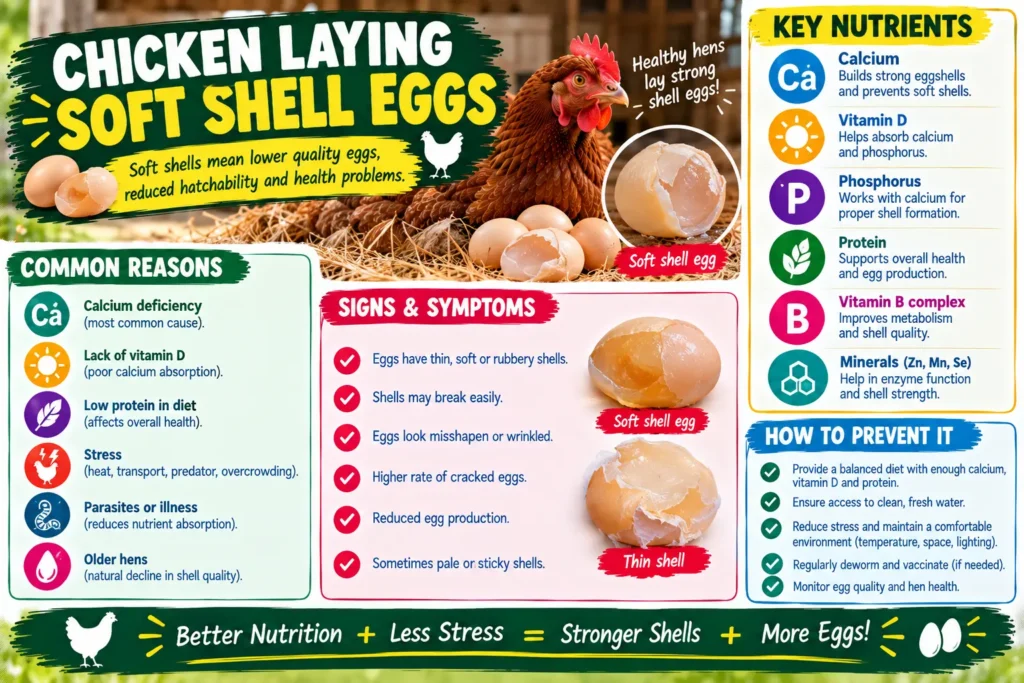
A chicken laying soft shell eggs is one of those situations that looks alarming the first time it happens, especially when a normally reliable hen suddenly produces something that feels more like a water balloon than an egg. Most causes are manageable and common, ranging from a simple calcium gap to normal age-related variation.
This guide covers every realistic cause behind soft eggs, weak eggshells, and thin shells, how to tell an occasional fluke apart from an ongoing problem, and exactly what to do about it.
Quick Answer: A chicken laying soft shell eggs is most often dealing with a calcium or vitamin D3 shortfall, though age, heat stress, certain illnesses, and simple egg-formation timing errors can all cause the same result. An occasional soft egg usually isn’t concerning, but a pattern across multiple eggs or hens points toward a nutritional or health issue worth correcting.
Table of Contents
Understanding How a Shell Normally Forms
The Shell Gland’s Role
A hen’s shell gland, part of the oviduct, spends roughly 18 to 20 hours forming the hard calcium-based shell around each egg. Anything disrupting this specific stage, whether nutritional, hormonal, or health-related, can result in a thin, soft, or entirely shell-less egg.
Why Timing Matters
Since shell formation happens overnight while a hen rests, factors that disrupt normal rest or hormonal rhythm, including stress and certain lighting issues, can interfere with this stage even when overall nutrition looks adequate on paper.
Read More: https://lashegg.com/nutrition-and-egg-production-in-chickens/
Common Causes of Soft Eggs and Thin Shells
1. Calcium Deficiency
Inadequate dietary calcium is the most common cause of a chicken laying soft shell eggs. Without enough calcium available during the shell gland stage, the shell simply doesn’t harden properly.
2. Vitamin D3 Deficiency
Since vitamin D3 is required for calcium absorption, a D3 shortfall can cause soft eggs even when dietary calcium intake looks sufficient. This is a commonly overlooked cause behind persistent weak eggshells despite proper oyster shell supplementation.
3. Age-Related Factors
Young pullets: New layers often produce a few soft or oddly shaped eggs as their reproductive system calibrates during the first weeks of laying.
Older hens: As hens age, shell gland efficiency can decline, sometimes resulting in occasional thin shells even with adequate nutrition.
4. Heat Stress
Hot weather reduces overall feed intake, which in turn reduces calcium consumption, making heat stress a common seasonal cause of thin shells even in hens on an otherwise appropriate diet.
5. Illness
Certain respiratory illnesses, including infectious bronchitis, are well documented in the Merck Veterinary Manual as a cause of thin, soft, or misshapen eggshells, sometimes alongside other respiratory symptoms.
6. Stress
Acute or chronic stress disrupts the hormonal signaling involved in shell formation, occasionally producing soft eggs even when nutrition is otherwise adequate.
7. Egg Formation Errors
Occasionally, two eggs enter the shell gland too close together, or an egg moves through the oviduct unusually quickly, resulting in an isolated soft or thin-shelled egg without any broader ongoing cause.
| Cause | Frequency Pattern | Other Signs |
| Calcium deficiency | Ongoing, multiple eggs/hens | Reduced laying, possible leg weakness |
| Vitamin D3 deficiency | Ongoing despite adequate calcium | Similar to calcium deficiency |
| Young pullet calibration | First few weeks only | Otherwise healthy, normal behavior |
| Older hen decline | Occasional, gradual | Overall reduced production |
| Heat stress | Seasonal, temperature-linked | Panting, reduced feed intake |
| Illness (e.g., infectious bronchitis) | Ongoing, may affect multiple hens | Respiratory symptoms |
| Stress | Tied to specific stressful event | Behavioral changes |
| Formation error | Isolated, single egg | No other symptoms |
Did You Know? A hen laying two eggs in one day occasionally produces a soft-shelled second egg simply because there wasn’t enough time or calcium available for a second full shell to form within that short window.
Soft Eggs vs. Other Shell Problems: Quick Comparison
| Shell Issue | Likely Cause | Concern Level |
| Occasional soft/shell-less egg | Formation timing, minor and isolated | Low |
| Consistently thin shells, multiple eggs | Calcium/D3 deficiency | Moderate |
| Wrinkled, textured shells | Stress, illness, or disrupted formation | Moderate |
| Soft shells with reduced laying/lethargy | Illness or significant deficiency | Higher, investigate |
Step-by-Step: Diagnosing a Chicken Laying Soft Shell Eggs
- Check frequency first. One isolated soft egg differs significantly from a repeated pattern across days or multiple hens.
- Review the current diet. Confirm an appropriate layer feed and free-choice oyster shell are both consistently available.
- Consider recent weather. A heat wave in the days leading up to the issue often points toward reduced feed intake as the cause.
- Rule out illness. Check for respiratory symptoms, lethargy, or other signs suggesting infection rather than a purely nutritional gap.
- Factor in age. A very young or notably older hen may simply be experiencing normal age-related shell variation.
- Correct the most likely cause and monitor. Improvement within one to two weeks generally confirms the diagnosis.
Expert Tip
Keep a simple log noting which specific hens produce soft or thin-shelled eggs, if you can identify individuals. A single hen repeatedly producing weak eggshells while the rest of the flock is fine points toward an individual issue, like age or a personal health problem, rather than a flock-wide nutritional gap.
Fixing the Underlying Cause
Step-by-Step: Correcting Diet-Related Soft Eggs
- Confirm layer feed calcium content. Verify it falls in the 3.5–4% range appropriate for actively laying hens.
- Ensure free-choice oyster shell is available and being consumed. Check that the supply isn’t empty, clumped, or otherwise inaccessible.
- Verify adequate vitamin D3. Confirm feed fortification and consider whether limited sunlight access might be a contributing factor.
- Reduce competing treats temporarily. This ensures calcium intake from the base feed and supplement isn’t being diluted.
- Monitor shell quality over the next one to two weeks. Steady improvement confirms the correction is working.
Common Mistakes to Avoid
- Panicking over a single isolated soft egg without checking for an ongoing pattern
- Assuming soft eggs always mean a health emergency rather than checking diet first
- Overlooking heat stress as a seasonal, temporary cause
- Ignoring respiratory symptoms that might point toward illness rather than diet
- Forgetting that very young or older hens may show normal age-related variation
Warning
A chicken laying soft shell eggs consistently, especially alongside respiratory symptoms, lethargy, or reduced overall laying, may be dealing with an underlying illness rather than a simple nutritional gap. This pattern deserves veterinary evaluation rather than diet correction alone.
When to Call a Vet
Contact a poultry veterinarian if soft or thin-shelled eggs continue for more than two to three weeks despite confirmed adequate calcium, vitamin D3, and appropriate management, or if the issue is paired with respiratory symptoms, lethargy, or a broader decline in health. These signs suggest a cause beyond simple diet correction.
People Also Ask
Is it normal for a chicken laying soft shell eggs occasionally? Yes, an occasional soft or shell-less egg, especially from a very young or older hen, is usually normal and not a cause for concern on its own.
What’s the fastest way to fix weak eggshells? Confirming and correcting calcium and vitamin D3 intake typically shows improvement within one to two weeks, making it the most common and effective first step.
Can heat cause thin shells even with good nutrition? Yes, heat stress reduces overall feed intake, which lowers calcium consumption even when the diet itself is properly formulated.
Do soft eggs mean my chicken is sick? Not necessarily; while some illnesses can cause soft eggs, most cases trace back to simple nutritional gaps, age, or temporary stress rather than disease.
Should I stop feeding treats if my hen is laying soft eggs? Reducing treats temporarily can help ensure adequate calcium intake from the base diet, though treats themselves aren’t usually the primary cause unless they’re making up a large portion of the overall diet.
Final Thoughts
A chicken laying soft shell eggs is dealing with one of several common, generally manageable causes, most often tracing back to calcium, vitamin D3, age, heat, or occasionally stress or illness. An isolated soft egg rarely signals a problem, while a consistent pattern is worth working through methodically.
Check diet and recent conditions first, and reach out to a poultry veterinarian if soft eggs or thin shells persist despite correction, or if they’re paired with other signs of illness rather than resolving with simple nutritional adjustments.
5. FAQ
Q: What does it mean when a chicken laying soft shell eggs also seems otherwise healthy? A: This pattern most often points toward a nutritional gap, like calcium or vitamin D3, rather than illness, since the hen’s overall behavior and appetite remain normal.
Q: Can weak eggshells be a sign of a serious illness? A: Occasionally, yes, particularly with respiratory illnesses like infectious bronchitis, though this is far less common than simple nutritional causes and usually comes with other symptoms too.
Q: How long does it take to fix thin shells with better nutrition? A: Most diet-related cases show noticeable improvement within one to two weeks of correcting calcium and vitamin D3 intake.
Q: Are soft eggs safe to eat? A: Yes, a soft-shelled egg is generally safe to eat if collected promptly and handled like any other fresh egg, though the membrane alone offers less protection than a hard shell.
Q: Can stress alone cause a chicken to lay soft shell eggs? A: Yes, acute or chronic stress can disrupt the hormonal signaling involved in shell formation, occasionally producing a soft egg even without any nutritional deficiency.