Nutrition and Egg Production in Chickens: The Big Picture

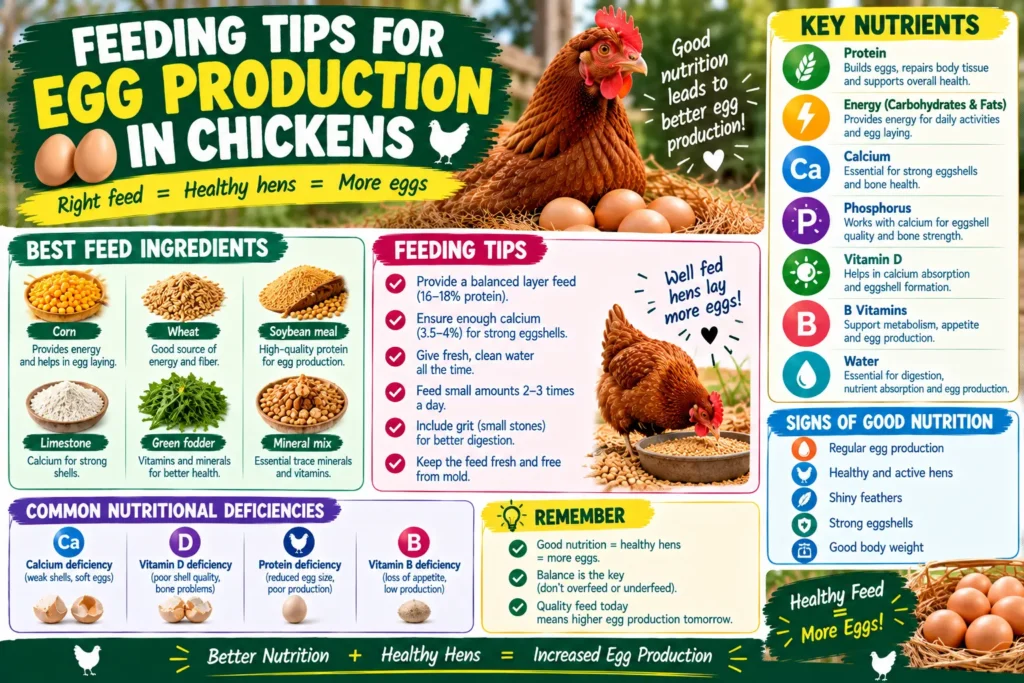
Nutrition and egg production in chickens are connected at nearly every stage, from the protein forming an egg’s white to the calcium building its shell. Rather than one single nutrient explaining everything, consistent laying depends on several pieces working together, which is exactly why diet and egg laying problems can trace back to so many different possible gaps.
This guide works as a complete overview, tying together protein, calcium, vitamins, feed quality, and what to avoid, so you can see how feed and egg production connect as a whole system rather than isolated facts. Each major nutrient gets deeper, dedicated treatment elsewhere; this page is where they all come together.
Quick Answer: Nutrition and egg production in chickens depend on four main pillars: adequate protein (16–18%) for egg formation, sufficient calcium (3.5–4%) for shell strength, key vitamins like D3 and A for absorption and reproductive health, and consistent water access. Gaps in any of these can reduce laying, while a complete, balanced layer feed covers most flocks’ needs without requiring extensive additional supplementation.
Table of Contents
The Four Nutritional Pillars of Egg Production
Protein: Building the Egg
Protein forms the majority of an egg’s white and supports overall body maintenance. Laying hens need feed containing 16 to 18% protein, higher during molting when feather regrowth competes for the same resources.
Calcium: Building the Shell
An eggshell requires roughly 2 grams of calcium, meaning actively laying hens need significantly more dietary calcium than non-laying birds. A complete layer feed with 3.5 to 4% calcium, supplemented with free-choice oyster shell, covers this need for most flocks.
Vitamins: Supporting Absorption and Health
Vitamin D3 enables calcium absorption, while vitamins A and E support broader reproductive and immune health. Without adequate levels of these, even a diet technically containing enough protein and calcium may not translate into strong production.
Water: The Overlooked Fourth Pillar
Water supports every stage of digestion and egg formation, and even brief periods without access can noticeably reduce laying. Consistent, clean water access deserves the same attention as solid food in any discussion of diet and egg laying.
Read More: https://lashegg.com/temperature-and-chicken-egg-production/
| Pillar | Target Range/Need | Primary Role |
| Protein | 16–18% of feed | Egg white formation, body maintenance |
| Calcium | 3.5–4% of feed | Shell strength |
| Vitamin D3 | Adequate feed fortification | Calcium absorption |
| Water | Constant, clean access | Supports all digestive and laying functions |
Did You Know? A hen’s body doesn’t meaningfully store excess protein for later use the way it stores some calcium in bone reserves, which is part of why consistent daily protein intake matters so much for steady nutrition and egg production in chickens.
How Feed Quality Ties These Pillars Together
Why a Complete Layer Feed Matters
A properly formulated layer feed is designed to deliver all four pillars in appropriate proportion, which is why feed and egg production advice so consistently starts with feed quality before considering individual supplements.
When Supplements Fill Genuine Gaps
Free-choice oyster shell, occasional protein treats like mealworms, and situational supplements like electrolytes during heat stress all serve specific, targeted purposes rather than replacing a complete base diet.
| Nutrition Approach | Covers | Best Paired With |
| Complete layer feed alone | Baseline protein, calcium, vitamins | Free-choice oyster shell |
| Feed + oyster shell | Baseline nutrition + calcium flexibility | Standard, healthy flock |
| Feed + targeted supplements | Baseline + situational support | Heat stress, illness recovery, molting |
What Poor Nutrition Actually Looks Like
Signs Diet and Egg Laying Problems Exist
- Thin, soft, or shell-less eggs (calcium/vitamin D3 gap)
- Reduced egg size or frequency (protein gap)
- Dull feathers, slow molt recovery (protein gap)
- Reduced hatchability in flocks raising chicks (vitamin A/E gap)
- General lethargy or poor body condition (broad nutritional gap)
| Symptom | Likely Nutritional Cause |
| Thin/soft shells | Calcium or vitamin D3 deficiency |
| Smaller or fewer eggs | Protein deficiency |
| Poor feather quality | Protein deficiency |
| Reduced hatchability | Vitamin A or E deficiency |
| General poor condition | Broad, multi-nutrient deficiency |
Foods and Ingredients to Avoid
Genuinely Harmful Foods
- Avocado skin and pit: Contains persin, which is toxic to poultry
- Raw or dried beans: Contain toxic compounds unless properly cooked
- Chocolate and caffeine: Toxic to chickens as with many other animals
- Moldy or spoiled feed and scraps: Can contain harmful mycotoxins
- Green potato skins and sprouts: Contain solanine, which is toxic in significant quantities
Foods to Limit Rather Than Avoid Entirely
- Salty or processed snacks: Not toxic in small amounts but offer little nutritional value
- Citrus fruits: Generally considered safe in moderation, though some keepers report reduced egg production with excessive citrus feeding, without strong formal evidence either way
- Excessive scratch grains: Not harmful but dilute the nutritional completeness of a balanced diet if overfed
| Food/Ingredient | Risk Level | Notes |
| Avocado skin/pit | High | Contains toxic persin |
| Chocolate/caffeine | High | Toxic to poultry |
| Raw dried beans | High | Toxic unless properly cooked |
| Moldy feed/scraps | High | Mycotoxin risk |
| Green potato skin/sprouts | Moderate to high | Contains solanine |
| Excess salty snacks | Low | Poor nutrition, not typically toxic |
| Excess scratch grains | Low | Dilutes overall diet balance |
Expert Tip
When introducing any new treat or scrap food, start with a small amount and observe the flock before making it a regular offering. This lets you catch any individual sensitivity or preference issue before it becomes a larger part of the routine diet.
Common Mistakes to Avoid
- Assuming any single nutrient explains a production problem without checking the full picture
- Overfeeding treats and scraps at the expense of a nutritionally complete base feed
- Offering known toxic foods without realizing the risk, especially avocado and chocolate
- Ignoring water access as part of the overall nutrition and egg production in chickens picture
- Adding supplements without first confirming the base feed is actually adequate
Warning
Even foods generally considered safe for chickens can cause problems in excess or if moldy or spoiled. Always prioritize fresh, appropriately stored food and treats, and remove any uneaten scraps promptly to avoid spoilage risk in the coop or run.
Step-by-Step: Auditing Your Flock’s Nutrition
- Check your base feed’s guaranteed analysis. Confirm protein and calcium levels match your flock’s actual laying status.
- Review treat and scrap habits. Estimate what percentage of the diet treats actually represent, and reduce if it’s more than a small fraction.
- Check water access and cleanliness. Confirm constant, clean availability, especially during hot weather.
- Look for symptom patterns. Match any observed issues against the nutrient-specific signs covered above.
- Address one gap at a time. Correct the most likely issue first and monitor results before making additional changes.
When to Call a Vet
Contact a poultry veterinarian if nutritional symptoms persist despite what appears to be a well-balanced diet, or if you suspect a bird has consumed a genuinely toxic food. A vet can help confirm whether a nutritional gap, an absorption issue, or an unrelated health condition is behind persistent production problems.
People Also Ask
What is the most important nutrient for egg production in chickens? No single nutrient stands alone, but protein and calcium are generally considered the two most directly tied to consistent nutrition and egg production in chickens.
Can poor diet and egg laying problems be reversed? Yes, most diet-related production issues improve within one to three weeks once the underlying gap, whether protein, calcium, or another factor, is corrected.
Do treats really affect feed and egg production that much? Yes, when treats make up too large a portion of the diet, they dilute the overall nutritional balance a hen needs for consistent laying.
Are there foods that specifically boost egg production? No single “miracle” food boosts production beyond a complete, balanced diet; the more relevant factor is ensuring the core nutritional pillars are consistently met.
How quickly does bad nutrition affect egg production? Some effects, like reduced protein availability, can show up within days, while others, like calcium-related shell issues, may take one to two weeks to become clearly visible.
Final Thoughts
Nutrition and egg production in chickens come down to a handful of interconnected pillars: protein, calcium, key vitamins, and water, all working together rather than in isolation. Understanding how these fit together, along with genuinely knowing what to avoid, gives a much clearer picture than focusing on any single nutrient alone.
Audit your flock’s diet against this full picture rather than guessing at one factor, and reach out to a poultry veterinarian if diet and egg laying problems persist despite what looks like a complete, well-balanced feeding routine.
5. FAQ
Q: How are nutrition and egg production in chickens connected to shell quality specifically? A: Calcium and vitamin D3 together are the primary nutritional drivers of shell strength, meaning gaps in either can show up as thin or soft-shelled eggs even when other nutrients are adequate.
Q: What percentage of a chicken’s diet should be treats? A: Most poultry nutrition guidance suggests keeping treats to no more than about 10% of the overall diet, with a complete layer feed making up the rest.
Q: Can diet and egg laying problems happen even with expensive, premium feed? A: Yes, if treats, scraps, or supplements dilute the overall balance, even a high-quality base feed can end up providing inadequate nutrition in practice.
Q: Is it necessary to test my chickens’ actual nutrient levels? A: Most backyard keepers don’t need formal testing; matching feed labels to known requirements and watching for symptom patterns is usually sufficient, with veterinary testing reserved for unclear or persistent cases.
Q: What’s the single easiest change to improve feed and egg production? A: Switching to an appropriate, complete layer feed formulated for actively laying hens is typically the single most impactful and straightforward nutritional change available.