Lash Egg Symptoms: What Every Chicken Keeper Needs to Know

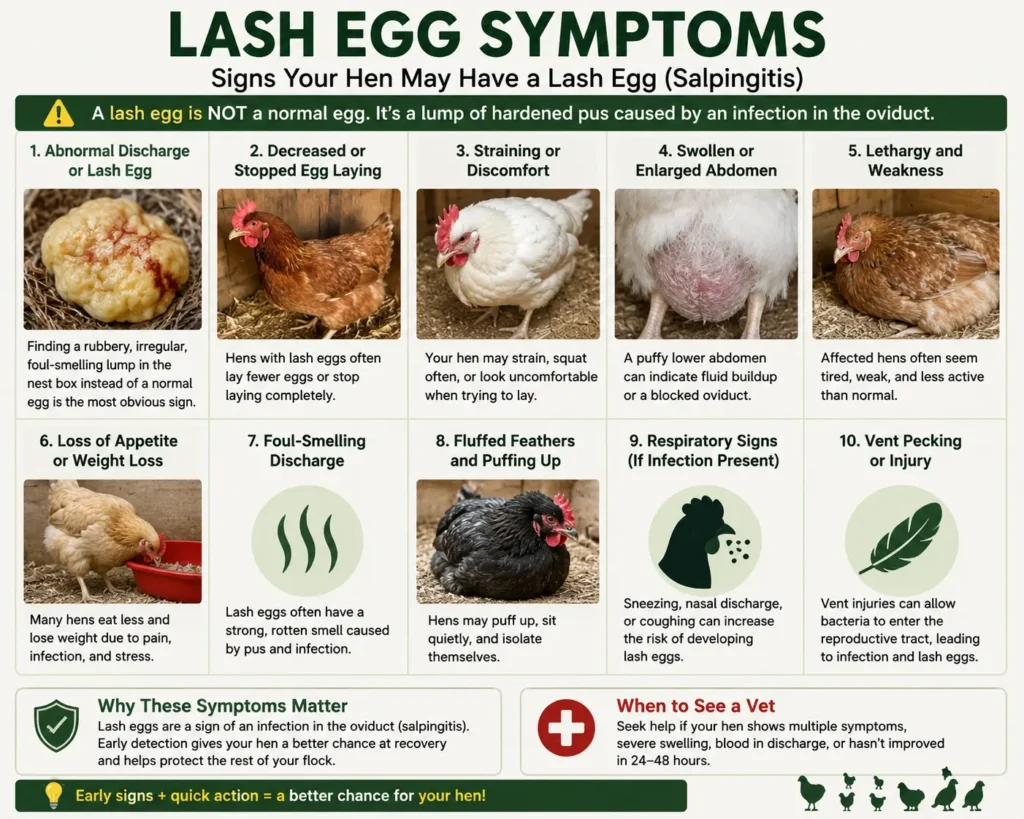
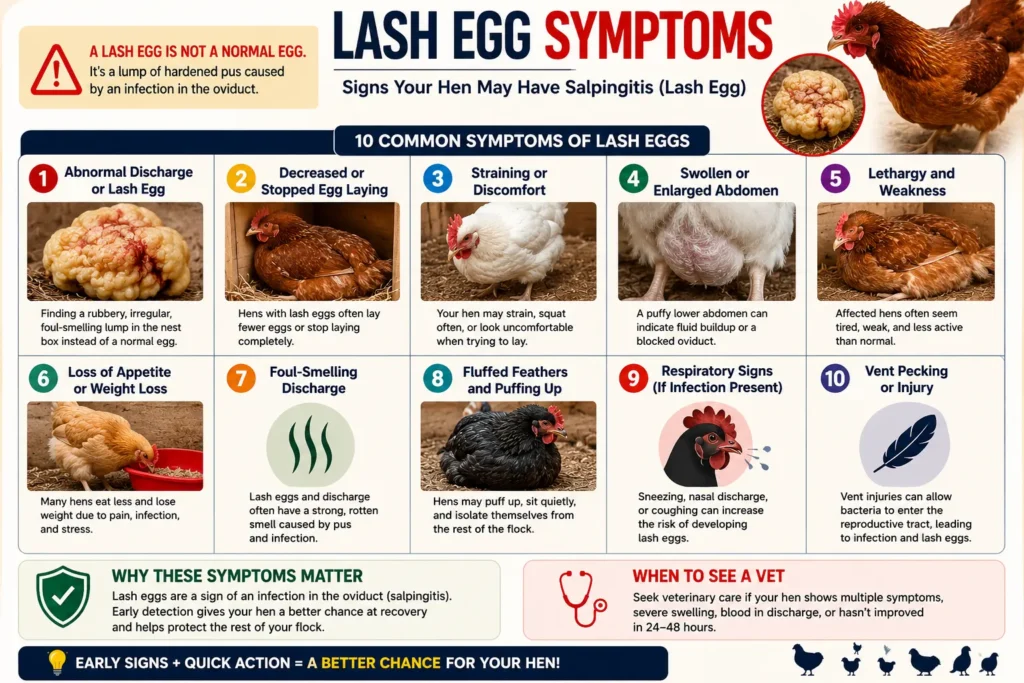
If you found a strange, rubbery, cheese-like mass in your coop, you are probably searching for lash egg symptoms right now because something feels wrong with your hen. A lash egg is not really an egg at all. It is a solid clump of pus, tissue, and inflammatory debris that a hen’s body expels when her reproductive tract is infected. Recognizing the symptoms early can mean the difference between a hen that recovers and one that does not.
This guide walks through every physical and behavioral sign, what causes the condition, how it is diagnosed, and when home care is enough versus when a veterinarian needs to step in.
Quick Answer: Lash egg symptoms include a soft, foul-smelling, layered mass found in the nesting box, along with lethargy, reduced appetite, a swollen or fluid-filled abdomen, reduced or stopped egg laying, and a hunched or “penguin” posture. These signs point to salpingitis, an infection of the oviduct, and warrant veterinary attention.
Table of Contents
Recognizing Lash Egg Symptoms in Chickens
Lash egg symptoms in chickens show up in two places: inside the nesting box and in the hen’s overall behavior. Some hens act almost normal and simply pass one lash egg, while others become visibly sick for days or weeks before or after it appears.
Physical Signs Found in the Nest
- An odd-shaped mass instead of a normal egg. It often looks like a soft, yellow-white, layered clump rather than a smooth oval shell.
- A foul or rotten smell. The odor comes from bacterial infection and dead tissue mixed into the mass.
- Blood streaks or discoloration. Some lash eggs contain visible blood or a greenish tinge.
- A rubbery or cheesy texture. Unlike a soft-shelled egg, a lash egg holds its shape and feels firmer, almost like coagulated cottage cheese wrapped in membrane.
Behavioral and Physical Signs in the Hen
- Lethargy and reduced activity. An affected hen may sit apart from the flock and move less than usual.
- Loss of appetite. Many hens with an oviduct infection eat noticeably less.
- Reduced or stopped egg production. The hen may skip laying entirely for days at a time.
- Swollen or fluid-filled abdomen. Gently feeling the lower belly may reveal firmness or fluid buildup.
- A hunched, upright “penguin” stance. This posture often develops as fluid or a mass puts pressure inside the abdomen.
- Pale comb and wattles. A pale or dull comb can signal illness or reduced blood flow from infection.
- Straining or vent discharge. Some hens strain as if trying to lay, and a discharge may be visible around the vent.
- Weight loss over time. Chronic infections often cause a hen to lose condition even if she is still eating some food.
Read More: https://lashegg.com/risk-factors-for-lash-eggs/
H3: Early vs. Advanced Lash Egg Symptoms
Catching the earliest signs of lash egg formation gives a hen the best chance at recovery. The table below breaks down how symptoms typically progress.
| Stage | Common Signs | What It Usually Means |
| Early | Slightly reduced appetite, one skipped laying day, mild lethargy | Early inflammation of the oviduct is beginning |
| Moderate | Lash egg found in nest, hunched posture, pale comb | Active infection (salpingitis) is present |
| Advanced | Swollen abdomen, labored breathing, isolation from flock, significant weight loss | Infection may be spreading to the abdominal cavity (egg yolk peritonitis) |
Signs of Lash Egg to Watch For Before It Happens
Many keepers ask about signs of lash egg that appear before the mass is ever found. In the days leading up to it, a hen commonly shows subtle changes first.
- She lays fewer eggs than usual, or her laying schedule becomes irregular.
- Her droppings may look watery or unusually colored.
- She spends more time sitting instead of foraging with the flock.
- Her comb loses some of its normal bright red color.
- She may hold her tail lower than usual.
Watching for these smaller changes lets a keeper intervene before the infection becomes severe. A body condition check every week or two, especially in hens over two years old, helps catch problems early.
Did You Know? A lash egg is sometimes called a “pus egg,” but it contains no yolk, shell, or embryo. It forms entirely from inflammatory material the oviduct produces in response to infection.
What Causes Lash Eggs?
A lash egg forms because of salpingitis, an infection or inflammation of the oviduct, the tube that produces and moves the egg through a hen’s reproductive system. The oviduct lining reacts to infection by producing a caseous discharge, and that discharge hardens into layers, much like the way an egg white and shell normally form around a yolk.
Common Underlying Causes
- Bacterial infection, most often E. coli, which can travel from the intestines or enter through the vent.
- Respiratory disease, including infectious bronchitis virus (IBV), which can damage the reproductive tract as a secondary effect.
- Reproductive stress, such as high-production breeds laying large or frequent eggs, which increases strain on the oviduct.
- Age, since older hens have a higher risk of reproductive tract disorders after years of laying.
- Poor nesting or coop hygiene, which raises the chance of bacteria entering the vent.
- Egg binding or previous reproductive trauma, which can leave the oviduct more vulnerable to infection.
H4: Why High-Production Hens Are More at Risk
Breeds selected for heavy egg output, such as commercial layer hybrids, place extra demand on the reproductive system. According to guidance from sources like the Merck Veterinary Manual, reproductive tract disorders including salpingitis are among the most common causes of death in laying hens, particularly in flocks under high production pressure. This does not mean backyard hens are immune. It simply means the risk rises with age and laying frequency.
How Lash Eggs Are Diagnosed
A single lash egg does not always confirm salpingitis, but it is a strong warning sign. A veterinarian typically combines a few methods to reach a diagnosis.
- Physical exam. Palpating the abdomen to check for swelling, fluid, or masses.
- History review. Discussing laying patterns, recent illness, and flock conditions.
- Imaging. Radiographs or ultrasound can reveal fluid buildup or an enlarged oviduct.
- Bloodwork. Elevated white blood cell counts can confirm active infection.
- Necropsy findings, in cases where a hen has already died, which can confirm salpingitis or egg yolk peritonitis directly.
Lash Egg vs. Other Egg Abnormalities
| Condition | Appearance | Cause | Typical Outcome |
| Lash egg | Soft, layered, cheese-like mass | Oviduct infection (salpingitis) | Requires veterinary evaluation |
| Soft-shelled egg | Egg with thin or missing shell | Calcium deficiency, stress, age | Often resolves with diet correction |
| Wind egg (fart egg) | Tiny egg with no yolk | Reproductive system hiccup, common in young pullets | Usually harmless and occasional |
| Egg-bound | No egg passed, hen straining | Egg stuck in the oviduct | Medical emergency if unresolved |
| Double-yolker | Large egg with two yolks | Rapid ovulation, common early in lay | Not a health concern |
Treatment Options for Lash Egg Symptoms
Treatment depends on how advanced the infection is. Mild cases sometimes resolve with supportive care, while moderate to severe infections need professional treatment.
Home Supportive Care
- Keep the hen warm, calm, and separated from the flock to reduce stress.
- Offer easy-to-digest food and fresh water at all times.
- Add electrolytes or a poultry-safe probiotic to support recovery.
- Monitor droppings, appetite, and comb color daily.
Veterinary Treatment
- Antibiotics prescribed based on the likely or confirmed bacterial cause.
- Anti-inflammatory support to reduce pain and swelling.
- Fluid therapy for dehydrated or severely ill hens.
- Surgical drainage or removal in advanced or recurring cases, performed by an avian veterinarian.
Expert Tip: Never give antibiotics without veterinary guidance. Incorrect dosing can worsen resistance issues and mask symptoms without resolving the underlying infection.
Warning: A hen with a swollen abdomen, labored breathing, or complete loss of appetite needs urgent veterinary care. These signs can indicate egg yolk peritonitis, which is life-threatening without treatment.
When to Call a Vet
When to Call a Vet: Contact an avian or poultry veterinarian if a hen passes a lash egg and also shows lethargy, abdominal swelling, labored breathing, pale comb, or stops eating for more than a day. Even a single lash egg without other symptoms is worth a phone consultation, since early treatment improves the outcome significantly.
Many general veterinarians have limited poultry experience, so look for a clinic with specific avian or backyard poultry expertise when possible. University extension services and state poultry diagnostic labs can often provide referrals.
Recovery and Prognosis
Recovery depends heavily on how early the infection is caught. A hen treated in the early stages of salpingitis, before fluid builds up in the abdomen, has a reasonably good chance of returning to normal activity, though she may lay fewer eggs afterward. Hens diagnosed after the infection has spread to the abdominal cavity have a much lower survival rate, even with treatment.
Some hens recover fully and resume laying within a few weeks. Others survive but stop laying permanently because the damaged oviduct can no longer function normally. A small number of cases require long-term management or humane euthanasia if quality of life cannot be maintained.
Preventing Lash Eggs and Reproductive Infections
- Keep nesting boxes clean and dry to reduce bacterial exposure.
- Provide a balanced layer feed with adequate calcium and protein.
- Reduce overcrowding, since stress weakens immune response.
- Vaccinate against infectious bronchitis virus where it is a known regional risk, following guidance from a poultry veterinarian.
- Quarantine new birds before introducing them to an existing flock.
- Monitor older hens more closely, since reproductive risk increases with age.
Common Mistakes: Many keepers assume a single lash egg is a one-time fluke and skip veterinary care. Others isolate the hen but delay contacting a vet until she stops eating entirely, which reduces treatment options. Acting on the first lash egg symptoms, rather than waiting, gives the best chance of recovery.
Conclusion
Spotting lash egg symptoms early, from a strange mass in the nesting box to subtle changes in appetite and posture, gives a hen the best possible chance at recovery. While mild cases sometimes resolve with rest and supportive care, any hen showing abdominal swelling, lethargy, or loss of appetite alongside a lash egg needs prompt veterinary evaluation. Keeping a close eye on flock behavior, laying patterns, and coop hygiene remains one of the most effective ways to catch reproductive problems before they become serious.
FAQ
What does a lash egg look like? A lash egg looks like a soft, layered, cheese-like or rubbery mass, usually pale yellow or white, sometimes streaked with blood. It does not have a hard shell like a normal egg.
Are lash egg symptoms painful for the hen? The underlying infection that causes a lash egg, salpingitis, is typically uncomfortable or painful, especially as inflammation and swelling increase in the abdomen.
Can a hen recover after passing a lash egg? Yes, many hens recover with prompt veterinary treatment, especially if caught in the early stages. Some hens stop laying permanently afterward even if they recover physically.
Is a lash egg contagious to other chickens? The lash egg itself is not contagious, but the underlying bacterial or viral infection that caused it, such as E. coli or infectious bronchitis virus, can potentially spread within a flock.
How common are lash egg symptoms in backyard flocks? Lash eggs are considered uncommon but not rare, and they tend to appear more often in older hens or high-production breeds under reproductive stress.
Should I separate a hen showing lash egg symptoms from the flock? Yes, separating her reduces stress, allows closer monitoring of food and water intake, and limits potential exposure to other birds while a diagnosis is pending.
Can diet prevent lash egg symptoms? A balanced layer diet supports overall reproductive health but cannot fully prevent salpingitis, since bacterial and viral causes are not diet-related.