What Is Egg Peritonitis and Why Does Egg Peritonitis Treatment Matter So Much?

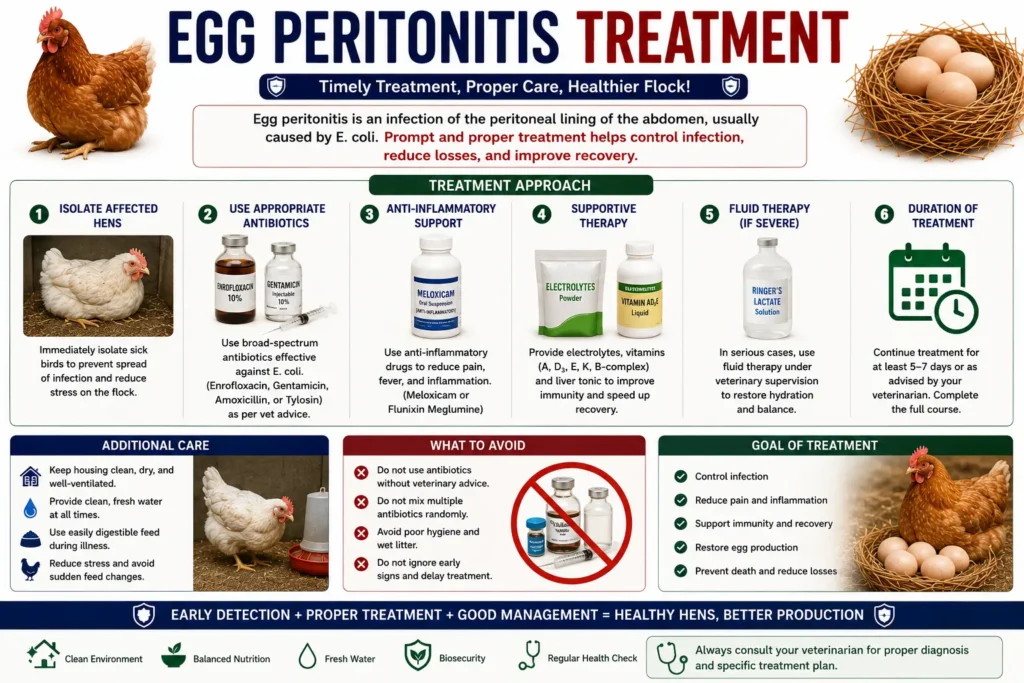
Egg peritonitis treatment is the single biggest factor separating a hen that recovers from one that doesn’t. Egg peritonitis, also called egg yolk peritonitis (EYP), happens when yolk material lands inside a hen’s abdomen instead of traveling down the oviduct and out as a normal egg. That stray yolk irritates the abdominal lining, invites bacteria, and can turn into a life-threatening infection within days.
This isn’t rare. It’s one of the leading causes of death in backyard laying hens over two years old, especially heavy breeds like Leghorns and hybrid layers bred for high egg output. The good news: caught early, many hens respond well to proper veterinary treatment. Caught late, the outlook is much harder.
This guide walks through exactly what egg peritonitis treatment involves, how vets diagnose it, what you can realistically do at home, and where home care ends and professional treatment must begin.
Table of Contents
Quick Answer: Egg peritonitis treatment typically combines antibiotics chosen after fluid culture, supportive care (fluids, warmth, nutrition), abdominal fluid drainage in severe cases, and sometimes surgery or a hormone implant to stop ovulation. There is no reliable over-the-counter cure — a vet diagnosis drives the treatment plan.
Understanding the Chicken Reproductive System First
To understand chicken peritonitis treatment, it helps to know how a normal egg forms. A hen’s ovary releases a yolk, which the infundibulum (the funnel-shaped opening of the oviduct) is supposed to catch. The yolk then travels through the magnum, isthmus, and shell gland before being laid as a complete egg, usually within 24–26 hours.
Read More: https://lashegg.com/egg-peritonitis-symptoms/
When that system breaks down — the infundibulum misses the yolk, the oviduct is blocked, or an egg breaks internally — yolk ends up somewhere it shouldn’t be: the coelomic (body) cavity. The body treats that yolk as foreign material, triggering inflammation. If bacteria join in, usually E. coli, it becomes a true infection, and that combination is what most people mean by “egg peritonitis.”
Causes: What Actually Triggers Egg Peritonitis
| Cause | How It Leads to Peritonitis |
| Ovulation errors (missed infundibulum) | Yolk drops directly into the abdomen instead of entering the oviduct |
| Oviduct blockage or impaction | Egg material backs up and can rupture into the abdominal cavity |
| Salpingitis (oviduct inflammation/infection) | Bacterial infection ascends the reproductive tract and spreads |
| Internal egg rupture | A soft-shelled or misshapen egg breaks before laying |
| High egg production genetics | Hybrid layers ovulate more often, increasing risk over a lifetime |
| Obesity | Fat around the oviduct can interfere with normal egg passage |
| Age (over 2–3 years) | Reproductive tissue loses elasticity and efficiency over time |
| Stress or sudden environmental change | Can disrupt the laying cycle and increase malformed eggs |
Egg Peritonitis Treatment Starts With Correct Diagnosis, Not Guesswork
Because so many causes overlap, effective egg peritonitis treatment always begins with a vet ruling out other conditions — ascites, tumors, or fatty liver disease — that can look identical from the outside.
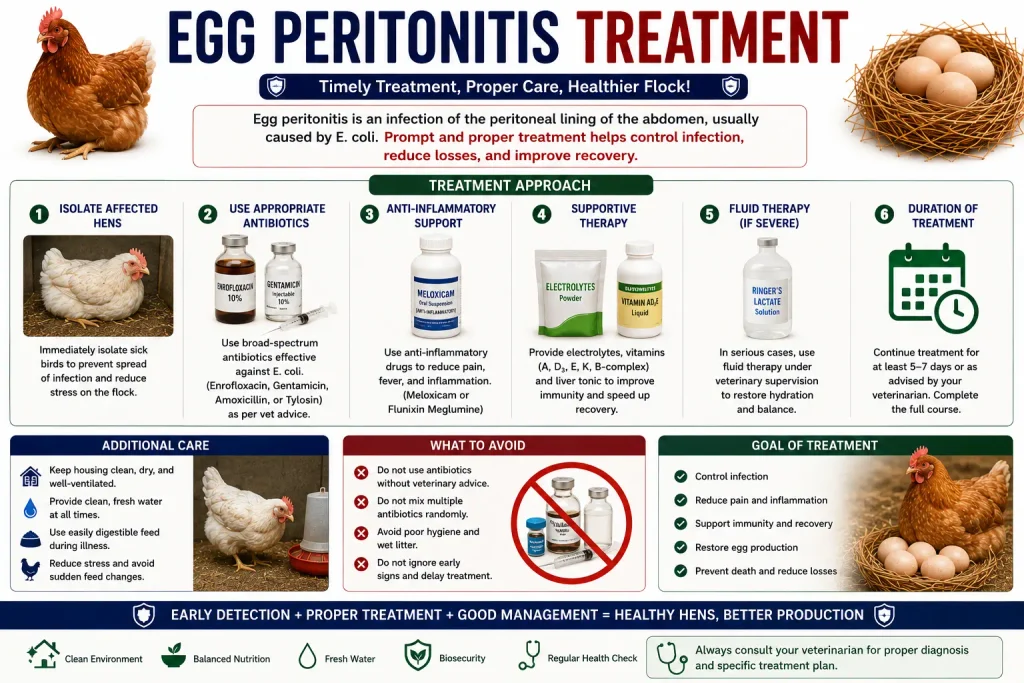
Recognizing the Symptoms Early
Hens hide illness well, which is a survival instinct that works against early detection. By the time symptoms are obvious, the condition has often been developing for days or weeks.
Common signs to watch for:
- Swollen, firm, or fluid-filled abdomen (“penguin stance” — standing more upright)
- Sudden drop or complete stop in egg laying
- Lethargy, hunched posture, reluctance to move
- Pale or dusky comb and wattles
- Loss of appetite alongside continued weight loss
- Labored or rapid breathing (fluid pressing on air sacs)
- Runny, yellowish, or foul-smelling droppings
- Tail bobbing while breathing
- Sitting apart from the flock
Warning: A hen showing labored breathing plus a distended abdomen needs urgent veterinary evaluation. This combination often signals advanced fluid buildup and should not wait more than 24 hours.
Diagnosis: How Vets Confirm Egg Peritonitis
| Diagnostic Step | What It Reveals |
| Physical exam and abdominal palpation | Detects swelling, fluid, or masses |
| Ultrasound | Shows fluid pockets, egg material, or organ changes |
| Radiographs (X-rays) | Identifies retained eggs, masses, or fluid distribution |
| Abdominocentesis (fluid tap) | Collects fluid for cytology and bacterial culture |
| Bloodwork | Checks white blood cell count and organ function |
Why Culture and Sensitivity Testing Matters for Egg Peritonitis Treatment
Blind antibiotic use is one of the most common mistakes owners make. A fluid or swab culture tells the vet exactly which bacteria are present and which antibiotic will actually work against them. Skipping this step is a major reason some treatment attempts fail.
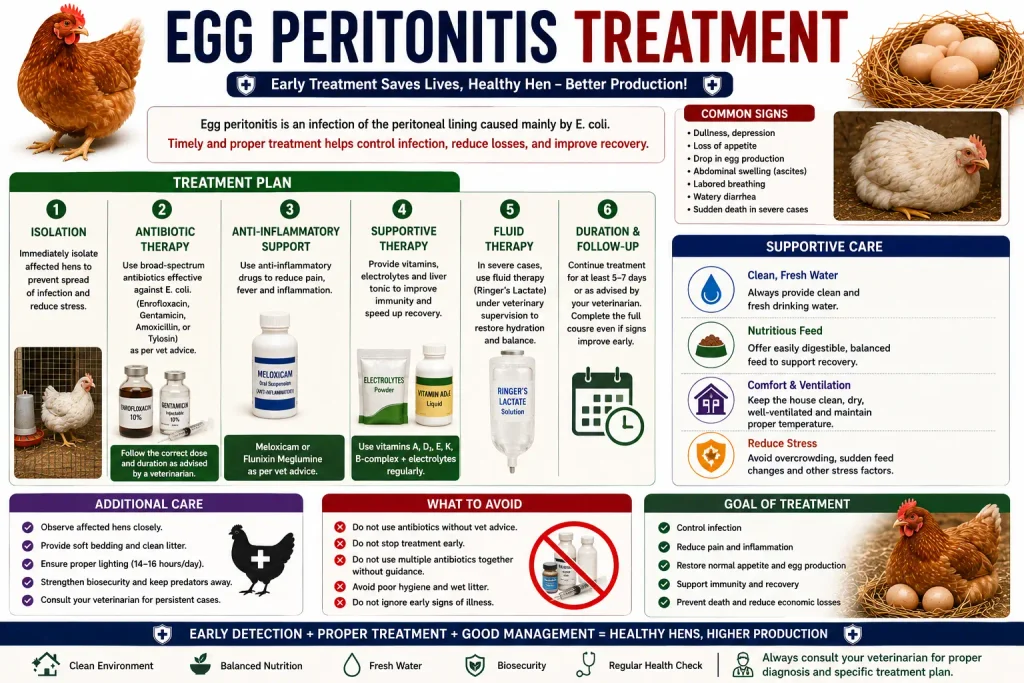
Egg Peritonitis Treatment Options Explained
Treatment depends heavily on how advanced the condition is when it’s caught. Mild, early cases respond differently than chronic, recurring ones.
1. Antibiotic Therapy
Vets prescribe antibiotics based on culture results whenever possible. Common choices include enrofloxacin or amoxicillin-based drugs, given orally or by injection, typically for 7–14 days. Because chickens metabolize drugs differently than mammals, dosing must come from an avian or poultry-experienced vet — not guesswork from online forums.
2. Abdominal Fluid Drainage
When fluid buildup (ascites) is compressing the lungs and air sacs, a vet may drain fluid with a needle (abdominocentesis) to relieve pressure and help the hen breathe. This provides fast comfort but doesn’t treat the underlying infection on its own.
3. Supportive Care
- Warm, quiet, low-stress housing separate from the flock
- Easy access to water, sometimes with electrolytes
- High-protein, easily digestible food to support recovery
- Anti-inflammatory or pain medication as prescribed
- Daily weight and appetite monitoring
4. Hormone Implants to Stop Egg Laying
A deslorelin (GnRH) implant, placed by a vet, suppresses ovulation for several months. Since every ovulation cycle carries renewed risk, stopping egg production is one of the most effective ways to prevent chicken peritonitis treatment from becoming a repeating cycle.
5. Surgery (Salpingohysterectomy)
In hens with chronic or recurrent egg peritonitis, or where an egg is stuck and can’t pass, surgical removal of the oviduct may be recommended. It’s a bigger commitment financially and physically, but for the right case it can stop the problem at its source.
Expert Tip: Ask your vet directly whether a hormone implant is a realistic option before committing to repeated antibiotic rounds. For hens with recurring episodes, it often changes the long-term outlook more than antibiotics alone.
Egg Peritonitis Treatment: Home Care vs. Veterinary Care
| Aspect | What You Can Do at Home | What Requires a Vet |
| Comfort | Warm, quiet, separate housing | Diagnosis of underlying cause |
| Nutrition | Offer soft, high-protein food and water | Prescription antibiotics |
| Monitoring | Track weight, droppings, appetite daily | Fluid drainage, imaging, culture |
| Pain relief | None — do not use human medications | Vet-approved anti-inflammatories |
| Long-term prevention | Reduce obesity, manage stress | Hormone implant, surgery |
Common Mistakes: Giving human pain relievers (like ibuprofen or acetaminophen) is dangerous for chickens. Delaying vet care because “she’s still eating” is another frequent error — appetite is often the last thing to change.
Prevention: Reducing the Risk of Future Episodes
- Keep hens at a healthy weight through appropriate, not excessive, feed
- Provide a balanced layer diet with adequate calcium and protein
- Minimize sudden stress: predator exposure, overcrowding, temperature swings
- Consider hormone implants proactively for hens with a prior episode
- Watch older hens (2+ years) more closely, since risk rises with age
- Avoid over-breeding hybrid layers selected purely for high egg output
Did You Know? Wild jungle fowl, the ancestors of domestic chickens, lay far fewer eggs per year than modern hybrids. Selective breeding for constant egg production is part of why reproductive disorders like egg peritonitis are more common in backyard flocks today than in wild bird populations.
Prognosis: What Recovery Actually Looks Like
Prognosis varies widely. A hen caught early, with a single isolated episode and no chronic infection, can often return to reasonable health, sometimes even resuming light laying (though many owners choose implants to prevent recurrence). Chronic or advanced cases, especially with heavy adhesions or repeated fluid buildup, carry a guarded outlook even with treatment.
When to Call a Vet: Contact a poultry or avian vet immediately if you notice abdominal swelling with labored breathing, a sudden stop in laying combined with lethargy, or any fluid visibly leaking from the vent alongside a swollen belly. Early intervention consistently improves outcomes.
People Also Ask
Can egg peritonitis in chickens be cured? It can be successfully treated, especially when caught early, though “cured” is a strong word — some hens need ongoing management like hormone implants to prevent recurrence, since the underlying tendency toward abnormal ovulation often remains.
Is egg peritonitis contagious to other chickens? No. It’s a reproductive and inflammatory condition, not an infectious disease that spreads between birds, so isolation is for the sick hen’s comfort and monitoring, not flock protection.
How long can a chicken live with egg peritonitis untreated? This varies enormously — from days in acute, severe cases to months in low-grade chronic cases — but untreated egg peritonitis carries a real risk of death, so “watching and waiting” without any vet input is not a safe strategy.
Can you prevent egg peritonitis by stopping a hen from laying? Reducing or stopping ovulation, typically with a vet-placed hormone implant, is one of the most effective prevention methods available, since fewer ovulation cycles mean fewer opportunities for yolk to misdirect into the abdomen.
FAQ
What is the best egg peritonitis treatment for a backyard hen? The best egg peritonitis treatment combines a vet diagnosis (ideally with fluid culture), targeted antibiotics, supportive care, and — for hens prone to recurrence — a hormone implant or surgical option. There’s no single home remedy that reliably treats it.
Does treatment for egg peritonitis always require surgery? No. Many cases respond to antibiotics and supportive care alone. Surgery is generally reserved for hens with a physically stuck egg, chronic recurring infection, or when other treatments have failed.
Is chicken peritonitis treatment expensive? Costs vary by region and severity. A basic exam, fluid tap, and antibiotic course is usually the least expensive route; imaging, hospitalization, or surgery raise the cost significantly. Ask your vet for a treatment plan with cost tiers upfront.
Can I treat egg peritonitis with antibiotics I already have at home? This isn’t recommended. Using the wrong antibiotic can let the infection worsen while masking symptoms, and dosing chickens incorrectly can cause harm. A vet-guided, culture-based prescription is safer and more effective.