Why Are My Chickens Not Laying Eggs? Start Here

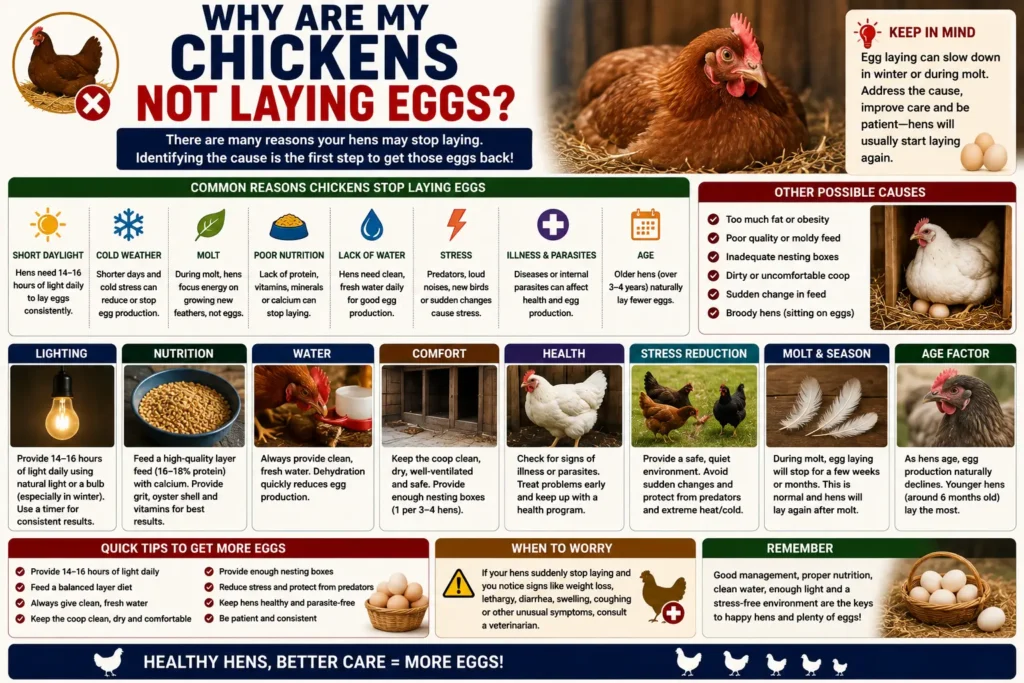
Why are my chickens not laying eggs is one of the most searched questions among backyard keepers, and the honest answer is that it’s almost never just one thing. Season, age, stress, diet, health, and daylight hours all play a role in whether a hen fills the nesting box or leaves it empty.
This guide walks through every realistic cause, from completely normal reasons that need no fixing to health issues that require closer attention. By the end, you’ll have a clear way to figure out exactly why your flock has slowed down or stopped laying altogether.
Quick Answer: Chickens stopped laying eggs most often because of natural molting, shortening daylight hours, hot or cold weather stress, hidden nests, or simply age. Less commonly, illness, parasites, or poor nutrition are behind the drop. Check the calendar, the coop, and the flock’s overall health before assuming something is seriously wrong.
Table of Contents
The Most Common (and Least Worrying) Reasons
1. Molting
Molting is a natural yearly process where hens lose and regrow feathers, and egg production nearly always pauses during this time because the body redirects protein toward feather growth instead of eggs. This is completely normal and typically lasts several weeks to a couple of months.
2. Shortening Daylight Hours
Hens need roughly 14 to 16 hours of light per day to maintain steady laying. As days shorten in fall and winter, many hens naturally slow down or stop, which explains why so many keepers notice their chickens stopped laying eggs right around the same time each year.
3. Age
Hens lay most heavily in their first two years and gradually decline afterward. A hen not laying eggs at four or five years old, despite good health otherwise, is often simply experiencing normal age-related decline rather than a problem to fix.
4. Hidden Nests
Free-ranging hens sometimes find a spot outside the coop and lay there instead. Before assuming a true production drop, it’s worth checking likely hiding spots around the yard.
Read More: https://lashegg.com/chicken-lethargic-and-weak/
| Cause | Typical Duration | Fixable? |
| Molting | 4–12 weeks | No, resolves on its own |
| Short daylight | Fall through winter | Yes, with supplemental light |
| Age | Ongoing, gradual | No, natural decline |
| Hidden nest | Until found | Yes, once located |
Stress and Environmental Causes
Heat and Cold Stress
Extreme temperatures redirect a hen’s energy toward survival rather than reproduction. Hens under heat stress often reduce laying to conserve energy and stay cool, while cold stress increases the calories needed just to maintain body temperature.
Predator Pressure and Fear
A recent predator scare, even one that didn’t result in an attack, can stress a flock enough to pause laying for days or weeks. Chickens are highly sensitive to perceived threats near the coop.
Overcrowding
Too many birds in too little space raises stress hormones and competition for food, both of which can suppress egg production. University extension poultry guidelines commonly recommend a minimum of 3 to 4 square feet of coop space per standard-sized hen.
Changes in Routine
New flock members, a moved coop, or a disrupted schedule can all cause temporary stress-related drops. Most hens resume laying within one to two weeks once things settle down.
Did You Know? A hen’s reproductive system responds directly to light hitting a gland near her eye, which signals hormone release tied to egg production. This is part of why daylight length has such a strong, direct effect on laying.
Nutritional Reasons a Hen Is Not Laying Eggs
Protein and Calcium Needs
Egg production demands significant protein and calcium. A diet too heavy in scratch grains, treats, or low-quality feed can leave hens without the building blocks needed for consistent laying.
Water Access
Hens drink significantly more water while laying than most keepers expect, and even short periods without access to clean water can cause a noticeable drop in production.
Feed Quality and Freshness
Old, moldy, or improperly stored feed loses nutritional value and can introduce toxins that further suppress laying. The USDA recommends storing poultry feed in a cool, dry, rodent-proof container to preserve its quality.
Health-Related Causes Behind Chickens Not Laying Eggs
Internal Parasites
A heavy worm or coccidia burden diverts nutrients away from egg production toward fighting the infection, often alongside other symptoms like pale combs or weight loss.
Reproductive Issues
Conditions such as salpingitis, egg yolk peritonitis, or a reproductive tract infection can stop laying either temporarily or permanently, depending on severity. According to the Merck Veterinary Manual, reproductive tract disease is a recognized and significant cause of reduced or halted egg production in commercial and backyard flocks alike.
Illness or Infection
Any systemic illness, from respiratory infections to broader bacterial or viral disease, tends to reduce or stop laying as the body prioritizes fighting the infection over reproduction.
Broodiness
A broody hen stops laying and instead focuses on sitting on eggs, whether fertilized or not, trying to hatch them. This behavior is hormonal, not a health problem, though it can last several weeks if not interrupted.
| Health Cause | Other Signs | Laying Impact |
| Internal parasites | Pale comb, weight loss, lethargy | Reduced or stopped |
| Reproductive infection | Discharge, swollen abdomen, lethargy | Often stopped |
| Systemic illness | Fever-like behavior, poor appetite | Stopped until recovery |
| Broodiness | Sitting constantly, plucking chest feathers | Stopped during broody period |
Step-by-Step: Figuring Out Why Your Hen Not Laying Eggs
- Check the calendar. Note the season, day length, and the hen’s age to rule out normal, expected causes first.
- Inspect the coop and yard. Look for hidden nests and confirm eggs aren’t simply being laid somewhere unexpected.
- Review recent changes. Consider new birds, a moved coop, weather extremes, or a recent scare.
- Assess the diet. Confirm the flock is eating a complete layer feed with adequate calcium and protein, plus constant clean water.
- Look for molting signs. Feather loss and regrowth point to a natural, temporary pause.
- Check for broodiness. A hen sitting persistently in the nesting box, even without eggs, is likely broody rather than sick.
- Watch for illness signs. Lethargy, pale comb, discharge, or diarrhea alongside the laying stop suggests a health cause worth addressing.
- Consult a vet if health signs appear. Persistent laying stops paired with other symptoms deserve professional evaluation rather than continued guessing.
Expert Tip
Keep a simple laying calendar for your flock, marking daily egg counts. Patterns become much easier to spot this way, and a calendar makes it far simpler to notice whether a drop lines up with molting season, weather, or something else worth investigating.
Common Mistakes to Avoid
- Assuming illness immediately when molting or short daylight explains the drop
- Adding artificial light without a consistent schedule, which can confuse a hen’s cycle
- Overfeeding treats at the expense of a balanced layer feed
- Ignoring a hen that seems broody but treating her like she’s simply not laying
- Missing hidden nests before assuming a true production problem
Warning
A sudden, complete stop in laying paired with lethargy, vent discharge, or a swollen abdomen should not be treated as a normal seasonal dip. These combinations often point toward a reproductive infection or another health issue that needs veterinary attention.
When to Call a Vet
Contact a poultry veterinarian if a hen stops laying suddenly and shows other symptoms like lethargy, pale comb, vent discharge, diarrhea, or a swollen abdomen. A hen not laying eggs for more than a few months without an obvious cause like age, season, or molting also deserves a professional check to rule out underlying disease.
Encouraging Hens Back Into Lay
Supporting Natural Recovery
- Provide a complete layer feed with balanced calcium and protein
- Ensure at least 14 hours of light during shorter winter days, using a timer for consistency
- Reduce stress by maintaining a stable routine and adequate space
- Address any parasite load with an appropriate, vet-approved treatment
What Not to Force
Avoid forcing a broody hen off the nest repeatedly without addressing the underlying hormonal drive, and avoid drastically increasing light hours overnight, since a gradual increase mimics natural seasonal change more safely.
People Also Ask
Why did my chickens stop laying eggs all at once? A sudden, flock-wide stop usually points to a shared stressor like extreme weather, a predator scare, or a major diet or routine change rather than individual illness.
How long can a hen go without laying eggs before it’s a problem? A few weeks tied to molting, season, or stress is normal, but several months without an obvious cause warrants a closer look, including a possible vet visit.
Does a hen’s age affect why she isn’t laying eggs? Yes, laying naturally declines after the first one to two peak years, and hens beyond four or five years old often lay significantly less as a normal part of aging.
Can stress alone stop a hen from laying eggs? Yes, stress from predators, overcrowding, or sudden changes can pause laying for days to weeks, usually resolving once the stressor is removed and the flock settles.
Will adding light bring my chickens back into laying? Supplemental light extending the day to around 14 hours often helps restart laying during shorter months, though it won’t override natural causes like molting or age.
Final Thoughts
Why are my chickens not laying eggs rarely has a single, dramatic answer. Season, molting, age, stress, and diet explain the vast majority of cases, while health issues like parasites or reproductive infections account for the rest.
Track the pattern, rule out the normal explanations first, and reach out to a poultry veterinarian if a hen not laying eggs is also showing signs of illness or if the drop lasts far longer than seasonal changes would explain.
5. FAQ
Q: Why are my chickens not laying eggs even with a good diet? A: Diet is only one piece of the puzzle; molting, shortening daylight, age, and stress can all stop laying even when nutrition is well managed.
Q: What’s the most common reason chickens stopped laying eggs in fall? A: Shortening daylight hours are the most common seasonal reason, since hens need around 14 to 16 hours of light to sustain regular egg production.
Q: Is it normal for a hen not laying eggs during molt? A: Yes, molting redirects energy toward feather regrowth, and most hens naturally pause laying for several weeks to a couple of months during this process.
Q: How do I know if my hen not laying eggs is sick versus just broody? A: A broody hen sits persistently in the nest and plucks chest feathers but otherwise looks healthy, while illness usually comes with lethargy, poor appetite, or other visible symptoms.
Q: Can old age be the only reason chickens stopped laying eggs? A: Yes, hens beyond their peak laying years, typically after two to three years, can show a steady natural decline without any other underlying problem.